

Blog

All 2026 Toyota Tundra Toyota RAV4 Toyota Tacoma Toyota Camry 2027 Toyota 4Runner Toyota Corolla Cross Toyota Grand Highlander Toyota Sequoia Toyota Crown Toyota Highlander Toyota Hybrids Toyota Land Cruiser Toyota Sienna
White Tacoma truck in a snowy forest, showcasing rugged wilderness adventure.
in Toyota Tacoma

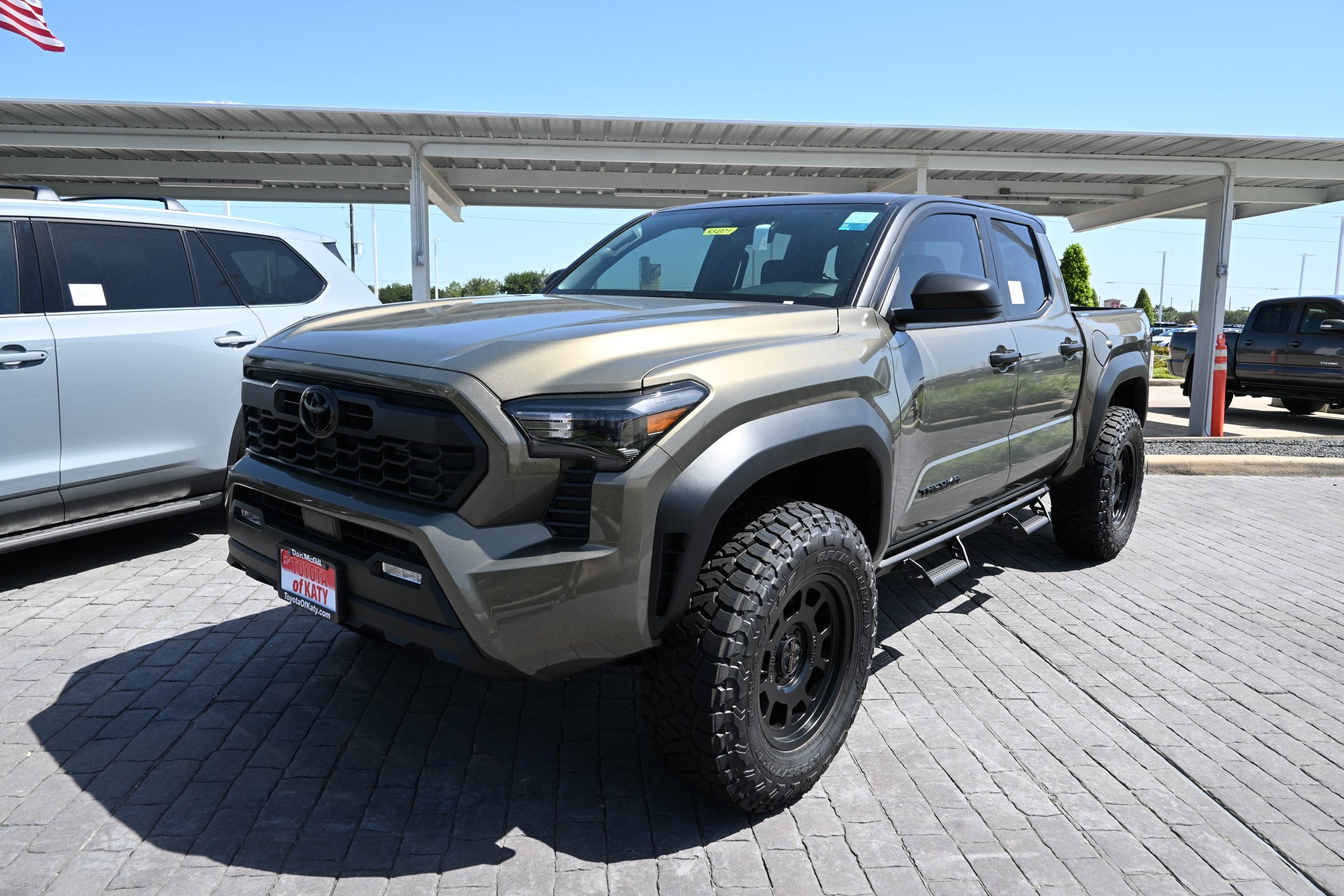
Toyota Tacoma TRD Sport vs. TRD Off-Road: Which Is Right for Katy Drivers?

If you're comparing the TRD Sport vs. TRD Off-Road, you're not alone. These are two of the most popular Tacoma trims among Katy-area shoppers, and each is built for a different kind of driving life. Whether you're commuting on the Katy Freeway every morning or planning weekend trips off the pavement, picking the right trim comes down to understanding where each truck actually excels. Below, we break down both trims and help you decide which one fits your routine. Browse new Tacoma inventory at Toyota of Katy anytime. more TRD Sport vs. TRD Off-Road: Two Distinct Tacoma Personalities The TRD Sport and TRD Off-Road ride on the same Tacoma platform, but Toyota takes the two trims in different directions. The Sport is tuned for drivers who want sharper handling and a truck that feels at home on paved roads. The Off-Road is engineered for traction and clearance, with hardware that makes rough terrain manageable. Both share the same 2.4L turbocharged i-FORCE engine, rated at 278 hp and 317 lb-ft with the 8-speed automatic, or 270 hp and 310 lb-ft with the available 6-speed manual. An i-FORCE MAX hybrid is available on each, delivering 326 hp and 465 lb-ft of torque. The real differences show up in suspension tuning, drivetrain, and available terrain technology, which we'll cover trim by trim before comparing them head-to-head. Meet the TRD Sport: Street-Smart Performance Toyota built the TRD Sport for drivers who want an athletic edge without giving up everyday comfort. It's tuned to perform where most Tacomas actually spend their time: on the road. Sport-Tuned Suspension and On-Road Handling The TRD Sport comes with a sport-tuned suspension and firmer shocks calibrated for paved surfaces. That means a more confident feel through corners, precise steering response, and better stability during highway lane changes. If your commute involves stretches of I-10 or the Grand Parkway loop around Katy, this tuning works in your favor daily. The TRD Sport is available in RWD or 4WD, giving buyers flexibility if occasional light off-pavement use is still part of the picture. Style and Tech Features That Define the Sport Trim The TRD Sport rolls on 18-inch TRD Sport alloy wheels with 265/65R18 street tires, giving it a cleaner, more refined look than its off-road sibling. Seats are 6-way manually adjustable up front, with 2-way power lumbar support standard on the driver's side; 8-way power seats are available through the Upgrade and Premium packages. Inside, an 8-inch touchscreen with wireless Apple CarPlay and Android Auto is standard, with a 14-inch display available, and Toyota Safety Sense 3.0 rounds out a package built for confident daily driving around Katy. Meet the TRD Off-Road: Built for Adventure The TRD Off-Road is for drivers who see a dirt road as an invitation, not something to steer around. Toyota built it for terrain that would make most trucks think twice. Trail-Ready Suspension, 4WD, and Terrain Tech Toyota tunes the TRD Off-Road's suspension specifically for uneven ground, pairing it with Bilstein® shocks that absorb impacts and help keep tires in contact with the surface. Standard 4WD supplies the traction needed when conditions turn loose or slippery. An electronic locking rear differential forces both rear wheels to spin at the same speed for maximum grip in low-traction situations, while Multi-Terrain Select adjusts throttle and traction settings for surfaces like mud, dirt, and sand. Crawl Control automatically manages throttle and braking at low speeds so you can focus entirely on steering through technical terrain. For gravel ranch roads or off-road parks within an hour of Katy, these systems earn their keep. Rugged Styling and Off-Road Cabin Features Black overfenders, a color-keyed rear bumper, and a composite front skid plate with transfer case and fuel tank protection give the TRD Off-Road a more purposeful stance than the Sport. It rides on 17-inch alloys with 265/70R17 all-terrain tires in i-FORCE form, or on 18-inch alloys with all-terrain tires on i-FORCE MAX models. Seating hardware matches the TRD Sport, with the same 8-way power seats available through packages, and interior materials are chosen to withstand muddy boots and hauled gear after a day on the trails. Head-to-Head: Ride Comfort, Capability, and Specs Compared On Katy's paved streets and highways, the TRD Sport's firmer suspension delivers a more planted, controlled feel with less body roll, especially at freeway speeds. The TRD Off-Road's Bilstein®-tuned setup absorbs bumps and rough terrain better, though it rides softer and allows more body roll under braking on pavement. Neither trade-off makes either truck impractical for its intended use, but the difference is noticeable if you're weighing daily comfort against trail capability. Towing is a match at 6,400 lbs for both trims in Double Cab i-FORCE form, or up to 6,000 lbs with the i-FORCE MAX hybrid. Payload differs mainly because the TRD Sport can be ordered in rear-wheel drive, where 4x2 Double Cab models are rated from 1,445 to 1,690 lbs, while 4x4 Double Cabs run from 1,380 to 1,705 lbs, depending on configuration. The real distinction between the two trims lies in drivetrain and traction hardware rather than raw hauling numbers. Spec TRD Sport TRD Off-Road Engine 2.4L turbocharged i-FORCE, 278 hp / 317 lb-ft (auto) or 270 hp / 310 lb-ft (manual); i-FORCE MAX hybrid available Same 2.4L turbocharged i-FORCE, same output; i-FORCE MAX hybrid available Drivetrain RWD or 4WD available Standard 4WD Wheels and Tires 18-in. alloy, 265/65R18 17-in. alloy, 265/70R17 all-terrain (i-FORCE); 18-in. alloy all-terrain (i-FORCE MAX) Suspension Sport-tuned shocks, coil-spring multi-link rear Bilstein® monotube shocks with piggyback reservoirs, coil-spring multi-link rear Traction Tech Active Traction Control on 4WD models Locking rear differential, Multi-Terrain Select, Crawl Control, Active Traction Control, available Stabilizer Disconnect Mechanism Max Towing (Double Cab) 6,400 lbs (gas); up to 6,000 lbs (hybrid) 6,400 lbs (gas); up to 6,000 lbs (hybrid) Max Payload Up to 1,690 lbs (4x2); up to 1,705 lbs (4x4) Up to 1,705 lbs (4x4 only) Contact Toyota of Katy to schedule a side-by-side test drive and feel these differences for yourself. Pricing and Value: TRD Sport vs. TRD Off-Road The TRD Sport is positioned as the more affordable, street-focused trim, starting around $40,315, compared with roughly $42,715 for the TRD Off-Road, and offers sport-tuned handling and tech features without paying for off-road hardware they may not use. That roughly $2,400 step up buys standard 4WD, Bilstein® shocks, a locking rear differential, and terrain management systems, hardware that delivers real value if trail driving is part of your regular routine. For city-focused buyers, that added cost may not translate to daily benefit. For adventure-oriented drivers, that hardware gets used almost every weekend. Pricing excludes delivery, processing, and handling. The right trim is the one that matches how you actually drive. Which Tacoma Trim Matches Your Katy Lifestyle? Katy drivers cover a lot of ground, literally and otherwise. Some are behind the wheel five days a week for work, others are counting down to the next weekend trail run. If your week looks like Energy Corridor commutes, errands around town, and the occasional highway trip, the TRD Sport is built for that rhythm. If your week looks like loading up gear on Friday and heading for gravel roads or off-road parks outside Houston, the TRD Off-Road is the better match. Choose TRD Sport for Daily Commuting and City Driving If most of your miles happen on pavement, the TRD Sport's sport-tuned suspension, refined handling, and tech-forward interior create a driving experience built for routine use, sharp, confident, and comfortable on Katy's roads. Choose TRD Off-Road for Weekend Trail Adventures For anyone who treats trail access as non-negotiable, the TRD Off-Road's Crawl Control, Multi-Terrain Select, locking rear differential, and Bilstein® shocks make a real difference once the pavement ends. It still handles daily driving fine, just with more body motion on smooth roads than the Sport, and all-terrain tires that generate a bit more noise at highway speed. Frequently Asked Questions What Is the Difference Between TRD Sport and TRD Off-Road? The TRD Sport is tuned for on-road performance, with sport suspension and a focus on daily comfort and style. The TRD Off-Road is built for terrain, with Bilstein® shocks, standard 4WD, a locking rear differential, Crawl Control, and Multi-Terrain Select. Both share the same engine options; the difference is in tuning and traction hardware. Which Tacoma Trim Is Better for Daily Driving in Katy? For most Katy drivers spending time on paved roads and highways, the TRD Sport is the stronger daily choice. Its sport-tuned shocks and street tires deliver a more controlled, better-settled ride on pavement. The TRD Off-Road is still perfectly drivable daily, just tuned primarily for terrain performance rather than pavement comfort. Can You Add Off-Road Features to a TRD Sport? Aftermarket upgrades like lift kits or all-terrain tires can improve a TRD Sport's off-pavement ability, but factory systems like Crawl Control and Multi-Terrain Select aren't easily replicated through modifications. If serious off-roading is part of your plans, the TRD Off-Road is the smarter starting point. Test Drive Your Ideal Tacoma at Toyota of Katy The best way to know which Tacoma fits your life is to get behind the wheel of both. As the #1 volume-certified Toyota dealer serving Katy for over 20 years, we carry new Tacoma inventory, including the TRD Sport and TRD Off-Road, and our team can walk you through the differences in person. Browse our current Tacoma inventory or contact our sales team to schedule a test drive. You can also call us directly at 844-809-1063 to get started.

Read More
2026 Toyota Tacoma at Toyota of Katy

Toyota Tacoma SR5 vs Limited: Which Is Right for Katy Drivers?

Choosing between two trims of the same truck shouldn't feel this complicated. But the Tacoma SR5 vs Limited debate comes down to real differences in comfort, technology, and price that matter once you're living with the truck every day. If you're hauling materials to a job site off I-10, you probably don't need ventilated seats. Spend an hour or more commuting through Katy traffic toward the Energy Corridor, though, and cabin quality starts to matter more than you'd expect. We put together this comparison to help you match the right trim to how you actually use your truck. You can also browse our new Toyota Tacoma inventory in Katy while you decide. Tacoma SR5 vs. Limited: Which One Fits Your Katy Workday? Katy is a working town. Between the commercial corridors along the Katy Freeway and the mix of trades that keep this area running, construction crews and logistics outfits and outdoor businesses alike, a lot of our customers need a truck that does real work without unnecessary extras. The Tacoma SR5 was built with exactly that in mind, delivering Toyota's proven towing capability and a cabin designed to take a beating without padding the price with rarely used features. The Limited, on the other hand, is for the buyer who wants that same capability but also wants their daily drive to feel like something more than strictly functional. Toyota layers comfort and technology upgrades onto the same rugged foundation, appealing to drivers who split time between job sites and longer commutes, or who use the same truck for work during the week and family trips to Cane Island on weekends. Quick Comparison: SR5 vs. Limited at a Glance The SR5 sits in the mid-tier of Toyota's Tacoma lineup, which runs from SR up through SR5, TRD PreRunner, TRD Sport, TRD Off-Road, Limited, TRD Pro, and finally Trailhunter. The SR5 emphasizes utility and value, while the Limited prioritizes premium materials and a more refined, tech-forward cabin. Both share the same core Tacoma engineering and off-road DNA. The differences show up in the details below. Feature Tacoma SR5 Tacoma Limited Engine 278 hp / 317 lb-ft (2.4L Turbo) 278 hp / 317 lb-ft (2.4L Turbo) or 326 hp / 465 lb-ft (i-FORCE MAX Hybrid) Max Towing 6,500 lbs (properly equipped) 6,300 lbs Fuel Economy (best) Up to 21/26/23 MPG (City/Hwy/Combined, RWD) Up to 20/23 MPG (City/Hwy, gas, RWD); 23/24 MPG (City/Hwy, i-FORCE MAX Hybrid) Comfort Heated front seats (optional), leather-trimmed steering wheel (Upgrade pkg) Ventilated & heated front seats, leather-trimmed steering wheel (standard) Tech Display 8-inch touchscreen 14-inch touchscreen, wireless Apple CarPlay/Android Auto Wheels 17-inch alloy 18-inch alloy Pricing and Value Differences The Limited carries a noticeably higher price than the SR5, and that gap reflects real differences in materials, technology, and comfort rather than just badge prestige. The SR5 delivers strong functionality at a lower cost of entry, which appeals to buyers who want dependability without paying for features they won't use. Keep the truck for years of heavy work, and the SR5 often turns out to be the better long-term value. Weigh comfort and tech alongside capability, and the Limited's price starts to make sense. Towing, Payload, and Fuel Economy Towing capacity actually favors the SR5 slightly, at up to 6,500 lbs properly equipped, compared to the Limited's 6,300 lbs. That gap comes down to how each trim is configured rather than any dramatic engineering difference, and both numbers comfortably cover trailers, equipment, and most job-site loads. Fuel economy on the gas engine actually favors the SR5, which is rated at 21/26/23 MPG (City/Hwy/Combined) versus the Limited's 20/23 MPG (City/Hwy). Opting for the Limited's i-FORCE MAX Hybrid raises city efficiency to 23 MPG and highway to 24 MPG. For buyers whose work requires consistent heavy towing, the SR5's slight towing edge, better gas fuel economy, and lower cost make it the more practical choice. Tacoma SR5: Built for Work Without the Extra Cost The SR5 gives buyers a capable, reliable Tacoma at a price that makes sense for practical use. You still get a well-equipped truck, just without features you'd rarely touch. Standard Features for Job Sites and Daily Driving The SR5 comes with durable cloth seating, an 8-inch touchscreen, and Toyota Safety Sense, including pre-collision warning, lane departure alert, and automatic high beams. It also includes keyless entry on all doors, blind-spot warning with rear cross-traffic warning, and bed rails with movable tie-down cleats. Double Cab models use a coil-spring rear suspension and seat up to five, which matters for crews riding to a job site together. The available SR5 Upgrade Package adds wireless charging, LED bed lights, and an Integrated Trailer Brake Controller, and that last one makes a real difference once you're towing regularly. Where the SR5 Leaves Comfort on the Table The cloth seats lack the refinement of leather, and there's no wireless charging standard, no premium audio, and no ventilated seating. Those features simply aren't available on the SR5 no matter which options you add. If your commute is short and your focus is purely on work performance, none of that matters. But for buyers spending long hours in the cabin, the SR5 can start to feel plain. Tacoma Limited: Luxury and Tech Upgrades Worth Considering The Limited stays a tough, capable work truck at heart, but Toyota adds a layer of refinement that makes a real difference during long drives, daily commutes, or trips where comfort matters as much as capability. Premium Interior and Comfort Features Step into a Limited and the difference from the SR5 is immediate. The seats are leather-trimmed, heated and ventilated in front, and considerably more supportive on longer drives. A leather-trimmed steering wheel and shift knob come standard, and additional sound insulation cuts down on road and wind noise at highway speeds. Worth knowing before you buy: the Limited's added roof-mounted equipment slightly reduces headroom compared to the SR5. Ventilated seats matter during Houston's humid summer months, when a hot cabin can make even a short drive uncomfortable. Advanced Tech and Safety Additions The Limited steps up to a 14-inch touchscreen with wireless Apple CarPlay and Android Auto, along with premium audio and additional driver-assistance technology. For buyers who use their truck for both work and personal driving, this adds real versatility. The larger display and wireless connectivity turn long Energy Corridor commutes into something more manageable, even if those features don't add capability on a job site. How Much Luxury Do You Really Need in a Work Truck? The answer depends on how the truck actually lives in your daily life, not on what sounds impressive on a spec sheet. If your Tacoma spends more time on the highway than the job site, the Limited's comfort features earn their keep. If it spends more time in the dirt, the SR5 already gives you what you need. Best Fit for Job-Site and Towing-Heavy Use If your Tacoma is primarily a tool, like a landscaper's crew truck hauling equipment across Katy, the SR5 is the right tool. Premium leather and a bigger touchscreen aren't going to change your workflow. What you need is a durable, dependable truck that shows up every day, and the SR5 delivers that at a price point that leaves room in the budget for accessories or fleet management. It also holds up better against the scuffs and hard miles that come with regular job-site use. Best Fit for Commuting and Mixed-Use Drivers The Limited earns its price when your truck serves more than one purpose. An Energy Corridor commuter who tows to a job site on weekends, or a weekend contractor hauling gear out to Cane Island, will feel the difference in seat quality, cabin noise, and tech every single day. For that kind of mixed use, the Limited is a change you'll feel on every drive, not just a splurge. Why Katy Truck Buyers Trust Toyota of Katy for Tacoma Expertise Katy buyers aren't shopping for show trucks. They need vehicles that perform in real conditions and hold up over time. Our team brings deep product knowledge that helps you find the right configuration instead of getting lost comparing trims. We stock a full range of Tacoma inventory, back it with financing support, and offer certified service using genuine Toyota parts. We also run an on-site collision center, so you've got long-term peace of mind built in. Explore the Tacoma SR5 or Limited Reading about the differences helps, but sitting in both trucks back-to-back gives you a much clearer sense of which one feels right. Contact our team to schedule a test drive for either the SR5 or the Limited, compare current inventory, and talk through financing options that fit your needs. Frequently Asked Questions Is the SR5 or Limited Better for Towing a Trailer? The SR5 actually has a slightly higher max towing rating at 6,500 lbs properly equipped, compared to 6,300 lbs on the Limited. Either trim handles trailer towing well within the Tacoma's rated capacity, so if towing is your primary concern, the SR5 gives you the edge without the added cost. Does the Limited Trim Get Worse Gas Mileage Than the SR5? With the standard gas engine, the SR5 is rated at 21/26/23 MPG (City/Hwy/Combined), while the Limited is rated lower at 20/23 MPG (City/Hwy). The Limited's available i-FORCE MAX Hybrid improves efficiency to 23 city and 24 highway MPG. Can You Add Limited Features to an SR5 Tacoma? Some features can be added to the SR5 through the available Upgrade Package, including wireless charging, LED bed lights, and an Integrated Trailer Brake Controller. However, leather-trimmed and ventilated seating, premium audio, and the 14-inch touchscreen are exclusive to the Limited and can't be added to an SR5. If those features matter to you, choosing the trim that includes them from the factory is the straightforward path. Contact our team at Toyota of Katy and we can walk you through exactly what's available on each trim.

A white 2026 Toyota Tundra at Toyota of Katy

2026 Toyota Tundra MPG: Does the 32-Gallon Tank Solve Long-Distance Driving in Texas?

Texas doesn't do anything small, and that includes distances. If you live in Katy and regularly drive to San Antonio, Austin, or farther west toward Big Bend or Amarillo, fuel economy isn't just a nice-to-have feature on a truck. It's a practical necessity. The 2026 Toyota Tundra comes with a 32.2-gallon fuel tank standard across all trims, two distinct powertrains, and EPA-estimated ratings that place it among the more capable long-range trucks in its class. Browse our 2026 Tundra inventory and see what's in stock, or keep reading to understand how real-world 2026 Toyota Tundra MPG translates to actual Texas driving. more What the 2026 Toyota Tundra's MPG Ratings Actually Mean for Texas Drivers EPA ratings give you a starting point, but they rarely reflect what Texas drivers actually deal with. Interstates where 75 to 80 mph is completely normal. Rural highways where the nearest fuel station might be 60 miles out. Urban corridors like the Katy Freeway, where stop-and-go traffic can punish fuel economy in ways no test cycle captures. The 2026 Tundra addresses these conditions with two powertrains built around different driving profiles. The standard i-FORCE twin-turbo V6 delivers consistent performance and predictable fuel consumption. The i-FORCE MAX Hybrid adds electric motor assistance to reduce fuel costs on city driving and mixed-use routes. Knowing how each behaves under Texas conditions helps you choose the right configuration for your actual routine. 2026 Tundra MPG by Powertrain: i-FORCE V6 vs. i-FORCE MAX Hybrid i-FORCE V6 Fuel Economy in Real Texas Conditions The i-FORCE twin-turbo V6 produces 389 horsepower and earns EPA estimates of 18 city / 23 highway mpg on 4×2 configurations and 17 city / 22 highway mpg on 4×4. That 23 highway mpg on a 4×2 means roughly 740 miles of theoretical range on a full 32.2-gallon tank, which matters a lot on Texas long hauls. In real-world conditions, the Tundra performs reliably when conditions are consistent. Flat terrain at moderate speeds on the I-10 corridor between Katy and San Antonio tends to keep MPG close to the highway estimate. For drivers who prioritize maximum towing capacity and a simpler mechanical profile, this engine is a strong choice. i-FORCE MAX Hybrid MPG and Where It Pays Off Most The i-FORCE MAX pairs the same twin-turbo V6 with an electric motor positioned between the engine and transmission, along with a nickel-metal hydride battery, for a combined 437 horsepower. EPA estimates come in at 20 city / 24 highway / 22 combined mpg for 4×2 trims, and 19 city / 22 highway / 20 combined for 4×4 trims. The TRD Pro 4×4 hybrid rates at 18 city / 20 highway. At 24 highway mpg, the 4×2 hybrid delivers approximately 773 miles of theoretical range per tank. One honest caveat for Texas drivers: the i-FORCE MAX advantage is most pronounced in stop-and-go and mixed driving, where regenerative braking captures energy, and the electric motor reduces engine load during acceleration. At sustained highway speeds above 70 mph, a common reality on Texas interstates, that advantage narrows. Katy Freeway congestion and city-route stop-and-go are where the i-FORCE MAX earns its keep most clearly. For drivers who split time between city errands and long highway hauls, the MPG advantage still compounds meaningfully over tens of thousands of miles. 2026 Tundra Powertrain Comparison: MPG and Range by Configuration Explore the 2026 Tundra lineup to see which powertrain and drivetrain combination fits your needs. The table below shows EPA-estimated figures and estimated highway range across configurations. Powertrain Drivetrain EPA City / Hwy / Combined Est. Highway Range Best-Fit Texas Use Case i-FORCE V6 4×2 18 / 23 / 20 mpg ~740 miles Long highway hauls, max towing i-FORCE V6 4×4 17 / 22 / 19 mpg ~708 miles Off-road, ranch use, towing i-FORCE MAX Hybrid 4×2 20 / 24 / 22 mpg ~773 miles Mixed city/highway, commuters i-FORCE MAX Hybrid 4×4 19 / 22 / 20 mpg ~708 miles Mixed driving with off-road capability i-FORCE MAX Hybrid (TRD Pro) 4×4 18 / 20 / 19 mpg ~644 miles Off-road and adventure use All figures are EPA-estimated. Actual range varies with load, speed, terrain, and driving habits. How the 32.2-Gallon Fuel Tank Changes the Long-Distance Equation Most full-size trucks carry between 22 and 28 gallons. The 2026 Tundra's 32.2-gallon tank directly addresses one of the most common frustrations for Texas drivers: frequent stops for fuel on long routes. Prior model years used a 22-gallon tank on base SR and SR5 trims, so the jump to 32.2 gallons standard across all 2026 trims is a real step forward. Even accounting for a 10 to 15 percent real-world reduction from speed, load, and conditions, both powertrains offer a practical range that few competitors match without an extra stop. Fewer stops mean less time lost and more predictable travel planning on routes where fuel stations can be sparse. How Towing, Payload, and Speed Affect Your Real-World Range The 2026 Tundra's maximum tow rating is 12,000 pounds when properly configured, and its payload capacity tops 1,850 pounds on select trims. These capabilities come at an MPG cost. Towing a loaded boat trailer or a fifth-wheel camper can reduce fuel economy by 20 to 35 percent, depending on trailer weight and speed. Speed matters more than many drivers realize. Fuel consumption rises sharply above 70 mph due to aerodynamic drag, and Texas interstates frequently see sustained speeds of 75 to 80 mph. If your typical trip involves pulling a trailer at highway speeds, adjust your range estimate downward. The 32.2-gallon tank provides enough buffer that, even with these efficiency penalties, the Tundra's range holds up better than that of smaller-tank competitors. Texas Route Reality Check: Katy to San Antonio, West Texas, and the Panhandle Katy to San Antonio and Back Without Stopping The drive from Katy to San Antonio covers roughly 200 miles each way, for a round-trip of approximately 400 miles. With the i-FORCE V6 4×2 at a conservative real-world 21 highway mpg, that round trip requires about 19 gallons, leaving more than 13 gallons in reserve on return. With the i-FORCE MAX 4×2, that reserve grows further. Most Katy-to-San Antonio round-trip flights can be done on a single tank with a comfortable margin of fuel left over, which is worth something if you're making that drive regularly for work or family. Planning Longer Hauls Toward West Texas and the Panhandle The real test comes when the route extends into West Texas or the Panhandle, where fuel stations can be few and far between. The drive from Katy to Midland is around 360 miles. El Paso stretches the trip to roughly 740 miles, close to the i-FORCE MAX 4×2's theoretical maximum range under ideal conditions. For El Paso, a stop in Midland or Fort Stockton makes sense regardless of powertrain. On a run toward Amarillo, roughly 600 miles from Katy via I-45 and US-290 corridors, a single fuel stop near Lubbock is sufficient with either powertrain under typical driving conditions. The 32.2-gallon tank gives you flexibility that smaller-tank competitors simply cannot match on these stretches. Is the 2026 Tundra the Right Long-Haul Truck for Texas Buyers? For most Texas buyers, yes, though it comes down to driving profile. If your trips are predominantly highway miles at consistent speeds, the i-FORCE V6 delivers strong, predictable fuel economy with a simpler drivetrain and maximum towing capability. If you regularly drive mixes of city and highway, or if you log high annual mileage, the i-FORCE MAX makes the fuel-economy argument more compelling over time. The advantage compounds most in traffic-heavy conditions around the greater Houston area. For buyers who want a truck that can tow serious loads, carry substantial cargo, and still cover 600-plus miles between fill-ups, the 2026 Tundra is about as capable an all-around choice as you'll find in this segment. Visit Toyota of Katy to Explore the 2026 Tundra If you're weighing which Tundra configuration best fits your driving habits, the next best step is to drive one. Toyota of Katy, located at 21555 Katy Fwy west of Houston, carries 2026 Tundra inventory across multiple trims and powertrain options. Contact our team at Toyota of Katy to schedule a test drive, ask about current inventory, or get answers on towing packages and trim differences. We're here to help Katy and West Houston drivers find the right truck for the roads they actually drive. Frequently Asked Questions About 2026 Toyota Tundra MPG and Range How many miles per gallon does a 2026 Toyota Tundra get? The i-FORCE V6 earns EPA estimates of 18 city / 23 highway / 20 combined mpg on 4×2 trims, and 17 city / 22 highway on 4×4. The i-FORCE MAX Hybrid rates at 20 city / 24 highway / 22 combined on 4×2, and 19 city / 22 highway / 20 combined on 4×4. How much does towing affect Tundra fuel economy? Towing reduces MPG noticeably, typically by 20 to 35 percent, depending on trailer weight and speed. At highway speeds with a heavy load, real-world fuel economy generally falls to 13-16 mpg. Does the 32.2-gallon tank help on long Texas drives? Significantly. At highway mpg, the i-FORCE MAX 4×2 can theoretically cover approximately 773 miles per tank under ideal conditions. Even with real-world reductions, both powertrains handle most Texas long-haul routes with one stop or none. Is the i-FORCE MAX worth the upgrade for fuel savings? For drivers who log high annual mileage or frequently deal with Houston stop-and-go traffic, yes. The advantage is most pronounced in mixed driving. On sustained Texas highway speeds above 70 mph, the gap narrows compared to the i-FORCE V6. Where can I test drive the 2026 Tundra near Katy, TX? Toyota of Katy at 21555 Katy Fwy carries 2026 Tundra inventory and offers test drives by appointment or walk-in. You can also explore trim comparisons and financing options through the website or by contacting the sales team directly.

A blue 2026 Toyota 4Runner at Toyota of Katy

The 2026 i-FORCE MAX: Does a Hybrid 4Runner Actually Hold Up on Texas Trails?

There's a real skepticism among off-road purists about hybrid powertrains. The concern is understandable: batteries, regenerative braking, and electric motors don't exactly scream "capable of pulling through a mudhole on a remote ranch road." But the 2026 Toyota 4Runner i-FORCE MAX is making a strong case that hybrid technology and serious trail performance aren't mutually exclusive. For Texas terrain specifically, the combination might actually be better than anything the traditional powertrain ever offered. If you want to see what we mean firsthand, browse our 2026 4Runner i-FORCE MAX inventory and find the trim that fits your build. more Why Texas Off-Roaders Are Eyeing the 2026 4Runner i-FORCE MAX Texas isn't forgiving terrain. Rocky ledges in the Hill Country and muddy two-tracks in the Piney Woods put any off-road vehicle through its paces, often in the same afternoon. That's part of why the 2026 4Runner i-FORCE MAX is drawing real attention from enthusiasts in the Katy and west Houston areas who need one vehicle that handles it all. The appeal goes beyond novelty. The 4Runner has been a reliable trail companion for decades, but the standard powertrain left some drivers wanting more low-speed grunt. The i-FORCE MAX hybrid configuration addresses that directly, delivering immediate torque from the electric motor even when a conventional engine is still winding up. For drivers who push their 4Runners hard on weekends and commute through I-10 traffic during the week, that versatility matters. What the i-FORCE MAX System Actually Brings to the Trail Toyota reworked the powertrain significantly with the i-FORCE MAX. A turbocharged 2.4L gasoline engine pairs with an integrated 48-hp electric motor and a 1.87-kWh NiMH battery pack, with the electric motor integrated into the 8-speed automatic transmission. The electric motor actively contributes to propulsion, especially at the low RPMs where off-road performance matters most, producing 326 hp and 465 lb-ft of torque combined. Fuel savings are a side effect, not the point. The table below shows how the i-FORCE MAX stacks up against the standard i-FORCE powertrain: Spec i-FORCE (Standard) i-FORCE MAX (Hybrid) Engine/Powertrain Turbo 2.4L gas Turbo 2.4L + 48-hp electric motor, 1.87-kWh NiMH battery Horsepower / Torque 278 hp / 317 lb-ft 326 hp / 465 lb-ft Drivetrain 2WD or 4WD available 4WD on all i-FORCE MAX Fuel Economy (combined, 4WD) 20 city / 24 hwy / 22 combined 23 city / 24 hwy / 23 combined Key Off-Road Tech A-TRAC, 2-speed transfer case A-TRAC, 2-speed transfer case, available SDM, available Multi-Terrain Monitor Max Towing 6,000 lbs 6,000 lbs Both configurations use an 8-speed electronically controlled automatic transmission. The i-FORCE MAX is the standard powertrain on the TRD Pro, Trailhunter, and Platinum, and an available option on the TRD Off-Road, TRD Off-Road Premium, and Limited. Wherever it is fitted, it is always paired with 4WD. Torque Where It Counts: The Hybrid Advantage The hybrid advantage in off-road driving is most obvious during low-speed technical sections. Electric motors produce maximum torque from a standstill, so the moment you need to pull, you have it. No lag, no waiting for RPMs to build. When you're crawling over a rock garden or easing down a steep descent, that immediate response translates directly into control. Traditional engines produce their best torque higher in the rev range, which can make technical crawling jerky and hard to modulate. The i-FORCE MAX sidesteps that entirely. The electric motor fills the torque gap at low RPMs while the turbocharged four-cylinder handles sustained power delivery, a real functional improvement for the kind of driving Texas off-roaders actually do. At a place like Rocky Hill Ranch or Barnwell Mountain Recreation Area, that 465 lb-ft hits a limestone shelf with a confidence a conventional setup simply can't match. Traction and Terrain Systems Built for Texas Conditions The powertrain doesn't operate in isolation. The i-FORCE MAX pairs the hybrid system with a suite of terrain management tools, including Active Traction Control (A-TRAC) and a 2-speed transfer case with high and low range. The Stabilizer Disconnect Mechanism (SDM) for increased wheel articulation is standard on Trailhunter and TRD Pro, and available as an option on TRD Off-Road Premium. The TRD Off-Road, TRD Pro, and Trailhunter trims offer the Multi-Terrain Monitor via the available 14-inch touchscreen. An automatic, limited-slip differential rounds out the hardware. These systems matter in Texas specifically because the terrain changes fast. A single trail section can take you across hard-packed clay, wet grass, and loose gravel before you've had time to adjust. The i-FORCE MAX's combination of electric torque fill and active traction management keeps wheel spin in check without requiring constant driver input, which reduces fatigue on long trail days. Mud, Rock, and Steep Climbs: Real-World Off-Road Performance When we take the 4Runner i-FORCE MAX off pavement, the hybrid system earns its place. The suspension geometry and ground clearance remain consistent with what 4Runner buyers expect, but the torque profile changes how the vehicle feels when you push it through challenging sections. Steep climbs are where the electric motor's low-end torque shines most clearly. The engine doesn't lug or hunt for the right gear because the electric motor is already filling that gap. Rocky sections benefit from the system's smooth power modulation, keeping tires planted rather than spinning. Off-road driving punishes hesitation in power delivery, and the i-FORCE MAX virtually eliminates it. Low-Speed Crawling and Technical Trail Capability Technical trail driving is a test of precision, not raw power. What matters is the ability to feed in small amounts of throttle with predictable results, and the 4Runner i-FORCE MAX handles that well. The electric motor's linear torque delivery gives the driver finer control at very low speeds than most conventional engines allow, making tight obstacle sections noticeably more manageable. Drive Mode Select comes standard with Normal, Eco, and Sport modes. Limited and Platinum trims add Sport S+, Comfort, and Custom modes, giving those buyers additional flexibility to tune powertrain response for specific conditions. Toyota Safety Sense 3.0 is standard across all 2026 4Runner models, rounding out the technology suite. How the Hybrid Battery Behaves Under Sustained Off-Road Load This question deserves a straight answer. The 1.87-kWh NiMH battery in the i-FORCE MAX is a torque assist system, not an extended electric reserve. It works best during low-speed crawling, short-burst acceleration, and stop-and-go trail conditions, exactly the conditions where off-road driving demands precision. Under those cycles, the regenerative braking system continuously captures energy during deceleration to keep the battery charged. Under sustained heavy load, think extended hill climbs or prolonged slow crawling on a demanding trail, the EV assist will taper as the system hands primary responsibility to the turbocharged engine. This is by design; Toyota engineered the i-FORCE MAX around that handoff. The gas engine is fully capable of handling a sustained load on its own. You won't experience a sudden loss of power on the trail, but expecting extended electric-only performance on a hard technical day isn't realistic. What you will get is consistent, responsive torque management across whatever conditions Texas trails throw at you. From the Trail to the Texas Highway: Daily Driving Performance One of the most practical arguments for the i-FORCE MAX is what it does between trail days. The hybrid powertrain changes the daily-driver calculation significantly, especially for Energy Corridor commuters or anyone sitting in westbound I-10 traffic on a Tuesday afternoon. The regenerative braking system captures energy during deceleration and feeds it back into the battery, a direct benefit in Houston's stop-and-go conditions, where a conventional drivetrain just converts that energy to heat. On longer stretches of highway toward the Hill Country, the turbocharged engine manages loads efficiently without the penalty of a larger displacement. The driving character is composed and refined, with no sense that the hybrid components add complexity or harshness. Fuel Economy Gains Without Sacrificing Power The i-FORCE MAX returns 23 city / 24 highway / 23 combined MPG with standard 4WD, a meaningful improvement over the standard i-FORCE's approximately 22 combined. For a west Houston area driver covering significant ground each week, that difference adds up across a year of ownership. Those gains come alongside a 148 lb-ft torque increase over the standard configuration, which makes the upgrade surprisingly easy to justify on paper. Is the i-FORCE MAX Worth the Upgrade Over the Standard 4Runner? The comparison comes down to priorities. The standard i-FORCE 4Runner remains a capable, proven off-roader. But the i-FORCE MAX delivers measurable advantages in torque, trail performance, and fuel efficiency without introducing the reliability concerns some buyers associate with hybrid technology. Every i-FORCE MAX is 4WD, so the drivetrain decision is made for you once you choose the hybrid. For buyers who are serious about both off-road use and real-world efficiency, the value proposition is strong. Both engines share the same towing capacity at 6,000 lbs, so capability doesn't take a step back. The i-FORCE MAX ultimately suits buyers who want every capability the 4Runner platform offers and who'd rather stop less often for fuel on the way there. See available i-FORCE MAX trims in Katy and compare configurations side by side. Who Is the 2026 4Runner i-FORCE MAX Built For? The 2026 4Runner i-FORCE MAX was built for a driver who doesn't want to compromise. If you're loading up for trail days on the weekend and battling the Energy Corridor on weekdays, you get better fuel economy, more torque, and no reduction in towing capacity. That covers a lot of ground for a single vehicle. TRD Pro comes standard with the hybrid and is aimed at trail buyers who also want modern technology, while TRD Off-Road buyers can add it as an option. Platinum buyers get the hybrid as standard, and Limited buyers can option it, both with a more refined daily character and additional drive mode options. The 4Runner i-FORCE MAX is squarely for the driver who actually uses the thing the way it was designed to be used. Find Your 2026 4Runner i-FORCE MAX at Toyota of Katy If you're in the Katy area and want to experience the 2026 4Runner i-FORCE MAX in person, we're ready to help. Test-driving it is genuinely the best way to understand what 465 lb-ft feels like in real conditions, something specs on a page can only partially capture. Contact our team at Toyota of Katy to schedule a test drive, ask about available trims, or get answers to any questions about the i-FORCE MAX powertrain. Whether you're comparing configurations or ready to move forward, we're here to make sure you drive away in the right 4Runner.

2026 Toyota Sequoia at Toyota of Katy

Toyota Tundra vs. Sequoia: Which Is Better for Katy Boaters?

Boat owners in Katy face a specific question every time they plan a Gulf Coast weekend: Tundra or Sequoia? Both wear the Toyota badge, and both can tow a trailer, but they're built around different priorities. If you're loading up for the roughly 79-mile run down I-45 S to Galveston, a trip that takes about 1 hour and 20 minutes in normal traffic, the vehicle underneath your hitch matters more than it might seem on a dry run through the neighborhood. Before we get into the numbers, take a look at our new vehicles or used vehicles lineup so you can follow along with real trims as we compare. Tundra vs. Sequoia: Which Toyota Wins the Trip to Galveston? The Tundra vs Sequoia debate comes down to what your weekends look like. The Tundra is a full-size pickup built around cargo space and towing muscle. The Sequoia is a three-row SUV built around passengers and weather-protected storage. A Toyota Tundra vs Toyota Sequoia comparison only makes sense once you know your boat's weight and how many people and how much gear you're hauling to the marina. This comparison covers towing numbers, powertrains, cargo layouts, and ride comfort, then points you toward the pick that fits your boating lifestyle. Towing Capacity Compared: Tundra vs. Sequoia by the Numbers When it comes to Tundra vs Sequoia towing, the numbers separate quickly once you look at specific trims and drivetrains rather than headline figures alone. Max Towing Capacity by Trim and Powertrain The 2026 Tundra tows anywhere from 8,300 to 12,000 lbs, depending on trim, cab configuration, and engine. The base i-FORCE engine on the SR trim produces 348 hp and 405 lb-ft of torque, towing up to 8,300 lbs. Step up to the enhanced i-FORCE on SR5 and above, and you get 389 hp and 479 lb-ft, which unlocks the 12,000-lb ceiling, though that top number applies specifically to the 4x2 SR5 Double Cab with a 6.5-ft bed. The i-FORCE MAX hybrid brings 437 hp and 583 lb-ft but tops out at 11,450 lbs on a 4x2 CrewMax, since the added hybrid components trim the max slightly. The Sequoia has run exclusively on the i-FORCE MAX hybrid since 2023, and its towing numbers vary by trim and drivetrain. The SR5 2WD tows up to 9,520 lbs, while the SR5 4WD tows up to 9,120 lbs. Limited trims come in at 9,300 lbs for 2WD and 9,020 lbs for 4WD, and the Capstone is rated at 9,280 lbs for 2WD and 8,980 lbs for 4WD. The most relevant boat-towing configurations stack up like this: Engine/Powertrain Drivetrain Max Towing Capacity Payload Cargo Volume Tundra Enhanced i-FORCE (389 hp/479 lb-ft) 4x2 (SR5 Double Cab, 6.5-ft bed) up to 12,000 lbs up to 1,940 lbs N/A (bed-based) Tundra i-FORCE MAX Hybrid (437 hp/583 lb-ft) 4x2 CrewMax up to 11,450 lbs up to 1,680 lbs N/A (bed-based) Tundra i-FORCE MAX Hybrid (437 hp/583 lb-ft) 4x4 CrewMax up to 11,175 lbs up to 1,665 lbs N/A (bed-based) Sequoia i-FORCE MAX Hybrid (437 hp), SR5 2WD up to 9,520 lbs up to 1,730 lbs up to 86.9 cu ft max Sequoia i-FORCE MAX Hybrid (437 hp), SR5 4WD up to 9,120 lbs up to 1,555 lbs up to 86.9 cu ft max Payload and Tongue Weight for Boat Trailers Trailer tow ratings exclude passengers and cargo, and both have to come out of the usable payload. The Tundra offers a payload up to 1,940 lbs with the i-FORCE and up to 1,680 lbs with the i-FORCE MAX hybrid, while the Sequoia offers up to 1,730 lbs on 2WD models and up to 1,555 lbs on 4WD models. A lot of boat owners get surprised by tongue weight. A roughly 7,000-lb trailer typically puts 700-plus lbs on the hitch, and that comes straight out of your payload before you've loaded a single cooler. Trailer contents add unlisted weight on top of the trailer's own listed weight, so it's worth weighing your actual setup rather than assuming the dry weight tells the whole story. Powertrain Performance for Towing on Texas Highways Flat highway miles down I-45 are one thing; grinding up an on-ramp with a loaded trailer is another. Powertrain choice affects how relaxed the drive feels. i-FORCE and i-FORCE MAX Hybrid Options The Tundra gives you a choice: the standard i-FORCE for lighter loads and everyday driving, or the i-FORCE MAX hybrid when you want more low-end torque for pulling away from a stop with a loaded trailer. The Sequoia doesn't offer a choice here, since every current model runs the i-FORCE MAX hybrid, delivering 437 combined hp from its 3.4L twin-turbo V6 paired with an electric motor. That standardization simplifies shopping for Sequoia buyers, since you get the stronger hybrid torque delivery no matter which trim you choose. 4x4 Traction for Galveston Boat Ramps Boat ramps along the Gulf Coast get slick fast, especially early mornings when dew and algae build up on the concrete, or after a passing shower, turning a sloped ramp into a slide. Both the Tundra and Sequoia offer 4x4 systems that help here, and both can be equipped with the same traction hardware. Tundra 4x4 models pair with Toyota's TNGA-F platform and a coil-spring rear suspension, giving the truck a stable base for backing a trailer down a wet incline. Crawl Control, Multi-Terrain Select, and Downhill Assist Control come with the TRD Off-Road package on 4x4 Sequoia and Tundra models and are standard on Tundra TRD Pro, genuinely useful for easing down a steep or uneven ramp at a controlled crawl speed rather than relying on brake modulation alone. If your regular launch site has a rougher ramp, ask about that package on either model rather than assuming it comes with four-wheel drive. Cargo, Passengers, and Gear: Which Layout Fits Your Crew? Once the boat's hitched, the next question is where everything else goes: the coolers, the life jackets, the tackle, plus everyone coming along for the ride. Tundra Bed Space and Tie-Downs The Tundra's bed comes in three lengths: a 5.5-ft bed (65.6 in) on CrewMax models, a 6.5-ft bed (77.6 in) on either cab, and an 8.1-ft bed (96.5 in) available only on the Double Cab. That gives you room to haul extra fuel cans, a cooler, life jackets, and fishing rods without eating into cab space. The deck rail header and side rails carry adjustable tie-down cleats, each rated at 220 lbs, plenty for securing gear on the drive to the boat ramp. CrewMax models also offer 41.6 in of rear legroom, so passengers aren't cramped even with gear packed around them. Sequoia Third-Row Seating and Weatherproof Storage The Sequoia seats up to eight, or seven with available captain's chairs, making it the better pick if your boating trips regularly involve more than four people. Cargo space behind the third row runs from 11.5 to 22.3 cu ft, depending on where the sliding third row sits, expanding to roughly 49 cu ft with the third row folded, and up to 86.9 cu ft with both rear rows folded flat. That's enough room for a full load of gear, and the enclosed cargo area shields everything from Gulf Coast humidity and sudden rain better than an open bed would. A 400W/120V rear-seat and cargo-area AC outlet is standard from Limited up and comes in the SR5 Premium Package, a nice touch for charging equipment or running a small cooler on the drive down. Comfort and Stability for the Katy-to-Galveston Drive Wheelbase length has a real effect on how a loaded trailer feels behind you at highway speed. The Tundra's crew-cab short-bed configuration runs 145.7 in of wheelbase, while the Sequoia comes in shorter at 122.0 in. That extra length gives the Tundra a noticeably more settled feel when towing, especially in crosswinds or when a passing 18-wheeler on I-45 kicks up turbulence next to your trailer. The Sequoia is more susceptible to that kind of sway, though within its rated towing capacity, it still tows confidently and comfortably. It's a detail worth knowing about, not a dealbreaker. On the safety side, the 2026 Tundra Crew Cab earned a Top Safety Pick award from IIHS and was one of only two large pickups to earn any 2026 award. The Sequoia earned "good" ratings in the IIHS small-overlap front and side tests but a "marginal" rating in the updated moderate-overlap front test, which measures second-row protection, so it did not qualify for a 2026 award. If back-seat crash performance is a priority for how you travel, that difference is worth talking through with us before you decide. Towing Packages and Accessories Available at Toyota of Katy Trailer Sway Control is standard on every Tundra and Sequoia. On the Tundra, the hitch receiver and 7-pin and 4-pin trailer connectors are standard from SR5 up and come in the SR Tow Package on the base trim, and a Panoramic View Monitor is available for tighter maneuvering around a boat ramp or marina parking lot. Tundra SR5 and above also add a Trailer Brake Control system and TOW/HAUL mode as standard equipment. On the Sequoia, the Tow Technology Package adds a digital display rearview mirror and Trailer Backup Guide with Straight Path Assist, both handy for backing a trailer down a narrow ramp without a spotter. Whichever model you choose, our service department can install towing accessories or run a pre-trip inspection before your next Galveston run. If financing is part of your plan, start with our finance application to see what fits your budget. Which Toyota Matches Your Boating Lifestyle? Choose the Tundra for Maximum Towing and Utility If your priority is raw towing capacity, higher payload, and an open bed for hauling anchors, gas cans, and gear, the Tundra is the stronger match. Its higher max towing figures, larger tie-down capacity, and more stable wheelbase make it the natural pick for frequent boaters hauling mid-size and larger boats. Explore our new Toyota Tundra inventory to compare trims and bed lengths in person. Choose the Sequoia for Comfort and Family Versatility If your boating trips are really family trips, with kids, coolers, and gear all riding along together, the Sequoia's third-row seating and enclosed, weatherproof cargo space make it the more livable choice. Its towing capacity still comfortably covers most mid-size boats. Browse our new Toyota Sequoia lineup to see which trim and seating configuration best fit your crew. Pre-Tow Checklist Before any Galveston run, a quick walkaround saves headaches later. Check tire pressure on both the tow vehicle and trailer, since underinflated tires affect handling more noticeably under load. Verify your trailer brake controller is set correctly for the trailer's weight. Check mirrors and hitch connections, including safety chains and wiring. Confirm weight distribution across the trailer and cargo so tongue weight stays within range. If any of this feels unfamiliar, our service department can handle a full pre-trip inspection or install towing equipment before you head out. Explore the Tundra and Sequoia Inventory at Toyota of Katy Toyota of Katy has served Katy and the Greater Houston area for more than 20 years, and we hold the #1 volume certified Toyota dealer status in the region, so our team has seen plenty of boat owners work through this exact decision. Ready to Compare in Person? Whether the numbers point you toward the Tundra's towing muscle or the Sequoia's family-friendly comfort, we're glad to walk through trims, hitch specs, and financing with you in person. Reach out to us to schedule a test drive or ask a specific towing question before your next trip down I-45 to Galveston.

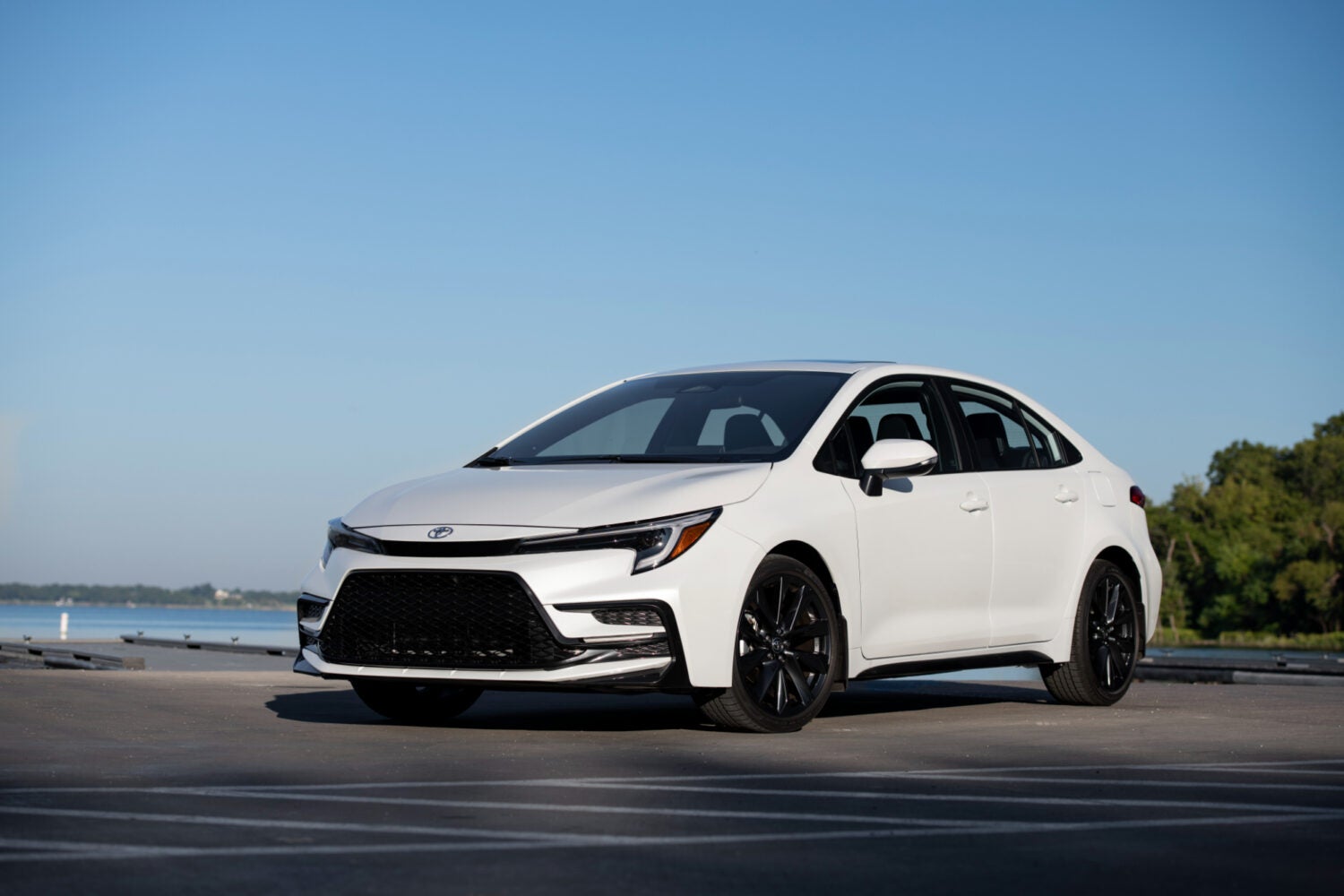
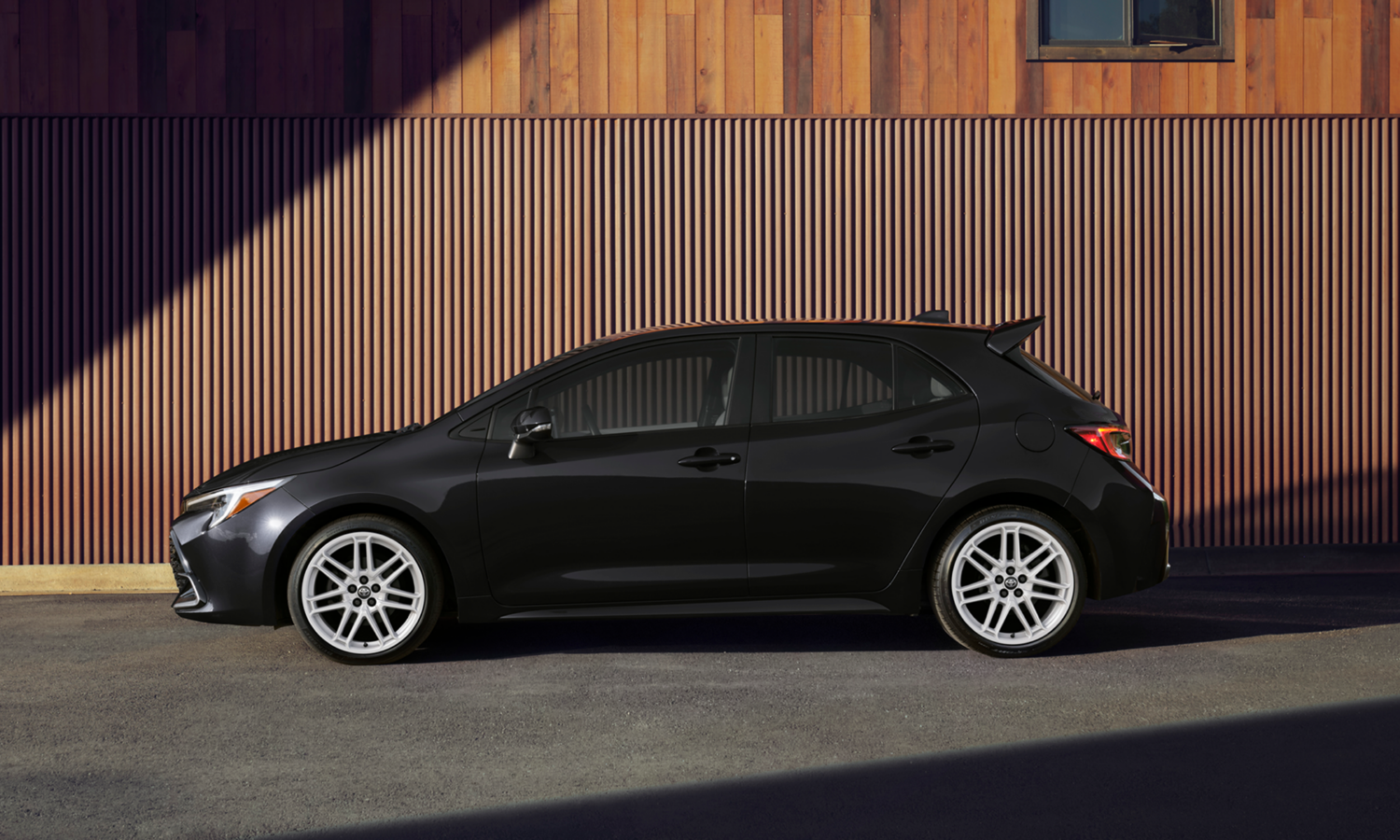
2026 Toyota Corolla at Toyota of Katy

Toyota Corolla vs. Corolla Cross: Which Is Right for Katy Drivers?

Every week we field the same question from Katy drivers: stick with a Corolla sedan, or step up to the Corolla Cross? Both wear the Corolla name, but they solve different problems depending on your route, whether you're crawling through Grand Parkway (99) traffic or logging longer stretches on I-10. This Corolla vs Corolla Cross comparison breaks down the real differences in space, mileage, and drivability so you can decide which one actually fits your routine. If you'd rather see them side by side in person, schedule a test drive with our team anytime. Corolla vs. Corolla Cross: Which Toyota Fits Your Katy Drive? The Corolla built its reputation on being an efficient, easy-to-park sedan for city and highway driving. The Corolla Cross takes that same foundation and literally raises it into a compact SUV with more cargo room and a higher seating position. The Corolla vs Corolla Cross decision comes down to whether you value a lower center of gravity and higher MPG, or extra clearance and hauling capacity for Katy life. Spec Corolla (Gas) Corolla Hybrid Corolla Cross (Gas) Corolla Cross Hybrid Fuel Economy (Combined) Up to 35 MPG (LE) Up to 50 MPG (LE, XLE FWD) 32 (FWD) / 30 (AWD) 42 MPG, AWD standard Drivetrain FWD FWD; AWD available on LE and SE FWD/available AWD AWD standard Cargo Volume 13.1 cu-ft trunk 13.1 cu-ft trunk 24 cu-ft FWD / 21.5 AWD (46.9 / 44 folded) 21.5 cu-ft (44 folded) Ground Clearance 5.3 in. 5.3 in. 8.1 in. 8.1 in. Trim Lineup LE, SE, XSE LE, SE, XLE L, LE, XLE Hybrid S, SE, XSE Size, Space, and Cargo: Sedan Efficiency vs. SUV Versatility Toyota builds the Corolla Cross with up to 94.9 cubic feet of passenger volume and, in front-wheel-drive models, a 24-cubic-foot cargo hold behind the rear seats that expands to 46.9 cubic feet with the 60/40 split seats folded. Add all-wheel drive, and those numbers come in at 21.5 and 44 cubic feet. The Corolla sedan offers 88.6 cubic feet of EPA interior volume and 13.1 cubic feet of trunk space. In a straightforward size comparison, the SUV wins on hauling capacity, while the sedan holds a slight edge in rear legroom. Corolla Cross Ground Clearance and Cargo Room The Corolla Cross's ground clearance is 8.1 inches, which helps at Katy's occasional flooded intersections and uneven parking lots. Toyota also gives it a payload rating between 1,120 and 1,175 pounds, depending on grade and drivetrain; towing capacity up to 1,500 pounds with a 150-pound maximum tongue weight; and roof rails standard from LE up, so it can handle small trailers or roof cargo on weekend trips out of town. Corolla Trunk Space and Interior Comfort The Corolla's size favors passenger comfort over cargo. Rear legroom measures 34.8 inches, nearly three inches more than the Corolla Cross offers, making the sedan a strong pick for drivers who regularly carry rear-seat passengers on longer rides but don't need much trunk space beyond groceries and luggage. Fuel Efficiency for Katy Commuters Fuel economy is often the deciding factor for commuters dealing with stop-and-go traffic on the Grand Parkway during rush hour, then settling into longer highway runs on I-10. Corolla vs. Corolla Hybrid Mileage The gap between gas and hybrid Corolla trims is significant. Gas trims return up to 35 MPG combined on the LE, while the Hybrid pushes that as high as 50 MPG combined on the FWD LE and XLE, with EPA estimates of 53 city and 46 highway. The Hybrid SE comes in at 47 MPG combined, and adding all-wheel drive to the LE or SE trades a few miles per gallon for traction. For daily Katy commuters logging highway miles on I-10, that efficiency adds up fast at the pump. Corolla Cross Gas and Hybrid MPG Corolla Cross fuel efficiency numbers are lower than the sedan's but remain competitive for a compact SUV. Gas FWD models earn 31 city, 33 highway, and 32 combined, while AWD trims see a slight dip to 29/31/30. The hybrid improves mileage, delivering an EPA-estimated 42 MPG combined, comes standard with AWD on every hybrid trim, and offers a range up to 445 miles. You gain SUV versatility here, but you give up some efficiency compared to the sedan. Driving Feel on Katy Roads and Houston Highways Both models feel Corolla distinctly behind the wheel, but the driving position and ride height change the experience in ways that matter on Katy's roads. Corolla's Nimble Handling on I-10 and the Grand Parkway The Corolla's lower stance and compact footprint make it easy to merge across feeder lanes and slip into tight parking spots near shopping centers. On I-10, the sedan's aerodynamic shape and responsive steering make longer commutes feel less tiring. Corolla Cross's Higher Clearance for Rain and Rough Pavement AWD is available on gas Corolla Cross trims and standard on hybrid trims. Toyota also builds the Corolla Cross Hybrid with a rear-axle electric motor that engages when it detects lost traction, a feature designed for slippery road conditions rather than off-roading. On Katy's rain-prone streets and post-storm rough pavement, that combination of clearance and standard AWD goes further than the sedan can, since the gas Corolla is front-wheel drive only, and the Hybrid offers AWD on the LE and SE trims only. Comparing Technology, Comfort, and Safety Features Toyota equips both models with wireless Apple CarPlay® and Android Auto™, along with Toyota Safety Sense™ 3.0 as standard equipment, including Pre-Collision with Pedestrian Detection, Lane Departure Alert with Steering Assist, Lane Tracing Assist, Dynamic Radar Cruise Control, and Road Sign Assist. New for 2026, Blind Spot Monitor with Rear Cross-Traffic Alert comes standard on every Corolla sedan grade and on the Corolla Cross LE, XLE, SE, and XSE grades (it's not included on the base L and S grades). Technology scales with trim on both models: base trims get an 8-inch touchscreen and 7-inch gauge cluster, while top trims add a 10.5-inch touchscreen, 12.3-inch digital instrument panel, and available 9-speaker JBL audio. On safety ratings, the 2026 Corolla scored "Good" in most IIHS tests but "Marginal" in the Moderate Overlap Front test, missing IIHS Top Safety Pick status because of that rear-seat result. The 2026 Corolla Cross, by comparison, narrowly missed earning an IIHS Top Safety Pick award, falling short in the updated moderate-overlap front test, along with several other Toyota SUVs. Trim Levels and Pricing Overview Rather than focusing on pricing figures, it's more useful to look at how features are built into each trim so you can match your budget to what you actually need. Corolla Trim Lineup The Corolla sedan lineup includes six trims: gas LE, SE, and XSE, plus Hybrid LE, SE, and XLE. The SE trim adds a multi-link rear suspension in place of the LE's torsion beam, 18-inch alloy wheels with a graphite finish, sport seats, and LED headlights. Moving up to XSE brings a moonroof, 12.3-inch digital instrument panel, SofTex synthetic leather, an 8-way power driver's seat, heated front seats, and a 10.5-inch touchscreen. If you want a Corolla hatchback instead, that's a separate three-trim lineup we also stock. Corolla Cross Trim Lineup The trim progression on the Corolla Cross looks similar. It also offers six trims: L, LE, and XLE on gas, plus Hybrid S, SE, and XSE. LE adds an available power moonroof, while XLE steps up with standard SofTex®-trimmed seating, heated front seats, and an available power liftgate, genuinely useful for anyone loading cargo in a parking lot. Which Toyota Matches Your Katy Lifestyle For most buyers, this boils down to how you actually use the vehicle day-to-day: chasing MPG on a solo commute or hauling gear on weekends. Pick the Corolla for Efficiency and Easy City Driving The Corolla makes sense if you're usually driving solo or with one passenger and want the best MPG possible for a daily commute. It's also the better call if parking in tight Katy lots is a regular headache, your cargo needs rarely go beyond groceries and luggage, and you like a lower, more connected feel on the highway. Pick the Corolla Cross for Extra Space and Capability The Corolla Cross earns its keep if you're regularly hauling gear, strollers, or sports equipment. It's also worth a look if you want AWD on hand for unpredictable weather, need the extra ground clearance for flood-prone streets, plan to tow a light trailer (up to 1,500 pounds), or just prefer a higher view of the road on I-10. Explore Corolla and Corolla Cross Inventory at Toyota of Katy Whichever direction you lean in this Corolla vs Corolla Cross comparison, the best way to confirm your choice is behind the wheel. Why Shop With Us Toyota of Katy has one convenient location serving Katy and West Houston, with a full inventory of new Corolla and Corolla Cross models, plus certified service, genuine parts, and a collision center if you ever need support after the sale. Schedule Your Test Drive Browse the Corolla and Corolla Cross lineups, or see our new vehicles for the full Toyota range. Stop by or contact us to set up a no-pressure test drive of both models today.

2026 Toyota Grand Highlander at Toyota of Katy

Grand Highlander vs. Sienna: Which Toyota Family Vehicle Is Best for Parents in Katy, TX?

Choosing between the Toyota Grand Highlander and the Toyota Sienna is one of the most common decisions parents wrestle with when shopping for a new vehicle. Both seat up to eight passengers, carry the Toyota badge, and hold up well to the demands of Katy's family life. They're built on completely different philosophies, though, and depending on how your family actually lives, that difference matters a lot. If you're a parent handling school pickups, weekly Costco hauls, and long weekend drives across Texas, this comparison should help you land on a confident, informed choice. Explore our Grand Highlander inventory or reach out to get started. more Grand Highlander vs. Sienna: Two Toyota Approaches to Family Life in Katy, TX What it comes down to is which vehicle actually fits your family's routine. The Grand Highlander takes a traditional SUV approach, with a commanding road presence and real towing capability. The Sienna is engineered from the ground up to make the daily mechanics of parenting easier, with a design built around accessibility and a hybrid powertrain standard across all trims. Neither approach is wrong. Katy's long commutes, sprawling suburbs, and genuine outdoor culture mean both vehicles find a natural home here. It's really about matching each vehicle's strengths to your actual schedule. How These Two Vehicles Are Built Differently The Grand Highlander: SUV Roots, Expanded for Families The Grand Highlander is Toyota's answer for families who have outgrown the standard Highlander but aren't ready to give up the SUV format. Toyota stretched the wheelbase and cabin to create genuinely usable third-row seating, with rear legroom that ranks well in its class. Engine options include a turbocharged four-cylinder gas engine, a standard hybrid system, and a Hybrid MAX turbocharged option, giving buyers real flexibility. For Katy families who tow a boat to Lake Conroe or simply want the elevated ride height and familiar SUV feel, the Grand Highlander delivers without sacrificing passenger space. The Sienna: A Minivan Engineered Around Family Convenience Every design decision in the Toyota Sienna points back to making daily parenting less chaotic. Power sliding rear doors eliminate the frustration of swinging a door open in a crowded Katy ISD pickup line or a tight parking garage. Getting a stroller loaded, wrestling a car seat into place, and helping a toddler buckle up on their own. All of it becomes noticeably smoother. Toyota also committed to offering only a hybrid powertrain across the entire Sienna lineup, so every buyer gets strong fuel economy without needing to upgrade. Quick Comparison: Grand Highlander vs. Sienna Feature Toyota Grand Highlander Toyota Sienna Body Style / Powertrain Three-row SUV; gas or hybrid Minivan; hybrid only Drivetrain FWD or AWD FWD or AWD Seating Capacity Up to 8 Up to 8 Cargo (behind 3rd row) 20.6 cu ft 33.5 cu ft Fuel Economy (combined) Up to 36 mpg (Hybrid XLE FWD); 33 to 34 mpg (Hybrid AWD); 22 to 24 mpg (gas) Up to 36 mpg Towing Capacity Up to 5,000 lbs (gas / Hybrid MAX); 3,500 lbs (standard Hybrid) 3,500 lbs Seating, Space, and Everyday Comfort Passenger Capacity and Cabin Flexibility Both vehicles can seat up to eight passengers, with configuration options that vary by trim. The Sienna offers a choice between an eight-seat bench and a seven-seat setup with second-row captain's chairs, which opens up a walk-through aisle to the third row. That access is a genuine quality-of-life feature when you need to reach kids in the back while parked. The flat floor throughout the cabin makes it even easier. The Grand Highlander also offers second-row captain's chairs on certain trims, with up to 153.3 cubic feet of EPA passenger volume (149.0 cubic feet with the panoramic moonroof). Its interior follows a more traditional SUV layout with thoughtful details that keep all three rows comfortable on longer drives, not just the front two. Cargo Room for School Runs, Costco Trips, and Weekend Adventures The Sienna's cargo advantage is real. With roughly 33.5 cubic feet behind the third row compared to the Grand Highlander's approximately 20.6 cubic feet, you'll feel the difference on any major grocery run or youth sports trip. The Sienna's tall, boxy interior lets you slide in grocery bags, sports equipment, or a full week of luggage without much reorganizing, and the low load floor means you're not lifting heavy items over a high rear bumper. The Grand Highlander holds its own with the third row folded and carries more than its exterior proportions suggest. For families who frequently haul large loads, though, the Sienna's edge in cargo space is hard to overlook. Fuel Efficiency and the West Houston Commute For families commuting along Highway 99 or the Katy Freeway every day, fuel costs are a real concern. Since every Sienna is a hybrid, every buyer gets approximately 36 mpg combined without needing to step up to a higher trim. The Grand Highlander Hybrid XLE FWD matches that figure at 36 mpg combined, while other Hybrid FWD and AWD configurations land between 33 and 34 mpg combined. The gas-powered Grand Highlander returns 22 to 24 mpg combined, depending on configuration, trailing both by a meaningful margin. For Katy's parents, sitting in school-zone congestion and running daily errands, the Sienna's purpose-built hybrid system tends to deliver consistent real-world efficiency in stop-and-go conditions. The Grand Highlander Hybrid is a genuinely efficient choice for an SUV, and for families who need towing capacity or prefer a raised ride height, it remains practical and economical. Kid-Friendly Features and Daily Usability Around Katy Daily usability comes down to the features you use most often. The Sienna's power sliding doors make a real difference in school parking lots and crowded shopping centers. The lower step-in height helps younger kids climb in on their own and reduces the amount of lifting parents have to do. Rear-seat entertainment options, USB ports throughout the cabin, and well-placed storage keep snacks and tablets within reach on longer days. The Grand Highlander brings its own advantages for families. Its available safety suite gives parents more confidence on crowded Texas highways, and the elevated seating position improves visibility for both driver and passengers. The premium interior on higher trims gives it a more polished feel overall. Road Trip Performance for Texas Travel Texas road trips demand a different kind of readiness. The Grand Highlander's towing capacity is a genuine differentiator. The standard Hybrid matches the Sienna at 3,500 lbs, but the gas-powered Grand Highlander and the Hybrid MAX both reach up to 5,000 lbs, which covers most boat trailers and campers for a Hill Country or Gulf Coast getaway. Higher ground clearance and a suspension tuned for a more engaged feel also open the door to light off-road use on ranch roads or campsite access paths. The Sienna's strengths on the road trip are comfort, efficiency, and passenger experience. The quieter cabin and flexible seating make long hauls genuinely enjoyable. Parents can reach kids in the second or third row during rest stops without contorting themselves, and consistent fuel economy across all configurations means fewer fuel stops on a long drive. Pricing, Value, and Choosing the Right Fit The value calculation here really depends on what matters most to your family. The Sienna's standard hybrid powertrain delivers fuel savings across every trim level, lowering the long-term cost of ownership no matter which configuration you choose. For families who prioritize everyday efficiency and practicality, that consistency adds up over time. The Grand Highlander's value case strengthens when you factor in its towing flexibility, broader SUV lifestyle appeal, and the premium technology available on higher trims. For families who want a vehicle that adapts to a wider range of activities, the added capability can justify the difference. Both are well-built, well-equipped vehicles from a brand with a strong record of reliability. Where your family spends most of its time determines which one is worth paying for. If you'd like a second opinion, contact our team in Katy, and we'll walk you through the specifics. Visit Toyota of Katy to Compare Both Vehicles in Person Reading a comparison is useful, but sitting in both vehicles back-to-back tells you what no article can. How the second row feels when you're loading a car seat, what the visibility is like from the driver's seat, and whether you can comfortably reach the third row with a sleeping child in the back. Those are the details that actually seal a decision. See Them Side by Side Toyota of Katy has served the Katy community for over 20 years and has earned the Toyota President's Award in recognition of that commitment. Our team carries both the Grand Highlander and the Sienna and can walk you through the differences based on your family's specific needs. We'd encourage you to load your actual gear into both cargo areas, check the third-row access with your own kids, and see which step-in height works better for your youngest. Schedule Your Test Drive Whether you're leaning toward the Grand Highlander's SUV versatility or the Sienna's everyday practicality, we're here to help you find the right fit for the way your family actually lives in Katy. Explore our Grand Highlander inventory online, or contact our team in Katy to schedule a test drive today.

A baby blue 2027 Toyota Land Cruiser

2027 Toyota Land Cruiser: What Katy, TX Drivers Should Know

The 2027 Toyota Land Cruiser continues Toyota’s return to a more focused, two-row off-road SUV, combining traditional Land Cruiser capability with a turbocharged hybrid powertrain and everyday road manners. For drivers in Katy, that combination can make a lot of sense: you get standard full-time 4WD and serious towing capability without sacrificing the comfort and technology expected of a modern SUV. But the Land Cruiser is not simply an SUV for occasional off-road adventures. Around Katy, the more interesting question is how its capability fits into everyday driving, from commuting along I-10 and the Grand Parkway to weekend trips outside the Houston area. At Toyota of Katy, we're also seeing the 2027 Land Cruiser begin to enter the local inventory pipeline. That gives shoppers an opportunity to start evaluating the new model before deciding between the Land Cruiser and other Toyota SUVs. What's New for the 2027 Toyota Land Cruiser? Toyota isn't completely redesigning the Land Cruiser for 2027. Instead, the new model builds on the current generation, adding several meaningful features. New available features for 2027 include: High-mounted air intake Heated and ventilated second-row outboard seats New Inked exterior color Continued availability of Toyota's i-FORCE MAX hybrid powertrain Standard full-time 4WD Toyota Safety Sense 3.0 The high-mounted air intake is particularly relevant to the Land Cruiser's off-road mission. Rather than being a feature most Katy drivers will use on their daily commute, it is designed for situations where the vehicle encounters dust, water, and challenging terrain. The available second-row heating and ventilation, meanwhile, are more directly relevant to everyday driving in Texas. When you're spending time in the SUV with passengers, comfort matters just as much as trail capability. Toyota has also kept the Land Cruiser's fundamental formula intact: a body-on-frame SUV built on the TNGA-F platform, the same truck-oriented architecture used by vehicles such as the Tacoma, Tundra, 4Runner, and Sequoia. 2027 Land Cruiser Performance and 4WD Every 2027 Land Cruiser uses Toyota's 2.4-liter turbocharged i-FORCE MAX hybrid powertrain. It produces: 326 net combined horsepower 465 lb.-ft. of torque 8-speed automatic transmission Standard full-time 4WD Up to 6,000 pounds of towing capacity The full-time 4WD system sends power continuously to both axles and works with an electronically controlled two-speed transfer case. The Land Cruiser also offers features such as Crawl Control and Multi-Terrain Select to help manage difficult surfaces. That capability is useful beyond extreme off-roading. If you're towing a trailer, traveling on loose surfaces, or heading toward a campsite where the pavement eventually disappears, having a four-wheel-drive system designed for those conditions can provide an additional margin of capability. How Much Can the 2027 Land Cruiser Tow? The 2027 Land Cruiser has a maximum towing capacity of 6,000 pounds when properly equipped. For a Katy-area owner, that can open up possibilities beyond simply carrying bikes or camping equipment. Depending on the trailer and its loaded weight, the Land Cruiser can be considered for hauling recreational equipment, smaller boats, or utility trailers. As always, actual towing suitability depends on the trailer's loaded weight, tongue weight, equipment, and other factors. The 6,000-pound figure shouldn't be treated as a recommendation to tow that much in every situation. Is the Land Cruiser Fuel-Efficient for an Off-Road SUV? The hybrid powertrain is one of the more interesting parts of the Land Cruiser. Toyota lists the 2027 Land Cruiser at an estimated 22 mpg city and 25 mpg highway, or 23 mpg combined. Those numbers don't turn the Land Cruiser into a fuel-sipping commuter crossover, but they are notable considering that this is a body-on-frame SUV with standard full-time 4WD, 326 horsepower, and 465 lb.-ft. of torque. For someone commuting around Katy during the week and heading out of town on weekends, the hybrid system gives the Land Cruiser a different balance from that of a traditional large gasoline-powered SUV. One thing to keep in mind when comparing advertised fuel economy is fuel requirement. Toyota's specifications for the Land Cruiser call for premium gasoline, so shoppers should consider fuel costs along with the EPA estimates when comparing it with other SUVs. What Is the 2027 Land Cruiser Like for Katy Driving? This is where the Land Cruiser gets more interesting than a simple specification sheet suggests. A Katy driver may spend most of the week on paved roads. I-10, the Grand Parkway, and local roads around Katy don't exactly demand Crawl Control or a two-speed transfer case. But that doesn't mean the Land Cruiser's capability is irrelevant. For the Daily Commute The Land Cruiser's 326-horsepower hybrid powertrain gives it plenty of performance for merging onto I-10 or the Grand Parkway. The hybrid setup also gives the SUV a different character from a conventional large-displacement gasoline engine. You don't have to use the Land Cruiser's off-road hardware every day to benefit from buying an SUV designed around it. For Texas Heat Katy's summer conditions can make interior comfort a bigger consideration than it might appear on a spec sheet. Available heated and ventilated seating can be useful when the SUV has been sitting outside during a hot afternoon. For families or groups traveling together, the availability of ventilation in the second row is particularly notable, as rear passengers aren't always the ones benefiting from the front-seat climate features. For Weekend Trips The Land Cruiser makes more sense if your weekends regularly take you beyond Katy. Its standard 4WD, 6,000-pound maximum towing capacity, and off-road hardware give it the flexibility to transition from highway driving to more demanding terrain without needing to switch to a specialized off-road vehicle. That's part of the appeal of the Land Cruiser: you don't have to choose between an SUV that's comfortable on the road and one that's engineered to handle difficult terrain. 2027 Toyota Land Cruiser 1958 vs. Land Cruiser Toyota offers the 2027 Land Cruiser in two main configurations: the Land Cruiser 1958 and the standard Land Cruiser. The 1958 starts at $58,080, while the Land Cruiser starts at $64,155 on Toyota's current consumer site. Both use the same 2.4-liter i-FORCE MAX hybrid powertrain, standard full-time 4WD, and are rated at 22/25 mpg city/highway. That means the decision isn't really about choosing between two completely different mechanical packages. Instead, the standard Land Cruiser is the better choice for shoppers who want more of the model's available technology, convenience, and premium features, while the 1958 offers a simpler entry point into the Land Cruiser lineup. If you're shopping based primarily on capability, it's worth comparing the equipment rather than assuming the more expensive version has a fundamentally different drivetrain. Technology in the 2027 Land Cruiser The Land Cruiser also gets modern technology that makes its old-school off-road mission easier to live with day-to-day. Depending on configuration, available technology includes: 12.3-inch Toyota Audio Multimedia touchscreen Wireless Apple CarPlay and Android Auto JBL audio system Panoramic View Monitor Multi-Terrain Monitor Toyota Safety Sense 3.0 2,400-watt power inverter The Multi-Terrain Monitor can be particularly useful when you're navigating technical terrain because cameras can provide views around the vehicle that aren't available from the driver's seat alone. For everyday Katy driving, features such as the multimedia system, smartphone connectivity, and driver-assistance technology will likely get far more use than the off-road cameras. That's part of what makes the current Land Cruiser different from a purpose-built trail vehicle: its technology is designed to work just as well when you're commuting as when you're exploring. How Much Cargo Space Does the Land Cruiser Have? The 2027 Land Cruiser seats five passengers, giving it a different mission from larger three-row Toyota SUVs such as the Sequoia. A current Toyota of Katy 2027 Land Cruiser listing shows 37.5 cubic feet of cargo volume behind the second row, along with a full-size spare tire. That five-seat configuration can actually be an advantage for shoppers who don't need a third row. Instead of paying for and carrying around additional seating capacity, you get a two-row SUV focused on passenger comfort, cargo room, and off-road capability. If your priority is carrying six or seven passengers regularly, however, the Land Cruiser isn't the Toyota SUV to choose. That's where models such as the Grand Highlander or Sequoia deserve a closer look. Is the 2027 Toyota Land Cruiser Right for You? The Land Cruiser makes the most sense for a particular type of SUV shopper. Consider the Land Cruiser if you want: Standard full-time 4WD Serious off-road capability A hybrid powertrain with 326 horsepower 465 lb.-ft. of torque Up to 6,000 pounds of towing capacity A two-row, five-passenger layout Modern technology without giving up traditional SUV capability An SUV that can handle both daily driving and weekend adventures You may want to consider another Toyota SUV if you need: Three rows of seating Maximum passenger capacity A primarily city-focused crossover The lowest possible purchase price A vehicle where off-road capability isn't a priority For many Katy shoppers, the decision ultimately comes down to how much they value capability. If your SUV will spend most of its time on paved roads and your top priorities are passenger space and fuel efficiency, another Toyota may be a better fit. If you want a vehicle that can handle the commute during the week and still be ready when the road gets rough on the weekend, the 2027 Land Cruiser is one of the more distinctive options in Toyota's lineup. See the 2027 Toyota Land Cruiser in Katy, TX The 2027 Land Cruiser brings together Toyota's off-road heritage, a turbocharged hybrid powertrain, and the technology expected from a modern SUV. Its standard 4WD, 326 horsepower, and 6,000-pound towing capacity give it legitimate capability, while available comfort features make it easier to live with as a daily driver. If you're shopping for a new Toyota Land Cruiser in Katy, TX, check the current inventory at Toyota of Katy for incoming and available 2027 models. You can also compare the Land Cruiser with other Toyota SUVs in person to see which combination of passenger space, capability, and everyday comfort makes the most sense for your driving needs. Toyota of Katy is located on Katy Freeway and offers new Toyota sales, financing, service, parts, and collision support in one location.

A white 2026 Toyota Tundra on the Toyota of Katy dealership lot.

2026 Toyota Tundra Capstone vs Platinum: Which Is Right for You?

Choosing between the Tundra Capstone vs Platinum comes down to how you actually live in Texas. A daily commute through the Energy Corridor asks different things of a truck than hauling gear to a job site or towing a boat on Saturday morning. Both trims sit at the top of the 2026 Toyota Tundra lineup, but they use different materials and make different promises about comfort under real Katy-area heat and sun exposure. If you'd like to see either trim in person, contact our Toyota of Katy team to schedule a look. Capstone vs Platinum: Two Approaches to Tundra Luxury in Texas The Platinum treats luxury as an upgrade on utility, layering premium materials and technology onto an already capable truck. The Capstone leans harder into cabin feel and finish, closer to what you'd expect from a luxury SUV than a pickup. For West Houston buyers, that distinction matters. Heat, sun, and the constant back-and-forth between daily comfort and weekend capability make every material choice count for more here than it would in a milder climate. Shared Foundations: What Every 2026 Tundra Capstone and Platinum Offer Both trims share the same strong core. The Capstone comes standard with the i-FORCE MAX twin-turbo 3.4L V6 hybrid powertrain, producing 437 hp and 583 lb-ft of torque, paired with 4WD. The Platinum's standard engine is the non-hybrid i-FORCE V6 (389 hp), with the i-FORCE MAX hybrid available in either 4x2 or 4WD. Both use the CrewMax cab, available with a 5.5-ft or 6.5-ft bed, and include Toyota Safety Sense 2.5 (pre-collision warning, lane tracing assist, and adaptive cruise with lane centering). Inside, both trims get a panoramic roof with power sunshade, a 14-inch touchscreen with wireless Apple CarPlay and Android Auto, a 12.3-inch digital gauge cluster, heated and ventilated front and rear seats, a heated and power-adjustable steering wheel, rear door sunshades, a digital rearview mirror, a surround-view camera with trailer back-up assist, wireless charging, and 12-speaker JBL premium audio. The shared content list here is long, which is worth knowing before you start reading price tags. Where the Capstone separates itself is in materials, wheels, and a handful of exclusives covered below. Spec Capstone Platinum Engine/Powertrain i-FORCE MAX 3.4L V6 hybrid, 437 hp / 583 lb-ft, standard i-FORCE 3.4L V6, 389 hp / 479 lb-ft standard; i-FORCE MAX hybrid available Drivetrain Standard 4WD 4x2 or 4WD Cab and Bed CrewMax only, single bed length CrewMax with 5.5-ft or 6.5-ft bed Towing (max) Up to 10,340 lbs Up to 11,310 lbs (4x2) Interior Materials Shale Premium Textured leather, dark American walnut wood-grain trim Genuine leather upholstery Capstone Exclusives Standard Head-Up Display, power-deploying running boards, power cargo bed step, acoustic front door glass, massaging front seats, 22-inch wheels Head-Up Display and power running boards available as options; 20-inch alloy wheels Fuel Economy 19/22 mpg city/highway (hybrid) 18/23 mpg city/highway (gas) Starting MSRP $80,800 $63,695 Towing and payload figures vary by cab, bed, and drivetrain configuration, with maximum payload reaching up to 1,850 lbs depending on setup, so confirm exact numbers for your preferred build when you reach out to the dealership. Interior Materials Built for Katy's Heat and Sun Exposure Katy summers push past 100 degrees for weeks at a time, and UV exposure barely lets up all year. That makes cabin materials a bigger deal here than they'd be in most other markets. Platinum's Leather Cabin: Heat Retention and Everyday Wear The Platinum's leather-trimmed 10-way power front seats feel upscale and resist scuffs and everyday wear well, which suits buyers who often load up the truck. Traditional leather does absorb and retain heat in direct sunlight, though, so a Platinum left in an open Katy parking lot will have hot seating surfaces until the ventilated seats and climate system catch up. Capstone's Shale Premium Textured Leather and Walnut Wood-Grain Trim Under Sun Stress The Capstone steps up to Shale Premium Textured leather, new for the 2026 model year, paired with dark American walnut wood-grain trim, a backlit CAPSTONE instrument panel badge, and metal speaker grilles. The textured surface has a different hand feel from the Platinum's smooth leather, and the wood grain adds visual warmth that reads closer to a luxury SUV cabin than to a traditional pickup. Whether that translates to measurably better long-term performance under sun exposure is not something Toyota publishes data on, so judge it by how it looks and feels to you rather than by a durability promise. Ventilated Seats and Climate Tech for Texas Summers Both trims include heated and ventilated front and rear seats along with the panoramic roof's power sunshade, and both are genuinely useful features for Texas driving. The Capstone adds massaging front seats, which matter less for heat than for the two-hour Friday crawl home. Neither trim leaves you struggling through a Katy summer commute. Exterior Finishes: Which Trim Resists Fade and Heat Damage Best Both trims use Toyota paint and coatings engineered to resist UV degradation, though the Capstone's exterior skews more distinctive, with 22-inch dark chrome and machined alloy wheels versus the Platinum's 20-inch alloys. Both hold up well in Texas conditions with regular maintenance. Choosing a darker exterior color on either trim means more heat absorption, so lighter shades are worth considering for comfort and long-term finish quality. Towing and Payload for Texas Work and Weekend Life The Tundra is a real work truck regardless of trim. The Platinum can tow up to 11,310 lbs in a 4x2 configuration, which tends to suit buyers who regularly haul horses, boats, or equipment. The Capstone tows up to 10,340 lbs in CrewMax 4WD form, still substantial, but its identity leans more toward elevated daily comfort than maximum utility. For summer towing, remember that hybrid batteries and tires run hotter under load in extreme heat, so check tire pressure and plan rest stops on long hauls to Lake Conroe or beyond. If you'd like to see how either trim tows in person, view our 2026 Tundra inventory at Toyota of Katy. Technology and Comfort Features Compared Infotainment, Sound, and Driver-Assist Differences Both trims share a 14-inch touchscreen, a 12.3-inch digital gauge cluster, wireless Apple CarPlay and Android Auto, 12-speaker JBL premium audio, a digital rearview mirror, a surround-view camera, and full Toyota Safety Sense 2.5 coverage. The genuine tech difference is narrower than the price gap suggests: the Head-Up Display comes standard on the Capstone and is available as an option on the Platinum, so if the HUD is what you want, you can get there without stepping up a full trim. The Capstone's acoustic front-door glass is the hardest to get your way into, and it is what you notice most on a long Energy Corridor commute. Panoramic Roof and Solar Load: A Local Consideration The panoramic glass roof standard on both trims increases the glass area, which means more solar load enters the cabin during Texas summers. Using the power sunshade whenever the truck is parked outside and running the climate system for a few minutes before driving helps offset that heat gain. It's a small habit that keeps both trims comfortable even in peak summer sun. Price Gap Explained: What You're Really Paying For The Capstone starts at an MSRP of $80,800, while the Platinum starts from $63,695 in 4x2 CrewMax form, a gap of roughly $17,105 that narrows once you opt for a Platinum with hybrid power. That premium buys the Shale Premium Textured leather and walnut trim, the standard i-FORCE MAX hybrid, standard 4WD, 22-inch wheels, massaging front seats, acoustic front door glass, power-deploying running boards, a power cargo bed step, and a standard Head-Up Display. Worth noting: a hybrid Platinum lands around $70,605, which is the more honest comparison if the powertrain is what you actually want. Prices exclude destination and dealer fees. The Platinum is genuinely luxurious on its own and doesn't feel like a compromise. It becomes one only if you specifically want the Capstone's upgraded materials and exclusive tech. If you prioritize versatility and towing capacity without paying for features you won't use, the Platinum is a strong value. If long-term interior comfort and materials performance under the Texas sun are your top priority, the Capstone's price is easier to justify. Which Trim Matches Your Texas Driving Lifestyle? Best for Daily Commuting and City Comfort For buyers who spend most of their time commuting through Katy and the Energy Corridor, the Platinum delivers excellent daily comfort without complications. Its leather-trimmed seats, 12.3-inch digital gauge cluster, and full safety suite cover what most drivers need. The Capstone pushes daily comfort further still, particularly in how the cabin feels and sounds, and that difference is noticeable every day for high-mileage drivers. Best for Towing, Hauling, and Work-to-Weekend Versatility The Platinum is the stronger pick if your truck regularly doubles as a work vehicle. It balances luxury with practical towing capability, up to 11,310 lbs in 4x2 form, and doesn't feel out of place at a job site or pulling a trailer down US 290. The Capstone handles substantial loads too, but it suits buyers who tow occasionally rather than constantly, buyers who want a refined daily driver first and a capable tow vehicle second. FAQs: Tundra Capstone vs Platinum Which Tundra trim is most luxurious? The Capstone is Toyota's highest Tundra trim and the most luxurious option. Its Shale Premium Textured leather, walnut wood-grain trim, massaging front seats, acoustic front door glass, and standard Head-Up Display make it the clear choice for maximum refinement. Keep in mind that the Platinum already includes much of the Capstone's technology as standard, including JBL audio, a digital rearview mirror, and a surround-view camera. Is the Capstone worth the extra cost over Platinum? For buyers prioritizing interior material quality and exclusive comfort features, the added cost is worthwhile. If the Platinum's already strong feature set meets your needs, that price difference may be better spent elsewhere. Which trim holds up best in extreme Texas heat and sun? Both trims use the same body, glass, paint, and climate hardware, and both come with ventilated front and rear seats and a power sunshade for the panoramic roof. The upholstery differs in texture and feel, but Toyota does not publish comparative heat or UV performance data for the two materials, so neither trim can be objectively considered the better choice for sun exposure. Parking in shade, using the sunshade, and running the climate system before you drive will do more for summer comfort than the trim badge. Do Capstone and Platinum tow the same amount? No. The Platinum tows up to 11,310 lbs in 4x2 form, while the Capstone tows up to 10,340 lbs in CrewMax 4WD. The Platinum's standard engine is the non-hybrid i-FORCE V6, with the i-FORCE MAX hybrid available; it is typically better suited to heavier, more frequent towing needs. Compare Tundra Capstone and Platinum at Toyota of Katy See Both Trims in Person The most reliable way to decide between the Tundra Capstone vs Platinum is to get behind the wheel of both. As a certified Toyota dealer with deep roots in the Katy community, we carry new Tundra inventory at every trim level and can walk you through how each performs in real Texas conditions. Schedule Your Visit View our 2026 Tundra inventory online, or contact our Toyota of Katy team to schedule a test drive and get a personalized quote. We're ready to help you find the right fit, whether that's Capstone's premium materials or Platinum's balanced capabilities.

A dark blue Toyota RAV4 on the Toyota of Katy dealership lot

Best Toyota Hybrids for the Katy to Downtown Houston Commute

If you drive I-10 from Katy to Downtown Houston every day, you already know what it costs you. The stretch between the Grand Parkway and Downtown ranks among the most congested in Texas, and it drains your wallet at the pump if you're behind the wheel of a conventional gas-powered vehicle. Choosing the right Toyota hybrid for this specific route can flip that script, turning daily stop-and-go traffic into a surprisingly efficient drive. Explore Toyota's hybrid and electrified lineup to see which model fits your commute before you read on. more Why the Katy-to-Downtown I-10 Commute Calls for a Hybrid This particular stretch of highway punishes conventional engines in ways many drivers don't fully grasp until they see their fuel bill. Stop-and-Go Traffic and Fuel Drain on I-10 A gas engine burns fuel whether the car is moving or not. During the crawl through the Katy Freeway's congestion zones, especially between Barker Cypress and the Loop, conventional engines idle constantly. Every red light, every brake tap, every crawling acceleration cycle bleeds fuel without moving you forward. Over a typical 40-plus-mile round trip, five days a week, that adds up fast. The corridor is also unusually variable, with drivers cruising at highway speed past Fry Road one moment and braking to a near-stop by Beltway 8 the next. That constant back-and-forth between highway and city-style driving is exactly where conventional powertrains struggle, and where hybrids do their best work. How Hybrid Technology Turns Your Commute into Savings Toyota's hybrid system, the Toyota Hybrid Synergy Drive, is designed around the driving patterns of urban and suburban commutes. When you decelerate or brake, the electric motor works as a generator, recovering kinetic energy and storing it in the battery. That energy then powers the electric motor during low-speed acceleration and EV-mode driving, so the gas engine doesn't have to work as hard when you're merging back into traffic. On a route like I-10 West, this regenerative braking cycle repeats dozens of times per commute, and hybrids tend to hit their best real-world fuel economy in exactly the conditions where gas-only vehicles suffer most. Best Toyota Hybrids for the Katy Commuter Toyota offers a range of hybrid models, and the differences between them matter when you're choosing based on a specific commute. Each brings something different to the I-10 route. Toyota Prius: Maximum MPG for Budget-Focused Drivers The Prius remains the benchmark for fuel economy in Toyota's lineup, rated at 57 city / 56 highway / 57 combined MPG. Its aerodynamic profile and refined hybrid powertrain deliver efficiency that's hard to match at any price point. If cutting fuel cost on the daily Katy commute is your top priority, the Prius gets you there most directly, and the current generation pairs that efficiency with sharper styling and a cleaner, more driver-focused cabin. Toyota Corolla Cross Hybrid: Compact Efficiency for Downtown Parking Finding parking Downtown changes when you're driving a compact car. The Corolla Cross Hybrid, rated at 46 city / 39 highway / 42 combined MPG, threads a useful needle between SUV versatility and car-like maneuverability, making it a practical choice for commuters who also need to navigate Houston's Downtown parking structures. Its slightly elevated ride height gives the driver better sightlines in congested traffic, and it handles weekend errands around Katy just as well as it handles the weekday grind Downtown. Toyota Camry Hybrid: Smooth Highway Merging and Comfort The Camry Hybrid pairs commuter efficiency with genuine driving comfort, rated at 53 city / 50 highway / 51 combined MPG on the LE FWD trim, with 225 hp in FWD configuration and 232 hp available in AWD. That power advantage matters when merging onto I-10 from a Katy on-ramp and needing to match highway speed quickly. Inside, the Camry offers a 12.3-inch touchscreen, a 12.3-inch digital instrument cluster on XLE and XSE trims, and an available 10-inch head-up display, all backed by Toyota Safety Sense 3.0, which includes pre-collision detection, adaptive cruise control, and lane-following assist. Long commutes feel less draining when the ride is smooth and noise is well-managed, and the Camry excels on both counts. Toyota RAV4 Hybrid: Versatile Power for Commute and Weekend The RAV4 Hybrid brings a well-rounded package to the lineup, rated at 41 city / 38 highway / 39 combined MPG with 219 hp. It pairs a capable AWD system with strong hybrid efficiency, matching the performance of non-hybrid compact SUVs while still saving real money at the pump. For Katy families who use one vehicle for everything, the RAV4 Hybrid's elevated ride height and cargo versatility make it just as ready for a weekend trip as it is for the daily commute. Comparing MPG, Comfort, and Value for the I-10 Route Choosing between these models comes down to how you weigh fuel savings against comfort, size, and highway feel. Fuel Economy and Cost Savings Over a Typical Commute A typical Katy-to-Downtown round trip on I-10 runs 40 miles or more, depending on your starting point, and, driven five days a week, that mileage adds up fast. The combined MPG figures break down like this: Model Combined MPG Estimated Monthly Fuel Cost* Prius 57 Lowest of the group Camry Hybrid 51 Slightly higher than Prius, well below non-hybrids Corolla Cross Hybrid 42 Moderate RAV4 Hybrid 39 Highest of the group, still well below non-hybrid SUVs \*Estimates based on typical I-10 commute mileage and Houston-area fuel pricing. Actual costs vary with driving habits and local gas prices. The Prius leads on pure MPG, followed by the Camry Hybrid, then the Corolla Cross Hybrid and RAV4 Hybrid. All four beat their non-hybrid counterparts by a meaningful margin, and for commuters driving this route five days a week, any of them is a real upgrade over a conventional gas engine. Cabin Comfort and Tech for Stop-and-Go Traffic Comfort matters more on a long commute than most buyers account for. Sitting in traffic for 30 to 60 minutes each way takes a real physical and mental toll over time. The Camry Hybrid offers the most refined cabin experience of the group, with available heated and ventilated seating, a quiet ride, and supportive seats. The RAV4 Hybrid comes close while adding SUV versatility. The Prius and Corolla Cross Hybrid are comfortable for their size but feel more compact inside. All four models are backed by Toyota Safety Sense, and on a stop-and-go interstate, features like lane-keeping assist and adaptive cruise control do real work, reducing fatigue. Which Toyota Hybrid Handles Daily Highway Driving Best Highway driving is where the Camry Hybrid and RAV4 Hybrid pull ahead of the smaller models. Their powertrains offer more passing power, better high-speed stability, and a more planted feel at sustained freeway speeds. When I-10 opens up west of the Grand Parkway, these two give you confidence that the compact models can't fully match. That said, the Prius and Corolla Cross Hybrid are fully capable highway vehicles. Their efficiency advantage is most evident in city driving, but they handle freeway segments of the commute without issue. Drivers who want a more composed highway feel should lean toward the Camry or RAV4. Drivers chasing raw efficiency will find the Prius holds its ground. Our Recommendation: Best Toyota Hybrid for This Commute For most Katy commuters driving I-10 to Downtown Houston, we recommend the Camry Hybrid. It strikes the strongest balance of the group, delivering real fuel savings in stop-and-go traffic while still having the power to merge confidently onto I-10 and the comfort to make a long stretch through the Energy Corridor bearable. Runner-Up Picks Based on Your Priorities The Prius is the strongest runner-up if maximizing fuel economy is your single top priority. The RAV4 Hybrid earns its spot for commuters who also need cargo space and AWD confidence during Houston's sudden rainstorms. The Corolla Cross Hybrid is the right call for drivers who want a compact SUV footprint that parks easily Downtown and handles the mixed-use nature of the I-10 commute well. Test Drive Your Best Toyota Hybrid at Toyota of Katy You don't have to guess which hybrid fits your commute. Toyota of Katy carries the full Toyota hybrid lineup, including the Prius, Corolla Cross Hybrid, Camry Hybrid, and RAV4 Hybrid, so you can compare them side by side and get behind the wheel before deciding. We're located at 21555 Katy Freeway, Katy, TX 77450, right on the same highway you drive every day, and our team understands the Katy-to-Downtown corridor because we're part of this community. Local Financing, Incentives, and Trade-In Options We offer financing and leasing options tailored to a range of budgets, including access to Toyota Financial Services programs that can make hybrid ownership more accessible than many buyers expect. We also accept trade-ins, which can offset a significant portion of the cost of switching to a hybrid. Our finance team can walk you through current incentives, available rate programs, and how your trade-in factors into the deal. Schedule Your Test Drive Near Katy and West Houston Ready to find your best Toyota hybrid for the I-10 commute? Contact Toyota of Katy or call us at 844-809-1063 to schedule a test drive, check hybrid inventory by model and trim, or ask about current offers. Our service department is also on-site for maintenance and warranty work, so Toyota of Katy stays with you well past the sale as a long-term partner for hybrid ownership in Katy and the Greater Houston area.

DSC_0055

2026 Toyota Crown vs. Camry: Which Sedan Is Best for Katy Commuters?

If you spend your mornings inching through I-10 traffic or commuting between Katy and Houston's Energy Corridor, your vehicle makes a bigger difference than you might think. The 2026 Toyota Crown and 2026 Toyota Camry are both excellent commuter sedans, but they serve different priorities. Whether you value premium comfort or exceptional fuel efficiency, understanding the differences can help you choose the right fit. For more than 20 years, Toyota of Katy has helped local drivers find the Toyota that best fits their lifestyle. more Toyota Crown or Camry: Which Luxury Commuter Fits West Houston? The Toyota Crown or Camry question comes down to what you're chasing behind the wheel. The Crown is Toyota's elevated play, built for drivers who want a premium experience without giving up practicality for style. The Camry, on the other hand, built its name on decades of reliable, efficient driving that never demanded much attention. West Houston's road mix is unique: high-speed stretches on I-10 and the Grand Parkway, followed by stop-and-go reality on surface streets around Katy and the Energy Corridor. Whichever car handles both comfortably and cost-effectively deserves your attention. Crown vs. Camry: Quick Comparison for Katy Commuters Spec Toyota Crown Toyota Camry Engine/Powertrain 2.5L Hybrid (standard); 2.4L Turbo Hybrid MAX (Platinum only) 2.5L hybrid four-cylinder (all trims) Max Horsepower 236 hp standard; 340 hp Hybrid MAX 225 hp (FWD); 232 hp (AWD) Combined MPG 41 combined (standard); ~30 combined (Hybrid MAX) Up to 52 city / 49 highway (LE FWD) Drivetrain Standard AWD, all trims FWD standard; AWD available on select trims Length ~196 in. ~193.5 in. Best For Highway-heavy commutes, elevated comfort City driving, efficiency, tighter parking The 2026 Crown arrives with a beefier available hybrid option, a taller stance, and an interior designed with luxury in mind. The Camry sticks with its familiar sedan shape but goes fully hybrid across every trim, landing it among the most fuel-efficient non-plug-in sedans you can buy. Both are available at Toyota of Katy, where you can contact our team to compare them in person. Meet the 2026 Toyota Crown: Elevated Luxury for Your Commute The 2026 Toyota Crown is a deliberate step upmarket from the typical Camry-shaped image most people associate with "Toyota." It rides higher than a traditional sedan, sits lower than a typical SUV, and carves out a style space of its own. Toyota built the standard hybrid system to deliver a smooth, responsive ride without a charging cable, something that matters when your morning starts on a 70 mph stretch of I-10. Crown Trim Levels and Standout Features The Crown lineup runs from XLE (from roughly $41,440) through Limited (from roughly $45,950), the Nightshade Edition (from roughly $48,765, with 21-inch matte-black wheels and dark badging, handles, and mirror caps), and Platinum (from roughly $54,990), the only trim offering the 340-hp Hybrid MAX powertrain. Standard leather seating, a panoramic fixed-glass roof, and heated and ventilated front seats run across all trims, alongside a large touchscreen, wireless Apple CarPlay and Android Auto, and Toyota Safety Sense. Higher trims add premium JBL audio, a head-up display, and ambient lighting. Comfort, Refinement, and Ride Quality The Crown's suspension tuning absorbs Houston's road imperfections with authority, keeping the cabin quiet even on rough freeway surfaces. Rear passengers get noticeably more legroom than in the Camry, which makes the Crown a compelling option for families or professionals who often carry clients. If your commute regularly stretches beyond 45 minutes each way, that refinement starts to feel less like an indulgence and more like a practical necessity. You can browse our current Crown inventory to see available trims. Meet the 2026 Toyota Camry: The Proven Value Commuter The 2026 Toyota Camry is one of the smartest evolutions in Toyota's lineup in years. For the first time, every Camry trim is hybrid, meaning every buyer benefits from improved fuel economy without paying extra. The Camry's profile is familiar, but its updated interior and technology bring it firmly into modern territory. It's not chasing luxury sedan status. It just does everything well, consistently, year after year. Camry Trim Levels and Standout Features The Camry lineup includes LE, SE, XLE, XSE (with AWD available), and Nightshade, starting around $29,600 MSRP with top trims landing in the mid-$30,000 range. Even the base trim includes a touchscreen, wireless smartphone integration, and Toyota Safety Sense 3.0. Mid-range trims add a sunroof, synthetic leather seating, and a larger display, while upper trims bring real leather, a JBL premium audio system, and a digital instrument cluster. The XSE trim adds two-tone exterior options for a sportier look. Efficiency and Everyday Comfort The full-hybrid Camry delivers up to 52 MPG city / 49 MPG highway on LE FWD, making it one of the most cost-effective choices in its segment for high-mileage commuters. Over the course of a year, those pump savings add up, particularly for drivers logging 20,000-plus miles annually on West Houston roads. Inside, the seating position is lower and more traditional than the Crown's, cargo space is generous for a sedan, and the layout prioritizes ease of use. Explore the current Camry inventory to compare trims side by side. Which Fits Your West Houston Drive Best? The right choice depends on the kind of driving that fills your week. Best for I-10 and Grand Parkway Highway Commutes For drivers spending most of their time on I-10, Highway 6, or the Grand Parkway, the Crown earns its price premium. The available 340-hp Hybrid MAX pulls confidently at highway speeds, and the cabin's noise isolation keeps wind and road noise out during longer stretches, even through Houston's sudden heavy rain. If your commute is primarily highway driving and you value comfort over a 50-minute round trip, the Crown delivers a meaningfully better experience. Best for City Driving Around Katy The Camry is the smarter pick for city-based driving around Katy and the surface streets of the Energy Corridor. It's easier to maneuver in tight parking situations, its hybrid system shines in stop-and-go traffic through regenerative braking, and its lower operating cost keeps ownership affordable. For commuters whose days involve short hops between errands, school pickups, and office parking garages, the Camry's practical footprint and fuel economy make it the clear everyday choice. Pricing and Value: Getting the Most for Your Commute The Camry's lower starting price, around $29,600 MSRP, makes it accessible to a broader range of buyers, and its full-hybrid powertrain across all trims means fuel savings from the first trim level up. The Crown starts around $41,440, a gap of roughly $11,800 or more, reflecting real differences in materials, ride quality, tech content, and overall sophistication. Pricing can vary with incentives and market conditions, so the team at Toyota of Katy, located at 21555 Katy Fwy, Katy, TX 77450, can walk you through current figures and financing options for either vehicle. Test Drive the Crown or Camry at Toyota of Katy Reading about these vehicles gets you part of the way there. Sitting in them closes the gap. The difference in ride height between the Crown and Camry is immediately apparent, and once you're behind the wheel, you'll notice that the seat feel, cabin noise, and steering response tell their own story, too. Schedule a visit and compare both models on familiar West Houston roads. Our sales team can help you compare against your own routes and budget, with no pressure either way. Ready to Decide? Whether you're leaning toward the Crown's luxury positioning or the Camry's proven efficiency, contact our team at Toyota of Katy to schedule a test drive and get behind the wheel of each. Frequently Asked Questions Does the 2026 Camry come as a hybrid? Yes. The 2026 Camry is hybrid-only across all trim levels, so every buyer gets the fuel-efficiency benefits without having to choose a specific powertrain option. Which is better for highway driving? The Crown is the stronger choice for sustained highway commutes. Its more powerful available hybrid system, quieter cabin, and smoother suspension make long stretches on I-10 or the Grand Parkway noticeably more comfortable. Which is the better value for daily commuting? The Camry offers a lower starting price and up to 52 city/49 highway MPG, making it the better value pick for cost-conscious commuters. The Crown offers more for drivers who prioritize luxury and are willing to pay a roughly $ 11,800 premium. Does the Crown or Camry offer AWD? The Crown comes with standard AWD across all trims, while the Camry offers AWD only on select trims. This matters for commuters wanting consistent traction in Houston's sudden rain. Can I test drive both at Toyota of Katy? Absolutely. Toyota of Katy carries both models and welcomes test drives. Schedule one through our contact page or visit us at 21555 Katy Fwy in Katy, TX.

pexels-gregory-costa-5733709

Most Reliable Used Toyota Models for Commuters in Katy, TX

Katy commuters don't get to baby their vehicles. Between the relentless stop-and-go along the Katy Freeway/I-10, summer heat that pushes cooling systems to their limits, and long stretches on the Grand Parkway, your car works hard just getting you to and from work each day. That's why so many local drivers gravitate toward used Toyotas. When our technicians at Toyota of Katy walk the used lot, certain models earn our trust over and over again. Below, we break down the most reliable used Toyotas for Katy and Greater Houston area commuters, which model years to prioritize, and what to check before you sign anything. If you'd rather start browsing now, you can browse our used Toyota inventory anytime. more Why Katy Commuters Trust These Used Toyotas Toyota's reputation for reliability comes from decades of disciplined engineering and thorough testing, which translates into fewer unexpected repair bills for commuters logging serious miles each week. The Corolla, for example, holds a RepairPal reliability rating of 4.5 out of 5.0, ranking first out of 36 compact cars, with an average annual repair cost of $362. That kind of track record is why a well-maintained Camry or Corolla from several years back can still perform like a solid daily driver today. What Our Technicians Look for in a Reliable Vehicle Before any used Toyota earns a spot on our lot, it goes through a detailed evaluation. Our technicians start with a maintenance history. A vehicle with regular oil changes, fluid services, and scheduled inspections tells a very different story than one with inconsistent upkeep. We also pay close attention to engine performance and transmission health, since these components are most likely to require costly repairs if neglected. Katy Traffic, Heat, and Highway Conditions That Test Durability Driving in Katy exposes any weakness in a vehicle fairly quickly. Summer temperatures regularly exceed 95 degrees, which strains cooling systems, hybrid battery health, and rubber components throughout the drivetrain. Add in dense commuter traffic around the Katy Freeway corridor, and you're asking a vehicle to handle prolonged idle time and frequent acceleration cycles every day. Our technicians routinely check coolant condition and hose integrity on used Toyotas coming off Katy commutes, since heat cycling is one of the fastest ways to age a cooling system in this climate. The Most Reliable Used Toyota Sedans for Commuting Sedans remain a smart choice for Katy commuters who want reliable daily transportation without the fuel costs of larger vehicles. Toyota Corolla: Affordable and Efficient for City Driving The Corolla handles a daily commute without drama. Its compact footprint makes it easy to navigate urban congestion, and its fuel efficiency helps keep costs manageable as gas prices fluctuate. Backed by that RepairPal ranking, the Corolla is one of the most dependable, lowest-cost-to-own vehicles in its class, and its lightweight design helps it feel nimble through Katy's tighter surface streets. Toyota Camry: Comfortable and Built to Last The Camry is a different animal: bigger, more comfortable on longer drives, and a favorite among buyers who spend serious time behind the wheel each week. Its smooth ride makes the stretch along I-10 more bearable, and its midsize sedan's durability generally holds up well in Katy's heat and traffic. A well-maintained Camry with high mileage can still offer years of reliable service, which is why professionals and families in the area continue to choose it. Toyota Prius: Top Fuel Economy for I-10 and Grand Parkway Drives The Prius brings a distinct advantage to Katy's commuting mix. Its hybrid powertrain is a fuel-efficiency leader for the kind of mixed driving that defines life here, with highway stretches on the Grand Parkway blending into suburban crawls through local corridors. Beyond savings at the pump, well-maintained Prius examples have a strong reliability record, making it a legitimate choice for efficiency-minded commuters. Drivers who want that hybrid efficiency in a smaller footprint should also consider the Corolla Hybrid, which combines the Corolla's proven reliability with meaningful fuel savings. The Most Reliable Used Toyota SUVs for Commuting SUVs continue to dominate the Katy market thanks to more cargo room, higher driving positions, and the flexibility to handle both family duties and solo commutes. Toyota RAV4: Versatile for Mixed Driving Conditions The RAV4 consistently earns high marks for handling varied driving conditions without sacrificing efficiency. Whether it's school drop-off, weekend gear hauling, or a long run into Houston, the RAV4 adapts well. It's a dependable, fuel-efficient choice for mixed driving, and used examples in good condition tend to retain their reliability across a wide mileage range. Toyota Highlander: Dependable Choice for Families The Highlander suits buyers who need more passenger capacity without moving into full-size truck territory. Its three-row seating and family-friendly utility make it a go-to for growing households, and its reputation for dependability holds up across model years. For families balancing school runs, commutes, and weekend activities, it remains one of the more sensible choices in Toyota's lineup. Comparison of Reliable Used Toyota Commuter Models Here's how those five models stack up side by side, so you can weigh body type, powertrain, and reliability against what your own commute actually demands. Model Body Type Powertrain Notable Reliability Trait Corolla Compact sedan Gas or hybrid (Corolla Hybrid) RepairPal 4.5/5.0, ranked #1 of 36 compact cars Camry Midsize sedan Gas Strong durability in heat and heavy traffic Prius Midsize hybrid hatchback Hybrid Fuel-efficiency leader for I-10/Grand Parkway commutes RAV4 Compact SUV Gas Versatile, dependable, fuel-efficient for mixed driving Highlander Midsize SUV Gas Dependable family SUV with third-row utility Best Model Years and What to Watch For Model year matters, and certain years reflect meaningful engineering improvements. Our technicians generally point to the 2019 Corolla and the 2021 Prius as strong picks among used Toyotas that come through the shop, though these are general recommendations based on what we've observed, not guarantees for any individual vehicle. As noted above, the Corolla Hybrid is also worth a look for buyers who want reliability and fuel savings in one package. Common Issues Seen in Older Used Toyotas High-mileage automatic transmissions can develop hesitation if fluid changes are skipped. Older Prius models may show some degradation in hybrid battery capacity, which affects fuel economy more than drivability but is worth factoring into your offer. Inspect older models thoroughly and account for any deferred maintenance when negotiating. A used Toyota with known minor quirks and a transparent history is often still a better value than a newer vehicle from a less proven brand. Choosing the Right Reliable Toyota for Your Daily Drive There's no single "best" used Toyota for every commuter. The right choice depends on your daily drive, how many passengers you carry, and how you want to balance upfront cost against long-term operating expenses. Short Commutes vs. Long Highway Drives For shorter city runs through Katy's neighborhoods, the Corolla is the sensible pick. It's light on gas, easy to park, and simple to live with day-to-day. If your commute involves extended highway mileage, the Camry or Prius earns its place with ride comfort and fuel economy over distance. SUV buyers handling a mix of family needs and longer commutes will find the RAV4 strikes a good practical balance, while buyers who genuinely need three rows should consider the Highlander. A Highlander is overkill for a solo driver covering five miles a day; a Corolla may not cut it for a family making twice-daily school runs. What to Check Before Buying a Used Toyota Our technicians recommend a focused checklist before any used Toyota purchase: Review the maintenance history for documented oil changes, tire rotations, and scheduled service. Inspect the engine for leaks, unusual noise, or signs of oil consumption. Check the cooling system, including hoses, coolant condition, and radiator integrity, especially important given Katy's summer heat. Confirm proper hybrid system function on Prius or Corolla Hybrid models, including battery performance. Look for signs of wear or rust on the undercarriage, tires, and brake components. A pre-purchase inspection by a qualified technician should also cover transmission response and any evidence of prior collision repairs that weren't properly completed. Keeping Your Used Toyota Reliable for the Long Haul Maintenance Cadence Buying a reliable used Toyota is only part of the equation. Keeping it reliable requires a consistent service routine. We generally recommend oil changes every 5,000 to 7,500 miles, with a more thorough inspection every 15,000 miles. Skipping these might seem harmless in the short term, but deferred maintenance accumulates faster than most drivers expect, especially in Katy's heat. Trust Factory-Recommended Service The service department at Toyota of Katy provides factory-recommended maintenance and repairs using genuine Toyota parts, helping used-vehicle owners maintain the quality standards the brand is built on. Scheduling regular service appointments is one of the simplest ways to protect the investment you made in a used Toyota. Explore Reliable Used Toyotas at Toyota of Katy Located at 21555 Katy Freeway, Katy, TX 77450, Toyota of Katy offers a broad inventory of used and certified pre-owned vehicles evaluated by technicians who know these platforms inside and out. Whether you're looking for a fuel-efficient Corolla, a family-ready Highlander, or a hybrid Prius for those long Grand Parkway drives, our team can help you find the right fit for your commute and budget. CPO evaluations help verify a vehicle's condition, though they don't guarantee it. Ready to Find Your Match You can browse our used Toyota inventory on our website or contact our team with questions about a specific model or year. Beyond the sale, we support customers through financing, genuine parts, and certified service, backed by a dedicated collision center, giving Katy and Greater Houston area drivers a complete resource for owning a Toyota long-term. Frequently Asked Questions What is the most reliable used Toyota for commuting in Katy? The Toyota Corolla is one of the most reliable used Toyotas for commuting, given its RepairPal ranking and low average repair costs, making it a natural fit for Katy commuters who want dependable, affordable transportation. Drivers who prioritize comfort on longer drives or need more space often find the Camry and RAV4 equally strong contenders. Which Toyota model years should I prioritize when buying used? Our shop generally points to the 2019 Corolla and 2021 Prius as strong picks among the used Toyotas we evaluate, and to the Corolla Hybrid for buyers who want reliability and fuel savings in one package. These are general observations from our technicians, not guarantees, so a pre-purchase inspection is still worthwhile. How often should a used Toyota be serviced to stay reliable? We recommend oil changes every 5,000 to 7,500 miles, with a more thorough inspection every 15,000 miles. For Katy commuters dealing with heat and heavy traffic, sticking to that schedule helps prevent minor issues from compounding into major repairs over time.

DSC_0037

2027 Toyota Tundra Preview: What Katy Truck Buyers Should Know

If you’re planning to buy a full-size pickup in the near future, the 2027 Toyota Tundra is likely already on your radar. Whether you need a truck for towing equipment around Katy, tackling demanding job sites across the Greater Houston area, or heading out for weekends at the Gulf Coast or Texas Hill Country, the Toyota Tundra has built a reputation for delivering dependable capability, advanced technology, and everyday comfort. Toyota has begun releasing official information about the 2027 Toyota Tundra, and now is an excellent time to learn what makes the current Tundra one of the most competitive full-size trucks on the market and what prospective buyers can expect as more details become available. At Toyota of Katy, we’re here to help you stay informed and find the right Tundra for your needs—whether you’re ready to purchase today or planning for the future. more What We Know About the 2027 Toyota Tundra Toyota officially introduced the 2027 Tundra in July 2026, revealing updated exterior styling, the new Trailhunter package, TRD Pro upgrades, a standard 14-inch multimedia screen, Toyota Safety Sense 4.0, and other enhancements. Full specifications, pricing, and additional details are planned for fall 2026. In the meantime, the current-generation Toyota Tundra continues to receive praise for its powerful twin-turbo engine lineup, impressive towing capabilities, advanced safety technologies, and refined interior. Because the truck was completely redesigned for its current generation, Toyota is building on that strong foundation with targeted updates for 2027. As Toyota releases more official information, we’ll update this guide with confirmed specifications, available trims, towing capacities, technology features, and pricing. Why the Toyota Tundra Continues to Stand Out Even as more 2027 details arrive, it’s worth understanding why the Toyota Tundra remains a popular choice for drivers throughout Katy and the Greater Houston area. Powerful Performance Today’s Toyota Tundra offers turbocharged V6 powertrains that deliver strong acceleration, confident highway passing, and excellent towing performance. Drivers appreciate the balance of capability and efficiency compared to traditional V8-powered competitors. Whether you’re pulling a work trailer along I-10, towing a boat toward Galveston, or hauling supplies between job sites in West Houston, the Tundra is engineered to handle demanding tasks with confidence. Built for Texas Work Truck ownership in Texas often means balancing professional responsibilities with weekend recreation, and the Toyota Tundra is designed for both. Many Katy-area drivers rely on their trucks for: Construction and contractor work Landscaping businesses Ranch and agricultural needs Recreational towing Family road trips Home improvement projects With multiple cab configurations, bed lengths, and trim levels available, the Tundra offers solutions for a wide variety of lifestyles and professions. Capability That Fits Life Around Katy The Greater Houston area presents unique challenges for truck owners. Daily commutes can quickly transition into heavy-duty work, and weekend adventures often involve towing or hauling. Current Toyota Tundra models offer features designed to make those jobs easier, including: Multiple drive modes Available four-wheel drive Trailer backup assistance Integrated trailer brake controller Multi-view camera systems Durable composite truck bed construction Available power tailgate These features help simplify everything from navigating busy Houston traffic to backing a trailer into a campsite or boat ramp. Advanced Technology for Everyday Driving Modern pickup trucks have become much more than work vehicles, and the Toyota Tundra reflects that evolution. Drivers can expect a cabin designed around convenience and connectivity, with available features such as: Large multimedia touchscreen Wireless Apple CarPlay® compatibility Wireless Android Auto™ compatibility Available premium audio Wireless smartphone charging Digital gauge cluster Multiple USB charging ports Available panoramic moonroof Whether you're commuting into Houston or spending hours behind the wheel between job sites, these technologies help keep every drive comfortable and connected. Toyota Safety Comes Standard Safety remains one of Toyota's strongest advantages. Current Tundra models include Toyota Safety Sense™ technologies that assist drivers with everyday driving awareness. Depending on the model and equipment, available driver-assistance features may include: Pre-Collision System with Pedestrian Detection Lane Departure Alert Lane Tracing Assist Dynamic Radar Cruise Control Road Sign Assist Automatic High Beams Blind Spot Monitor Rear Cross-Traffic Alert While Toyota has not announced the exact safety equipment for the 2027 Toyota Tundra, advanced driver-assistance technologies are expected to remain an important part of the truck's design. Which Tundra Is Right for You? One reason the Toyota Tundra appeals to such a broad audience is the variety of available trims. Current Tundra shoppers can choose from trims that range from practical work trucks to premium luxury models and serious off-road performers. Popular options include: SR – Built for dependable everyday work. SR5 – A balance of value, technology, and capability. Limited – Added comfort and premium amenities. Platinum – Luxury-focused interior with advanced features. 1794 Edition – Texas-inspired styling and upscale craftsmanship. TRD Pro – Engineered for serious off-road adventures. Capstone – The most luxurious Tundra available. Toyota has not yet confirmed the trim lineup for the 2027 model year, but future buyers can likely expect a similarly diverse selection designed to meet a wide range of needs. Should You Wait for the 2027 Toyota Tundra? That depends on your timeline. If you need a truck today, the current Toyota Tundra already offers impressive capability, modern technology, and proven reliability. There’s no need to delay your purchase solely because of the upcoming model. However, if you’re planning to purchase in the future, keeping an eye on the 2027 Toyota Tundra makes sense. As additional official announcements become available this fall, you’ll have the latest information to help determine whether waiting is the right choice. Our team at Toyota of Katy is happy to answer questions about current inventory and help customers stay informed about upcoming Toyota models. Why Shop at Toyota of Katy? For more than 20 years, Toyota of Katy has proudly served drivers throughout Katy, Houston, Cypress, Richmond, Fulshear, Brookshire, and surrounding communities. Our knowledgeable team understands that every truck buyer has different priorities. Some customers need maximum towing capability, while others focus on family comfort, off-road performance, or long-term value. When you visit Toyota of Katy, we’ll help you compare available Tundra trims, explain towing and payload capabilities, discuss available technology packages, and answer your questions so you can make a confident decision. Stay Updated on the 2027 Toyota Tundra at Toyota of Katy Toyota has already begun sharing details about the 2027 Toyota Tundra, and more complete information is expected this fall. As new details become available, Toyota of Katy will continue updating this page with confirmed specifications, pricing, trim levels, technology features, and availability. In the meantime, we invite you to explore our current Toyota Tundra inventory to see everything today’s models have to offer. Whether you’re looking for a dependable work truck, an off-road-ready adventure vehicle, or a premium full-size pickup for everyday driving, our team is here to help you find the right fit. Visit Toyota of Katy at 21555 Katy Freeway, Katy, TX 77450, browse our online inventory, or contact us today to learn more about the Toyota Tundra and stay informed about future model announcements.

Contact Us

Fill out this form below and we'll contact you shortly
*Required Fields