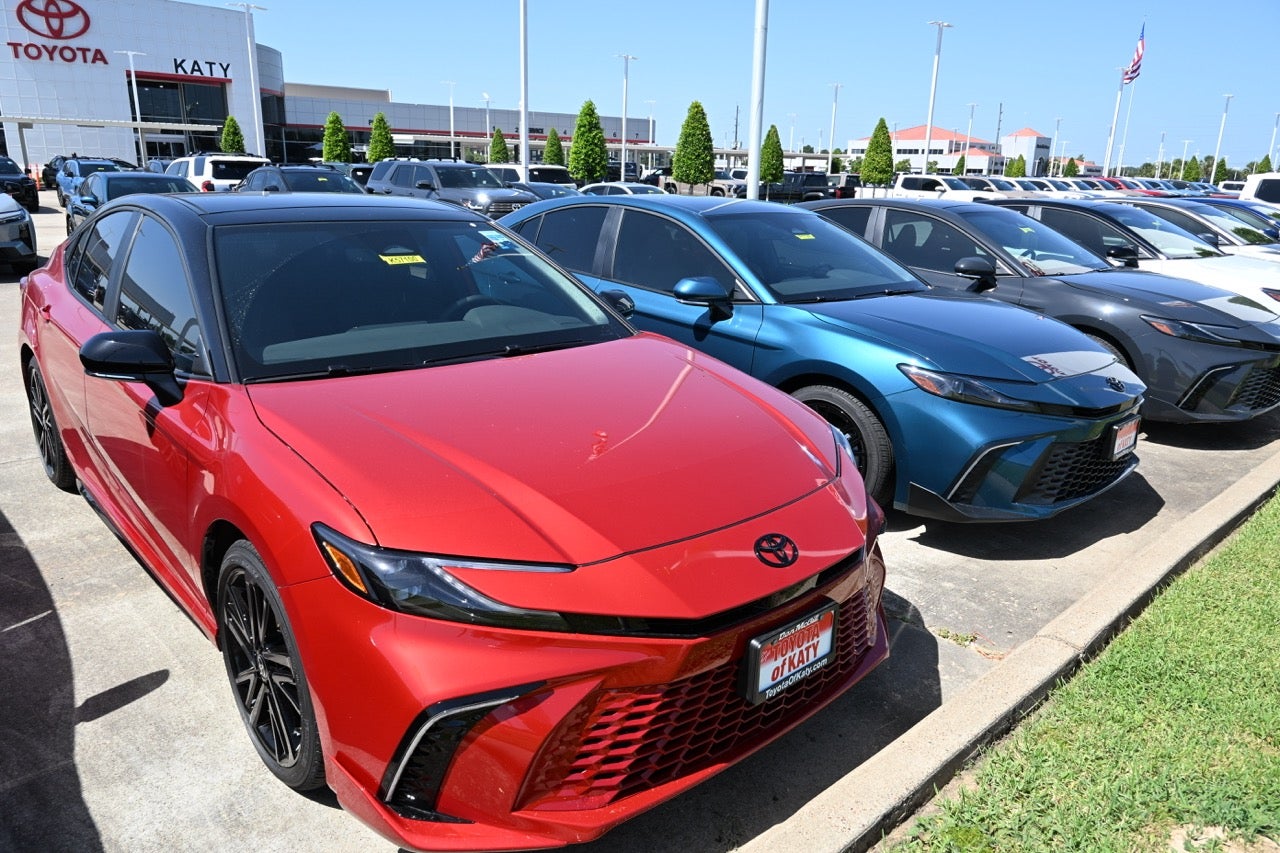


If you're driving the Katy Freeway every weekday, a few extra miles per gallon add up fast. That's why the camry hybrid vs prius question comes up so often among Katy commuters heading into Houston. Both hybrids wear the Toyota badge and share the same core engineering, but they solve the daily grind differently. Below is a rundown of the real differences, backed by the numbers. The Katy-to-Houston Commute: Why Your Hybrid Choice Matters Katy sits roughly 25 to 35 miles west of downtown Houston, and most residents rely on I-10 West (the Katy Freeway) or TX-99 (the Grand Parkway) to get where they're going. A typical Katy-to-Houston run covers about 28.7 miles one way and takes around 34 minutes in normal traffic. Morning rush hour tells a different story: expect 45 to 60 minutes most days, and longer still once you hit the I-610 West Loop, which has been ranked the most congested road segment in the state for three years running. The segment that earns that title begins right where the Katy Freeway meets it. The Katy Freeway itself is one of the widest highways in the world, running up to 12 main lanes plus four managed lanes, but volume still wins most mornings. When you're spending that much time behind the wheel, fuel economy and reliability aren't extras. They're daily necessities. Camry Hybrid vs. Prius: Quick Comparison Snapshot Both cars share the same hybrid philosophy, but their execution diverges. The Camry Hybrid is a midsize sedan built for space and a quieter ride, while the Prius is a five-door hatchback tuned for efficiency and cargo flexibility. The base LE FWD trims stack up like this: Spec Camry Hybrid LE FWD Prius LE FWD Engine/Powertrain 2.5L 4-cyl HEV 2.0L 4-cyl + 83-kW motor, 222V lithium-ion battery Drivetrain FWD (AWD available) FWD (AWD available) Fuel Economy (City/Hwy/Combined) 53/50/51 MPG 57 combined Horsepower 225 hp 194 hp combined Cargo Volume 15.1 cu ft (trunk) 23.8 cu ft (behind rear seats) Safety Tech TSS 3.0, 2026 IIHS Top Safety Pick+ TSS 3.0, 2026 IIHS Top Safety Pick+ If you'd like to see these trims in person, browse our current inventory before making the trip out. Fuel Economy for Your Daily I-10 Commute The Prius LE FWD tops out at 57 city, 56 highway, and 57 combined MPG, the best rating between the two hybrids, while the Camry Hybrid LE FWD delivers 52 city, 49 highway, and 51 combined. Move up to the Camry's SE, Nightshade, XSE, or XLE trims, and combined economy drops to 46 MPG, and choosing AWD costs about 1 MPG on the LE and about 3 MPG on the XSE. The Prius follows a similar pattern, with the LE AWD at 54 combined and the XLE, Nightshade, and Limited landing at 52 combined with FWD or 49 with AWD. Both run on regular unleaded, so neither asks for a premium at the pump, and the Camry's 13.0-gallon tank gives it roughly 663 miles of range on the LE FWD trim. Numbers on a spec sheet only tell part of the story. Against that 28.7-mile Katy-to-Houston commute, using an estimated gas price of $3.00 per gallon, a Camry Hybrid LE averaging 51 MPG combined would burn about 1.13 gallons round trip (57.4 miles), costing roughly $3.38 a day. A Prius LE at 57 MPG combined would use about 1.01 gallons for the same round trip, costing close to $3.02. That's a difference of about 36 cents a day, or around $7 to $9 a month, depending on how many days you're driving into the office. Over a year that lands near $90, and since the base Prius also starts about $750 below the base Camry Hybrid, there's no price premium to earn back first. Neither car wins outright; it comes down to how much room you need against how much you value the efficiency. For a closer look, explore our Toyota hybrid selection. Space and Comfort for Commuters and Families The Prius edges out the Camry slightly in front legroom, 43.2 inches versus 42.1 inches, but the story flips in the back seat. The Camry offers 38.0 inches of rear legroom compared to the Prius's 34.8 inches, a gap that matters if you regularly haul passengers or car seats, or just want to stretch out. Total passenger volume follows the same trend, with the Camry offering up to 99.9 cubic feet of space compared to the Prius's 91.2 cubic feet. If you're weighing size for family use, the Camry's extra rear-seat room is the more practical pick. Flip the comparison to cargo, and the Prius pulls ahead. Its hatchback design gives it about 23.8 cubic feet behind the rear seats on the LE trim, or 20.3 cubic feet on the XLE, Nightshade, and Limited grades, and the 60/40 split-fold rear seats open up considerably more room for longer loads. The Camry's trunk tops out at 15.1 cubic feet, plenty for groceries and luggage, but without the same flexibility for bulkier items like furniture or sports gear. Anyone weighing cargo capacity will find the Prius the more versatile hauler. Highway Performance and Driving Feel Performance-wise, these two are closer than you might expect. Independent testing puts the front-drive Prius at roughly 7.7 seconds to 60 MPH and the front-drive Camry Hybrid at roughly 7.8, essentially a wash, with Camry AWD models a few tenths quicker thanks to the extra rear motor. Both transition between electric and gasoline power smoothly through their eCVTs, so there's no jarring handoff at highway speeds. The Camry tends to feel larger, quieter, and more composed on longer drives, which lines up with its sedan proportions, while the Prius counters with nimble handling that some drivers prefer in tighter city traffic. If you want extra traction for Gulf Coast downpours, the Camry's optional electronic on-demand AWD uses a dedicated rear-axle motor with no driveshaft, so it doesn't eat into cargo space either. Technology and Safety Features for Long Commutes Both models come standard with Toyota Safety Sense 3.0, which includes pre-collision detection with pedestrian and cyclist recognition, full-speed range dynamic radar cruise control, lane departure alert with steering assist, lane tracing assist, road sign assist, automatic high beams, and proactive driving assist. That's the same safety backbone across both cars, so neither one cuts corners on the freeway. Where they differ is in cabin tech. The Camry's XLE and XSE trims get a standard 12.3-inch digital gauge cluster, while LE, SE, and Nightshade trims use a 7-inch gauge cluster. All Camry trims start with an 8-inch touchscreen, with a 12.3-inch touchscreen available on higher trims. Wireless Apple CarPlay and Android Auto come standard across the Camry lineup, along with a standard wireless charging pad on all trims. The Prius keeps things simple, with an 8-inch touchscreen standard on the LE, XLE, and Nightshade; a 12.3-inch screen standard on the Limited; and that larger screen offered as an option on the XLE and Nightshade. Both the 2026 Camry Hybrid and Prius earned IIHS Top Safety Pick+ status, with the Camry rated Good in all three crash tests and in both front crash prevention evaluations, though its headlights were rated Acceptable. Both vehicles are backed by eight standard airbags. The Prius earned Good ratings across the same crash tests, with its headlights likewise rated Acceptable rather than Good. Pricing and Total Cost of Ownership Pricing is where this comparison gets interesting, because the two are nearly neck and neck. The Camry Hybrid starts at $29,600 for the LE FWD and climbs to $36,000 for the XSE FWD across five trims, all before a $1,195 destination charge. AWD adds $1,525 across the board, pushing the top XSE AWD to $37,525. The Prius starts at $28,550 for the LE FWD before the same $1,195 destination charge, with AWD adding $1,400. Moving up the Prius ladder, the XLE FWD runs $31,995, with a 12.3-inch screen and a panoramic roof, while the Nightshade lands at $32,800 FWD or $34,325 AWD, and the Limited tops the range. Base to base, the Prius comes in about $1,050 under the Camry Hybrid, so the price gap alone won't make the decision for you. All figures here are MSRP and subject to change, so we always recommend confirming current pricing with our team before you decide. If financing is on your mind, get a head start through our finance application. Toyota's reputation for dependability shows up in both models. Consumer Reports has again named Toyota the most dependable brand in its Annual Auto Reliability Survey, and hybrids consistently score well in that data. J.D. Power rated the 2026 Prius at 78 out of 100 overall, with quality and reliability at 75, driving experience at 76, resale value at 87, and dealership experience at 77. RepairPal gives the Prius a reliability score of 4.0 out of 5, with average annual repair costs of around $408 and a low unscheduled repair visit rate of 0.4. Both hybrids carry Toyota's 10-year/150,000-mile limited hybrid battery warranty, and according to Torque News, maintenance costs on the hybrid systems themselves are virtually identical between the two. Which Hybrid Fits Your Katy-to-Houston Drive? The right pick comes down to your specific commute, household, and budget, not some abstract idea of which car is "better." Choose the Camry Hybrid If… You regularly carry rear-seat passengers, want more shoulder and legroom for a growing family, or prefer a quieter, more composed ride on longer stretches of I-10. It's also the pick if you want AWD without sacrificing trunk space, thanks to its rear-motor setup. Browse our new Camry inventory in Katy to see current trims and availability. Choose the Prius If… You're a solo or two-person commuter prioritizing the best possible MPG, need hatchback-style cargo flexibility for gear or weekend trips, and don't mind a tighter rear seat in exchange for efficiency. This is exactly the tradeoff many drivers debate: efficiency and cargo versatility against sedan comfort and rear-seat room. Explore Camry Hybrid and Prius Models at Toyota of Katy Specs and comparison charts only go so far. The best way to settle the debate is to sit in both, adjust the seats, and feel how each one handles a stretch of the Katy Freeway. We serve drivers throughout Katy, Cinco Ranch, Fulshear, and West Houston from our location at 21555 Katy Freeway, Katy, TX 77450, with more than 600 vehicles on our lot spanning new, used, and certified pre-owned options, including our full Toyota hybrid selection featuring the Camry Hybrid, RAV4 Hybrid, and Highlander Hybrid. Contact us to schedule a test drive and put both hybrids to the test on your own Katy-to-Houston route.