

Blog / Toyota Highlander

Used Toyota Highlander vs. RAV4: Which SUV Is Right for Katy Drivers?

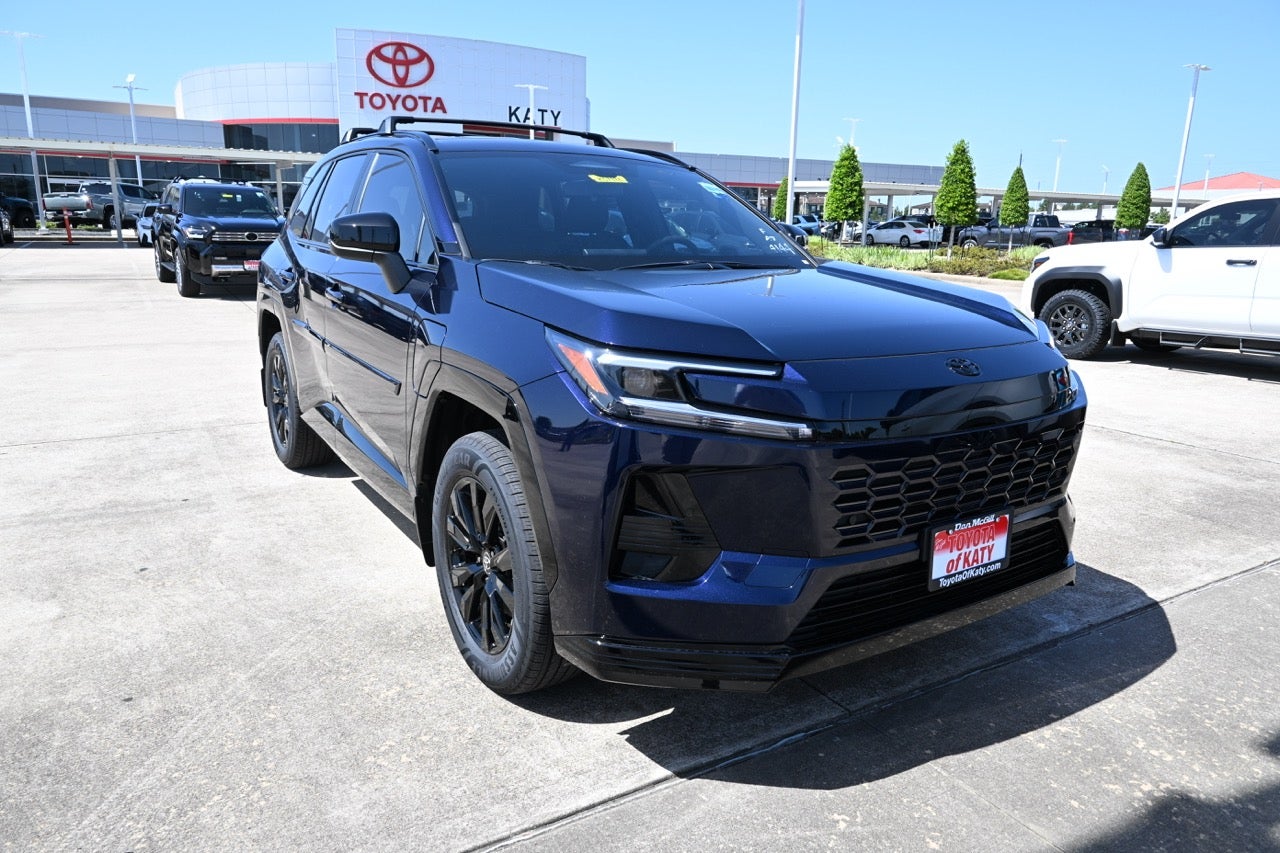
2026 Toyota RAV4 at Toyota of Katy

Shoppers browsing the used lot at Toyota of Katy tend to land on the same two names: Highlander and RAV4. Both wear the Toyota badge that Katy families trust, but they solve very different problems. When you're weighing Highlander vs RAV4 for your next pre-owned purchase, the decision comes down to which one holds its value, fits your driveway, and matches how you actually use a vehicle day to day.

Used Highlander vs. RAV4: Which SUV Wins in the Katy Market?

Larger households tend to lean toward the Highlander for its extra seating and cargo space. Smaller families and daily commuters tend to gravitate toward the RAV4's compact, efficient setup. Both have earned reputations for dependability and strong resale numbers, so the decision usually comes down to lifestyle rather than quality. Whether you're cross-shopping these two for a growing family or a solo commuter grabbing something efficient for Energy Corridor traffic, the used market gives you plenty of model years to choose from at every budget. If you'd like to see what's currently available, you can explore our used Toyota SUVs in Katy anytime while you're deciding.

Meet the Contenders: Toyota Highlander and RAV4 Generations Explained

Specs shifted quite a bit by generation, so it helps to know what changed under the hood before comparing numbers.

Used Toyota Highlander: Size, Power, and Model Year Highlights

The third-generation Highlander (2014-2019, XU50) offered a 2.7L four-cylinder rated at 185 hp, a 3.5L V6, and a 3.5L V6 hybrid producing up to 306 hp from 2017, paired with FWD or AWD and seating for up to eight. Watch the safety cutoff here: Toyota Safety Sense P became standard across the Highlander line for 2017, bringing forward-collision warning, automatic emergency braking, lane-departure warning, and adaptive cruise control.

On 2014-2016 models, those features were optional and largely limited to top trims, so a 2017-2019 example is the safer buy in this generation. The fourth generation (2020-2025, XU70) launched with a 295-hp 3.5L V6 and an 8-speed automatic, added Toyota Safety Sense 2.0 as standard, then switched to a 265-hp turbocharged 2.4L four-cylinder for 2023 alongside a 243-hp Highlander Hybrid. Trims run L and LE up through XLE, Limited, and Platinum, and Toyota added the three-row Grand Highlander for 2024.

Used Toyota RAV4: Efficiency, Versatility, and Model Year Highlights

The fourth-generation RAV4 (2013-2018) dropped the V6 and third-row option in favor of a more efficient transmission, and Toyota introduced the first RAV4 Hybrid for 2016-2018. The fifth generation (2019-2025) moved to the TNGA-K platform with a 203-hp 2.5L engine, a 219-hp RAV4 Hybrid, and a 302-hp RAV4 Prime plug-in hybrid available from 2021-2024 (renamed RAV4 Plug-in Hybrid for 2025). The Adventure trim was offered from 2019 through 2024, while Toyota added the TRD Off-Road trim starting in 2020; both were offered through 2024. Looking ahead, the sixth generation (2026+) will drop gas-only powertrains entirely in favor of Hybrid or PHEV options, worth keeping in mind if you're cross-shopping late-model used inventory.

Resale Value Showdown: Which Toyota SUV Holds Its Value Longer

The numbers get interesting for used-car shoppers. According to iSeeCars resale data, the Highlander depreciates by 36.3% over five years, while the RAV4 depreciates by just 25.0%, an 11.3-point advantage for the RAV4. Put another way, the RAV4 holds about 75% of its value at the five-year mark, compared with roughly 64% for the Highlander.

Both beat their segments, but the RAV4 beats its own by more: the compact SUV average is 39.9% depreciation, so the RAV4 runs nearly 15 points better than its class, while the Highlander's 36.3% is about 10 points better than the 46.3% midsize average. If protecting your investment is the priority, the RAV4 has a stronger track record, and either one can run well past 100,000 miles with proper care.

Reliability and Ownership Costs for Katy Drivers

Reliability is close between these two, but the RAV4 edges ahead slightly. iSeeCars rates the RAV4's overall quality at 8.8 out of 10, ranking it 4th among 66 crossover SUVs, while the Highlander scores 8.5, placing it 5th. Reliability scores follow a similar pattern, with the RAV4 at 8.2 and the Highlander at 8.1. RepairPal gives both models a 4.0 out of 5.0 rating, but the RAV4 ranks 3rd among 26 compact SUVs, with average annual repair costs of $429, compared with a $521 average for compact SUVs. The Highlander ranks 7th among 26 midsize SUVs, averaging $489 annually, compared with a midsize average of $573. Both average just 0.3 unscheduled repairs per year, and both the 2021-2025 RAV4 and 2021-2025 Highlander carry NHTSA's full 5-out-of-5 overall rating.

Two powertrain notes worth weighing: the RAV4's 2.5L four-cylinder has been in service since 2019 across several Toyota lines and is one of the more workshop-friendly engines around, while the Highlander's 2.4L turbo only arrived for 2023 and has a much shorter service record. On hybrids, Toyota covers the battery for 10 years or 150,000 miles from first use on 2020-and-later models, and that coverage transfers with the vehicle.

Feature and Performance Comparison by Generation

Specs vary a lot depending on the model year you're looking at, so it pays to know exactly what changed and when. Here's how the two compare across the generations you'll actually find on a used lot.


Spec

Highlander

RAV4

Engine/Powertrain

3rd gen (2014–2019): 2.7L I4 185 hp, 3.5L V6, 3.5L V6 Hybrid up to 306 hp; 4th gen (2020–2025): 3.5L V6 295 hp [2020–2022], 2.4L turbo I4 265 hp [2023+], Hybrid 243 hp

4th gen (2013–2018): I4, Hybrid [2016–2018]; 5th gen (2019–2025): 2.5L I4 203 hp, Hybrid 219 hp, Prime 302 hp [2021–2024]

Drivetrain

FWD/AWD

FWD/AWD

Cargo Volume (4th/5th gen)

16 / 48.4 / 84.3 cu ft

37.6 / 69.8 cu ft

Seating Capacity

7–8 (3 rows, 27.7 in third-row legroom)

5 (2 rows)

Fuel Economy (2023 gas)

24–25 mpg combined

28–30 mpg combined

Fuel Economy (2023 hybrid)

36 mpg combined

39 mpg combined

Max Towing

5,000 lbs (V6) / 3,500 lbs (Hybrid)

3,500 lbs (Adventure, TRD Off-Road) / 1,750 lbs (Hybrid) / 2,500 lbs (Prime)

5-Year Depreciation (iSeeCars)

36.3%

25.0%

5-Year Resale Retention

~64%

~75%

Interior Space, Towing, and Family-Friendly Features

The cargo space gap between these two is significant. On the fourth-generation Highlander (2020-2025), you get 16 cubic feet behind the third row, 48.4 cubic feet with the third row folded, and 84.3 cubic feet with the second row also folded. The fifth-generation RAV4 (2019-2025) offers 37.6 cubic feet behind the rear seats and 69.8 cubic feet with the second row folded.

In terms of dimensions and seating, the Highlander offers three rows for 7 to 8 passengers, while the RAV4 sticks to two rows and 5 seats. Be realistic about that third row: on the 2014-2019 Highlander, it measures 27.7 inches of legroom, which is a kids-only space rather than a true seven-seat cabin. If your household is four or five people, you're paying for a row you'll rarely use.

Towing favors the Highlander: the V6 (2020-2022) pulls up to 5,000 lbs, and the Highlander Hybrid (2020-2025) up to 3,500 lbs. The base gas RAV4 (2019-2024) tops out around 1,500 lbs, Adventure and TRD Off-Road trims reach 3,500 lbs, the RAV4 Hybrid manages 1,750 lbs, and the RAV4 Prime (2021-2024) reaches 2,500 lbs. For 2025, the RAV4 gas model remains at 1,500 lbs since the Adventure and TRD Off-Road trims were dropped.

On the tech side, the Highlander offers an available 12.3-inch touchscreen versus the RAV4's 10.5-inch max, three-zone climate control versus two-zone, standard wireless CarPlay and Android Auto, where the RAV4 defaults to wired, and an available 11-speaker JBL premium audio system, the same speaker count as the RAV4's optional JBL setup.

Fuel Economy and Powertrain Differences Across the Years

Fuel economy is where the RAV4 pulls clearly ahead, and the gap is wider than most shoppers expect. Take 2023, when both were in their current form. The Highlander is EPA-rated 22 city/29 highway/25 combined with front-wheel drive and 21/28/24 with all-wheel drive. The RAV4 gas model rates 27/35/30 on FWD trims, dropping to 25/32/28 on the TRD Off-Road. That's a 5-to-6 mpg spread in combined driving, and it holds across the 2020-2025 span.

The hybrids repeat the pattern. The RAV4 Hybrid returns 41 city/38 highway across most trims, or 39 combined, while the Highlander Hybrid returns 36/35. The RAV4 Prime (2021-2024) adds a plug-in option that the Highlander never offered, with an electric-only rating of 94 MPGe and 38 mpg combined once the battery is depleted.

Output runs the other way, which is the trade you're making. The Highlander's 2023-and-later 2.4L turbo makes 265 hp against the RAV4's 203-hp 2.5L, and the Highlander Hybrid's 243 hp edges the RAV4 Hybrid's 219 hp. For Katy commuting, the RAV4's efficiency usually matters more than the Highlander's extra power.

Which Used SUV Fits Your Katy Lifestyle Best

Think about how you actually spend your time behind the wheel around Katy and the Greater Houston area. The RAV4 suits Energy Corridor commuters and four- to five-person households that want an agile, fuel-efficient SUV for errands and daily driving without wasted space. The Highlander makes more sense for families juggling carpools across Katy's master-planned communities and long hauls with seven or eight passengers, thanks to its extra power and a more premium interior. Match the vehicle to your actual routine, and you'll end up happy with the purchase years down the road.

A few practical tips apply regardless of which model you choose. Pay attention to mileage bands relative to age, since a well-maintained, higher-mileage RAV4 or Highlander can outperform a neglected, low-mileage one. Ask for maintenance records whenever possible, and understand trim differences, since features like third-row seating, towing packages, and hybrid powertrains vary widely by year and trim. Matching the generation to the specs you actually want, whether that's the 2023+ Highlander's turbo four-cylinder or the 5th-gen RAV4's hybrid options, will save you from surprises later.

Check the Flood History Before Anything Else

This matters more in Katy than almost anywhere in the country. Between Hurricane Harvey in 2017 and the Memorial Day floods before it, a large number of water-damaged vehicles entered the Texas used market, and not all of them carry a branded title. Flood damage tends to surface later as corroded connectors, intermittent electrical faults, and failing modules, and on a hybrid, it can reach high-voltage components that are expensive to put right.

Before you commit to any used Highlander or RAV4, run the VIN through the free NICB VINCheck and a CARFAX or AutoCheck report, and look for a title branded flood or salvage. In person, check for silt in the spare tire well and seat rails, a musty or heavily deodorized cabin, moisture behind the headlight lenses, and rust on bolt heads under the seats. Every used vehicle on our lot goes through inspection before it's listed, and we'll pull the history report for you on request.

Why Buy Your Used Highlander or RAV4 at Toyota of Katy

We've served the Katy community for more than 20 years, and that experience shapes how we handle every used vehicle on our lot. Toyota Certified Used Vehicles go through a 160-point quality assurance inspection and come with a 12-month/12,000-mile limited comprehensive warranty, a 7-year/100,000-mile limited powertrain warranty measured from the original date of first use, one year of roadside assistance, and a CARFAX vehicle history report at no extra cost. That's real coverage on top of the resale strength these SUVs already carry. Our factory-trained technicians service them to Toyota's own standards, and consistent maintenance history is one of the most overlooked factors in protecting resale value down the line.

Find Your Perfect Pre-Owned Toyota SUV Today

Whether the numbers point you toward a RAV4's stronger resale retention or a Highlander's extra seating and towing capacity, the right choice depends on how you live, not just what the spec sheet says. We carry a rotating selection of both models across multiple generations, so you have real options at different price points and feature sets.

Explore our used Toyota SUVs in Katy, or contact our team to schedule a test drive and get a feel for which one best fits your daily routine.
Posted in:

Related Posts

Two 2026 blue and white Toyota Camrys at Toyota of Katy

2026 Toyota Camry Hybrid vs. Prius: Which Is Better for Katy Drivers?

If you're driving the Katy Freeway every weekday, a few extra miles per gallon add up fast. That's why the camry hybrid vs prius question comes up so often among Katy commuters heading into Houston. Both hybrids wear the Toyota badge and share the same core engineering, but they solve the daily grind differently. Below is a rundown of the real differences, backed by the numbers. The Katy-to-Houston Commute: Why Your Hybrid Choice Matters Katy sits roughly 25 to 35 miles west of downtown Houston, and most residents rely on I-10 West (the Katy Freeway) or TX-99 (the Grand Parkway) to get where they're going. A typical Katy-to-Houston run covers about 28.7 miles one way and takes around 34 minutes in normal traffic. Morning rush hour tells a different story: expect 45 to 60 minutes most days, and longer still once you hit the I-610 West Loop, which has been ranked the most congested road segment in the state for three years running. The segment that earns that title begins right where the Katy Freeway meets it. The Katy Freeway itself is one of the widest highways in the world, running up to 12 main lanes plus four managed lanes, but volume still wins most mornings. When you're spending that much time behind the wheel, fuel economy and reliability aren't extras. They're daily necessities. Camry Hybrid vs. Prius: Quick Comparison Snapshot Both cars share the same hybrid philosophy, but their execution diverges. The Camry Hybrid is a midsize sedan built for space and a quieter ride, while the Prius is a five-door hatchback tuned for efficiency and cargo flexibility. The base LE FWD trims stack up like this: Spec Camry Hybrid LE FWD Prius LE FWD Engine/Powertrain 2.5L 4-cyl HEV 2.0L 4-cyl + 83-kW motor, 222V lithium-ion battery Drivetrain FWD (AWD available) FWD (AWD available) Fuel Economy (City/Hwy/Combined) 53/50/51 MPG 57 combined Horsepower 225 hp 194 hp combined Cargo Volume 15.1 cu ft (trunk) 23.8 cu ft (behind rear seats) Safety Tech TSS 3.0, 2026 IIHS Top Safety Pick+ TSS 3.0, 2026 IIHS Top Safety Pick+ If you'd like to see these trims in person, browse our current inventory before making the trip out. Fuel Economy for Your Daily I-10 Commute The Prius LE FWD tops out at 57 city, 56 highway, and 57 combined MPG, the best rating between the two hybrids, while the Camry Hybrid LE FWD delivers 52 city, 49 highway, and 51 combined. Move up to the Camry's SE, Nightshade, XSE, or XLE trims, and combined economy drops to 46 MPG, and choosing AWD costs about 1 MPG on the LE and about 3 MPG on the XSE. The Prius follows a similar pattern, with the LE AWD at 54 combined and the XLE, Nightshade, and Limited landing at 52 combined with FWD or 49 with AWD. Both run on regular unleaded, so neither asks for a premium at the pump, and the Camry's 13.0-gallon tank gives it roughly 663 miles of range on the LE FWD trim. Numbers on a spec sheet only tell part of the story. Against that 28.7-mile Katy-to-Houston commute, using an estimated gas price of $3.00 per gallon, a Camry Hybrid LE averaging 51 MPG combined would burn about 1.13 gallons round trip (57.4 miles), costing roughly $3.38 a day. A Prius LE at 57 MPG combined would use about 1.01 gallons for the same round trip, costing close to $3.02. That's a difference of about 36 cents a day, or around $7 to $9 a month, depending on how many days you're driving into the office. Over a year that lands near $90, and since the base Prius also starts about $750 below the base Camry Hybrid, there's no price premium to earn back first. Neither car wins outright; it comes down to how much room you need against how much you value the efficiency. For a closer look, explore our Toyota hybrid selection. Space and Comfort for Commuters and Families The Prius edges out the Camry slightly in front legroom, 43.2 inches versus 42.1 inches, but the story flips in the back seat. The Camry offers 38.0 inches of rear legroom compared to the Prius's 34.8 inches, a gap that matters if you regularly haul passengers or car seats, or just want to stretch out. Total passenger volume follows the same trend, with the Camry offering up to 99.9 cubic feet of space compared to the Prius's 91.2 cubic feet. If you're weighing size for family use, the Camry's extra rear-seat room is the more practical pick. Flip the comparison to cargo, and the Prius pulls ahead. Its hatchback design gives it about 23.8 cubic feet behind the rear seats on the LE trim, or 20.3 cubic feet on the XLE, Nightshade, and Limited grades, and the 60/40 split-fold rear seats open up considerably more room for longer loads. The Camry's trunk tops out at 15.1 cubic feet, plenty for groceries and luggage, but without the same flexibility for bulkier items like furniture or sports gear. Anyone weighing cargo capacity will find the Prius the more versatile hauler. Highway Performance and Driving Feel Performance-wise, these two are closer than you might expect. Independent testing puts the front-drive Prius at roughly 7.7 seconds to 60 MPH and the front-drive Camry Hybrid at roughly 7.8, essentially a wash, with Camry AWD models a few tenths quicker thanks to the extra rear motor. Both transition between electric and gasoline power smoothly through their eCVTs, so there's no jarring handoff at highway speeds. The Camry tends to feel larger, quieter, and more composed on longer drives, which lines up with its sedan proportions, while the Prius counters with nimble handling that some drivers prefer in tighter city traffic. If you want extra traction for Gulf Coast downpours, the Camry's optional electronic on-demand AWD uses a dedicated rear-axle motor with no driveshaft, so it doesn't eat into cargo space either. Technology and Safety Features for Long Commutes Both models come standard with Toyota Safety Sense 3.0, which includes pre-collision detection with pedestrian and cyclist recognition, full-speed range dynamic radar cruise control, lane departure alert with steering assist, lane tracing assist, road sign assist, automatic high beams, and proactive driving assist. That's the same safety backbone across both cars, so neither one cuts corners on the freeway. Where they differ is in cabin tech. The Camry's XLE and XSE trims get a standard 12.3-inch digital gauge cluster, while LE, SE, and Nightshade trims use a 7-inch gauge cluster. All Camry trims start with an 8-inch touchscreen, with a 12.3-inch touchscreen available on higher trims. Wireless Apple CarPlay and Android Auto come standard across the Camry lineup, along with a standard wireless charging pad on all trims. The Prius keeps things simple, with an 8-inch touchscreen standard on the LE, XLE, and Nightshade; a 12.3-inch screen standard on the Limited; and that larger screen offered as an option on the XLE and Nightshade. Both the 2026 Camry Hybrid and Prius earned IIHS Top Safety Pick+ status, with the Camry rated Good in all three crash tests and in both front crash prevention evaluations, though its headlights were rated Acceptable. Both vehicles are backed by eight standard airbags. The Prius earned Good ratings across the same crash tests, with its headlights likewise rated Acceptable rather than Good. Pricing and Total Cost of Ownership Pricing is where this comparison gets interesting, because the two are nearly neck and neck. The Camry Hybrid starts at $29,600 for the LE FWD and climbs to $36,000 for the XSE FWD across five trims, all before a $1,195 destination charge. AWD adds $1,525 across the board, pushing the top XSE AWD to $37,525. The Prius starts at $28,550 for the LE FWD before the same $1,195 destination charge, with AWD adding $1,400. Moving up the Prius ladder, the XLE FWD runs $31,995, with a 12.3-inch screen and a panoramic roof, while the Nightshade lands at $32,800 FWD or $34,325 AWD, and the Limited tops the range. Base to base, the Prius comes in about $1,050 under the Camry Hybrid, so the price gap alone won't make the decision for you. All figures here are MSRP and subject to change, so we always recommend confirming current pricing with our team before you decide. If financing is on your mind, get a head start through our finance application. Toyota's reputation for dependability shows up in both models. Consumer Reports has again named Toyota the most dependable brand in its Annual Auto Reliability Survey, and hybrids consistently score well in that data. J.D. Power rated the 2026 Prius at 78 out of 100 overall, with quality and reliability at 75, driving experience at 76, resale value at 87, and dealership experience at 77. RepairPal gives the Prius a reliability score of 4.0 out of 5, with average annual repair costs of around $408 and a low unscheduled repair visit rate of 0.4. Both hybrids carry Toyota's 10-year/150,000-mile limited hybrid battery warranty, and according to Torque News, maintenance costs on the hybrid systems themselves are virtually identical between the two. Which Hybrid Fits Your Katy-to-Houston Drive? The right pick comes down to your specific commute, household, and budget, not some abstract idea of which car is "better." Choose the Camry Hybrid If… You regularly carry rear-seat passengers, want more shoulder and legroom for a growing family, or prefer a quieter, more composed ride on longer stretches of I-10. It's also the pick if you want AWD without sacrificing trunk space, thanks to its rear-motor setup. Browse our new Camry inventory in Katy to see current trims and availability. Choose the Prius If… You're a solo or two-person commuter prioritizing the best possible MPG, need hatchback-style cargo flexibility for gear or weekend trips, and don't mind a tighter rear seat in exchange for efficiency. This is exactly the tradeoff many drivers debate: efficiency and cargo versatility against sedan comfort and rear-seat room. Explore Camry Hybrid and Prius Models at Toyota of Katy Specs and comparison charts only go so far. The best way to settle the debate is to sit in both, adjust the seats, and feel how each one handles a stretch of the Katy Freeway. We serve drivers throughout Katy, Cinco Ranch, Fulshear, and West Houston from our location at 21555 Katy Freeway, Katy, TX 77450, with more than 600 vehicles on our lot spanning new, used, and certified pre-owned options, including our full Toyota hybrid selection featuring the Camry Hybrid, RAV4 Hybrid, and Highlander Hybrid. Contact us to schedule a test drive and put both hybrids to the test on your own Katy-to-Houston route.

2026 Toyota Sequoia at Toyota of Katy

Toyota Tundra vs. Sequoia: Which Is Better for Katy Boaters?

Boat owners in Katy face a specific question every time they plan a Gulf Coast weekend: Tundra or Sequoia? Both wear the Toyota badge, and both can tow a trailer, but they're built around different priorities. If you're loading up for the roughly 79-mile run down I-45 S to Galveston, a trip that takes about 1 hour and 20 minutes in normal traffic, the vehicle underneath your hitch matters more than it might seem on a dry run through the neighborhood. Before we get into the numbers, take a look at our new vehicles or used vehicles lineup so you can follow along with real trims as we compare. Tundra vs. Sequoia: Which Toyota Wins the Trip to Galveston? The Tundra vs Sequoia debate comes down to what your weekends look like. The Tundra is a full-size pickup built around cargo space and towing muscle. The Sequoia is a three-row SUV built around passengers and weather-protected storage. A Toyota Tundra vs Toyota Sequoia comparison only makes sense once you know your boat's weight and how many people and how much gear you're hauling to the marina. This comparison covers towing numbers, powertrains, cargo layouts, and ride comfort, then points you toward the pick that fits your boating lifestyle. Towing Capacity Compared: Tundra vs. Sequoia by the Numbers When it comes to Tundra vs Sequoia towing, the numbers separate quickly once you look at specific trims and drivetrains rather than headline figures alone. Max Towing Capacity by Trim and Powertrain The 2026 Tundra tows anywhere from 8,300 to 12,000 lbs, depending on trim, cab configuration, and engine. The base i-FORCE engine on the SR trim produces 348 hp and 405 lb-ft of torque, towing up to 8,300 lbs. Step up to the enhanced i-FORCE on SR5 and above, and you get 389 hp and 479 lb-ft, which unlocks the 12,000-lb ceiling, though that top number applies specifically to the 4x2 SR5 Double Cab with a 6.5-ft bed. The i-FORCE MAX hybrid brings 437 hp and 583 lb-ft but tops out at 11,450 lbs on a 4x2 CrewMax, since the added hybrid components trim the max slightly. The Sequoia has run exclusively on the i-FORCE MAX hybrid since 2023, and its towing numbers vary by trim and drivetrain. The SR5 2WD tows up to 9,520 lbs, while the SR5 4WD tows up to 9,120 lbs. Limited trims come in at 9,300 lbs for 2WD and 9,020 lbs for 4WD, and the Capstone is rated at 9,280 lbs for 2WD and 8,980 lbs for 4WD. The most relevant boat-towing configurations stack up like this: Engine/Powertrain Drivetrain Max Towing Capacity Payload Cargo Volume Tundra Enhanced i-FORCE (389 hp/479 lb-ft) 4x2 (SR5 Double Cab, 6.5-ft bed) up to 12,000 lbs up to 1,940 lbs N/A (bed-based) Tundra i-FORCE MAX Hybrid (437 hp/583 lb-ft) 4x2 CrewMax up to 11,450 lbs up to 1,680 lbs N/A (bed-based) Tundra i-FORCE MAX Hybrid (437 hp/583 lb-ft) 4x4 CrewMax up to 11,175 lbs up to 1,665 lbs N/A (bed-based) Sequoia i-FORCE MAX Hybrid (437 hp), SR5 2WD up to 9,520 lbs up to 1,730 lbs up to 86.9 cu ft max Sequoia i-FORCE MAX Hybrid (437 hp), SR5 4WD up to 9,120 lbs up to 1,555 lbs up to 86.9 cu ft max Payload and Tongue Weight for Boat Trailers Trailer tow ratings exclude passengers and cargo, and both have to come out of the usable payload. The Tundra offers a payload up to 1,940 lbs with the i-FORCE and up to 1,680 lbs with the i-FORCE MAX hybrid, while the Sequoia offers up to 1,730 lbs on 2WD models and up to 1,555 lbs on 4WD models. A lot of boat owners get surprised by tongue weight. A roughly 7,000-lb trailer typically puts 700-plus lbs on the hitch, and that comes straight out of your payload before you've loaded a single cooler. Trailer contents add unlisted weight on top of the trailer's own listed weight, so it's worth weighing your actual setup rather than assuming the dry weight tells the whole story. Powertrain Performance for Towing on Texas Highways Flat highway miles down I-45 are one thing; grinding up an on-ramp with a loaded trailer is another. Powertrain choice affects how relaxed the drive feels. i-FORCE and i-FORCE MAX Hybrid Options The Tundra gives you a choice: the standard i-FORCE for lighter loads and everyday driving, or the i-FORCE MAX hybrid when you want more low-end torque for pulling away from a stop with a loaded trailer. The Sequoia doesn't offer a choice here, since every current model runs the i-FORCE MAX hybrid, delivering 437 combined hp from its 3.4L twin-turbo V6 paired with an electric motor. That standardization simplifies shopping for Sequoia buyers, since you get the stronger hybrid torque delivery no matter which trim you choose. 4x4 Traction for Galveston Boat Ramps Boat ramps along the Gulf Coast get slick fast, especially early mornings when dew and algae build up on the concrete, or after a passing shower, turning a sloped ramp into a slide. Both the Tundra and Sequoia offer 4x4 systems that help here, and both can be equipped with the same traction hardware. Tundra 4x4 models pair with Toyota's TNGA-F platform and a coil-spring rear suspension, giving the truck a stable base for backing a trailer down a wet incline. Crawl Control, Multi-Terrain Select, and Downhill Assist Control come with the TRD Off-Road package on 4x4 Sequoia and Tundra models and are standard on Tundra TRD Pro, genuinely useful for easing down a steep or uneven ramp at a controlled crawl speed rather than relying on brake modulation alone. If your regular launch site has a rougher ramp, ask about that package on either model rather than assuming it comes with four-wheel drive. Cargo, Passengers, and Gear: Which Layout Fits Your Crew? Once the boat's hitched, the next question is where everything else goes: the coolers, the life jackets, the tackle, plus everyone coming along for the ride. Tundra Bed Space and Tie-Downs The Tundra's bed comes in three lengths: a 5.5-ft bed (65.6 in) on CrewMax models, a 6.5-ft bed (77.6 in) on either cab, and an 8.1-ft bed (96.5 in) available only on the Double Cab. That gives you room to haul extra fuel cans, a cooler, life jackets, and fishing rods without eating into cab space. The deck rail header and side rails carry adjustable tie-down cleats, each rated at 220 lbs, plenty for securing gear on the drive to the boat ramp. CrewMax models also offer 41.6 in of rear legroom, so passengers aren't cramped even with gear packed around them. Sequoia Third-Row Seating and Weatherproof Storage The Sequoia seats up to eight, or seven with available captain's chairs, making it the better pick if your boating trips regularly involve more than four people. Cargo space behind the third row runs from 11.5 to 22.3 cu ft, depending on where the sliding third row sits, expanding to roughly 49 cu ft with the third row folded, and up to 86.9 cu ft with both rear rows folded flat. That's enough room for a full load of gear, and the enclosed cargo area shields everything from Gulf Coast humidity and sudden rain better than an open bed would. A 400W/120V rear-seat and cargo-area AC outlet is standard from Limited up and comes in the SR5 Premium Package, a nice touch for charging equipment or running a small cooler on the drive down. Comfort and Stability for the Katy-to-Galveston Drive Wheelbase length has a real effect on how a loaded trailer feels behind you at highway speed. The Tundra's crew-cab short-bed configuration runs 145.7 in of wheelbase, while the Sequoia comes in shorter at 122.0 in. That extra length gives the Tundra a noticeably more settled feel when towing, especially in crosswinds or when a passing 18-wheeler on I-45 kicks up turbulence next to your trailer. The Sequoia is more susceptible to that kind of sway, though within its rated towing capacity, it still tows confidently and comfortably. It's a detail worth knowing about, not a dealbreaker. On the safety side, the 2026 Tundra Crew Cab earned a Top Safety Pick award from IIHS and was one of only two large pickups to earn any 2026 award. The Sequoia earned "good" ratings in the IIHS small-overlap front and side tests but a "marginal" rating in the updated moderate-overlap front test, which measures second-row protection, so it did not qualify for a 2026 award. If back-seat crash performance is a priority for how you travel, that difference is worth talking through with us before you decide. Towing Packages and Accessories Available at Toyota of Katy Trailer Sway Control is standard on every Tundra and Sequoia. On the Tundra, the hitch receiver and 7-pin and 4-pin trailer connectors are standard from SR5 up and come in the SR Tow Package on the base trim, and a Panoramic View Monitor is available for tighter maneuvering around a boat ramp or marina parking lot. Tundra SR5 and above also add a Trailer Brake Control system and TOW/HAUL mode as standard equipment. On the Sequoia, the Tow Technology Package adds a digital display rearview mirror and Trailer Backup Guide with Straight Path Assist, both handy for backing a trailer down a narrow ramp without a spotter. Whichever model you choose, our service department can install towing accessories or run a pre-trip inspection before your next Galveston run. If financing is part of your plan, start with our finance application to see what fits your budget. Which Toyota Matches Your Boating Lifestyle? Choose the Tundra for Maximum Towing and Utility If your priority is raw towing capacity, higher payload, and an open bed for hauling anchors, gas cans, and gear, the Tundra is the stronger match. Its higher max towing figures, larger tie-down capacity, and more stable wheelbase make it the natural pick for frequent boaters hauling mid-size and larger boats. Explore our new Toyota Tundra inventory to compare trims and bed lengths in person. Choose the Sequoia for Comfort and Family Versatility If your boating trips are really family trips, with kids, coolers, and gear all riding along together, the Sequoia's third-row seating and enclosed, weatherproof cargo space make it the more livable choice. Its towing capacity still comfortably covers most mid-size boats. Browse our new Toyota Sequoia lineup to see which trim and seating configuration best fit your crew. Pre-Tow Checklist Before any Galveston run, a quick walkaround saves headaches later. Check tire pressure on both the tow vehicle and trailer, since underinflated tires affect handling more noticeably under load. Verify your trailer brake controller is set correctly for the trailer's weight. Check mirrors and hitch connections, including safety chains and wiring. Confirm weight distribution across the trailer and cargo so tongue weight stays within range. If any of this feels unfamiliar, our service department can handle a full pre-trip inspection or install towing equipment before you head out. Explore the Tundra and Sequoia Inventory at Toyota of Katy Toyota of Katy has served Katy and the Greater Houston area for more than 20 years, and we hold the #1 volume certified Toyota dealer status in the region, so our team has seen plenty of boat owners work through this exact decision. Ready to Compare in Person? Whether the numbers point you toward the Tundra's towing muscle or the Sequoia's family-friendly comfort, we're glad to walk through trims, hitch specs, and financing with you in person. Reach out to us to schedule a test drive or ask a specific towing question before your next trip down I-45 to Galveston.

A baby blue 2027 Toyota Land Cruiser

2027 Toyota Land Cruiser: What Katy, TX Drivers Should Know

The 2027 Toyota Land Cruiser continues Toyota’s return to a more focused, two-row off-road SUV, combining traditional Land Cruiser capability with a turbocharged hybrid powertrain and everyday road manners. For drivers in Katy, that combination can make a lot of sense: you get standard full-time 4WD and serious towing capability without sacrificing the comfort and technology expected of a modern SUV. But the Land Cruiser is not simply an SUV for occasional off-road adventures. Around Katy, the more interesting question is how its capability fits into everyday driving, from commuting along I-10 and the Grand Parkway to weekend trips outside the Houston area. At Toyota of Katy, we're also seeing the 2027 Land Cruiser begin to enter the local inventory pipeline. That gives shoppers an opportunity to start evaluating the new model before deciding between the Land Cruiser and other Toyota SUVs. What's New for the 2027 Toyota Land Cruiser? Toyota isn't completely redesigning the Land Cruiser for 2027. Instead, the new model builds on the current generation, adding several meaningful features. New available features for 2027 include: High-mounted air intake Heated and ventilated second-row outboard seats New Inked exterior color Continued availability of Toyota's i-FORCE MAX hybrid powertrain Standard full-time 4WD Toyota Safety Sense 3.0 The high-mounted air intake is particularly relevant to the Land Cruiser's off-road mission. Rather than being a feature most Katy drivers will use on their daily commute, it is designed for situations where the vehicle encounters dust, water, and challenging terrain. The available second-row heating and ventilation, meanwhile, are more directly relevant to everyday driving in Texas. When you're spending time in the SUV with passengers, comfort matters just as much as trail capability. Toyota has also kept the Land Cruiser's fundamental formula intact: a body-on-frame SUV built on the TNGA-F platform, the same truck-oriented architecture used by vehicles such as the Tacoma, Tundra, 4Runner, and Sequoia. 2027 Land Cruiser Performance and 4WD Every 2027 Land Cruiser uses Toyota's 2.4-liter turbocharged i-FORCE MAX hybrid powertrain. It produces: 326 net combined horsepower 465 lb.-ft. of torque 8-speed automatic transmission Standard full-time 4WD Up to 6,000 pounds of towing capacity The full-time 4WD system sends power continuously to both axles and works with an electronically controlled two-speed transfer case. The Land Cruiser also offers features such as Crawl Control and Multi-Terrain Select to help manage difficult surfaces. That capability is useful beyond extreme off-roading. If you're towing a trailer, traveling on loose surfaces, or heading toward a campsite where the pavement eventually disappears, having a four-wheel-drive system designed for those conditions can provide an additional margin of capability. How Much Can the 2027 Land Cruiser Tow? The 2027 Land Cruiser has a maximum towing capacity of 6,000 pounds when properly equipped. For a Katy-area owner, that can open up possibilities beyond simply carrying bikes or camping equipment. Depending on the trailer and its loaded weight, the Land Cruiser can be considered for hauling recreational equipment, smaller boats, or utility trailers. As always, actual towing suitability depends on the trailer's loaded weight, tongue weight, equipment, and other factors. The 6,000-pound figure shouldn't be treated as a recommendation to tow that much in every situation. Is the Land Cruiser Fuel-Efficient for an Off-Road SUV? The hybrid powertrain is one of the more interesting parts of the Land Cruiser. Toyota lists the 2027 Land Cruiser at an estimated 22 mpg city and 25 mpg highway, or 23 mpg combined. Those numbers don't turn the Land Cruiser into a fuel-sipping commuter crossover, but they are notable considering that this is a body-on-frame SUV with standard full-time 4WD, 326 horsepower, and 465 lb.-ft. of torque. For someone commuting around Katy during the week and heading out of town on weekends, the hybrid system gives the Land Cruiser a different balance from that of a traditional large gasoline-powered SUV. One thing to keep in mind when comparing advertised fuel economy is fuel requirement. Toyota's specifications for the Land Cruiser call for premium gasoline, so shoppers should consider fuel costs along with the EPA estimates when comparing it with other SUVs. What Is the 2027 Land Cruiser Like for Katy Driving? This is where the Land Cruiser gets more interesting than a simple specification sheet suggests. A Katy driver may spend most of the week on paved roads. I-10, the Grand Parkway, and local roads around Katy don't exactly demand Crawl Control or a two-speed transfer case. But that doesn't mean the Land Cruiser's capability is irrelevant. For the Daily Commute The Land Cruiser's 326-horsepower hybrid powertrain gives it plenty of performance for merging onto I-10 or the Grand Parkway. The hybrid setup also gives the SUV a different character from a conventional large-displacement gasoline engine. You don't have to use the Land Cruiser's off-road hardware every day to benefit from buying an SUV designed around it. For Texas Heat Katy's summer conditions can make interior comfort a bigger consideration than it might appear on a spec sheet. Available heated and ventilated seating can be useful when the SUV has been sitting outside during a hot afternoon. For families or groups traveling together, the availability of ventilation in the second row is particularly notable, as rear passengers aren't always the ones benefiting from the front-seat climate features. For Weekend Trips The Land Cruiser makes more sense if your weekends regularly take you beyond Katy. Its standard 4WD, 6,000-pound maximum towing capacity, and off-road hardware give it the flexibility to transition from highway driving to more demanding terrain without needing to switch to a specialized off-road vehicle. That's part of the appeal of the Land Cruiser: you don't have to choose between an SUV that's comfortable on the road and one that's engineered to handle difficult terrain. 2027 Toyota Land Cruiser 1958 vs. Land Cruiser Toyota offers the 2027 Land Cruiser in two main configurations: the Land Cruiser 1958 and the standard Land Cruiser. The 1958 starts at $58,080, while the Land Cruiser starts at $64,155 on Toyota's current consumer site. Both use the same 2.4-liter i-FORCE MAX hybrid powertrain, standard full-time 4WD, and are rated at 22/25 mpg city/highway. That means the decision isn't really about choosing between two completely different mechanical packages. Instead, the standard Land Cruiser is the better choice for shoppers who want more of the model's available technology, convenience, and premium features, while the 1958 offers a simpler entry point into the Land Cruiser lineup. If you're shopping based primarily on capability, it's worth comparing the equipment rather than assuming the more expensive version has a fundamentally different drivetrain. Technology in the 2027 Land Cruiser The Land Cruiser also gets modern technology that makes its old-school off-road mission easier to live with day-to-day. Depending on configuration, available technology includes: 12.3-inch Toyota Audio Multimedia touchscreen Wireless Apple CarPlay and Android Auto JBL audio system Panoramic View Monitor Multi-Terrain Monitor Toyota Safety Sense 3.0 2,400-watt power inverter The Multi-Terrain Monitor can be particularly useful when you're navigating technical terrain because cameras can provide views around the vehicle that aren't available from the driver's seat alone. For everyday Katy driving, features such as the multimedia system, smartphone connectivity, and driver-assistance technology will likely get far more use than the off-road cameras. That's part of what makes the current Land Cruiser different from a purpose-built trail vehicle: its technology is designed to work just as well when you're commuting as when you're exploring. How Much Cargo Space Does the Land Cruiser Have? The 2027 Land Cruiser seats five passengers, giving it a different mission from larger three-row Toyota SUVs such as the Sequoia. A current Toyota of Katy 2027 Land Cruiser listing shows 37.5 cubic feet of cargo volume behind the second row, along with a full-size spare tire. That five-seat configuration can actually be an advantage for shoppers who don't need a third row. Instead of paying for and carrying around additional seating capacity, you get a two-row SUV focused on passenger comfort, cargo room, and off-road capability. If your priority is carrying six or seven passengers regularly, however, the Land Cruiser isn't the Toyota SUV to choose. That's where models such as the Grand Highlander or Sequoia deserve a closer look. Is the 2027 Toyota Land Cruiser Right for You? The Land Cruiser makes the most sense for a particular type of SUV shopper. Consider the Land Cruiser if you want: Standard full-time 4WD Serious off-road capability A hybrid powertrain with 326 horsepower 465 lb.-ft. of torque Up to 6,000 pounds of towing capacity A two-row, five-passenger layout Modern technology without giving up traditional SUV capability An SUV that can handle both daily driving and weekend adventures You may want to consider another Toyota SUV if you need: Three rows of seating Maximum passenger capacity A primarily city-focused crossover The lowest possible purchase price A vehicle where off-road capability isn't a priority For many Katy shoppers, the decision ultimately comes down to how much they value capability. If your SUV will spend most of its time on paved roads and your top priorities are passenger space and fuel efficiency, another Toyota may be a better fit. If you want a vehicle that can handle the commute during the week and still be ready when the road gets rough on the weekend, the 2027 Land Cruiser is one of the more distinctive options in Toyota's lineup. See the 2027 Toyota Land Cruiser in Katy, TX The 2027 Land Cruiser brings together Toyota's off-road heritage, a turbocharged hybrid powertrain, and the technology expected from a modern SUV. Its standard 4WD, 326 horsepower, and 6,000-pound towing capacity give it legitimate capability, while available comfort features make it easier to live with as a daily driver. If you're shopping for a new Toyota Land Cruiser in Katy, TX, check the current inventory at Toyota of Katy for incoming and available 2027 models. You can also compare the Land Cruiser with other Toyota SUVs in person to see which combination of passenger space, capability, and everyday comfort makes the most sense for your driving needs. Toyota of Katy is located on Katy Freeway and offers new Toyota sales, financing, service, parts, and collision support in one location.