


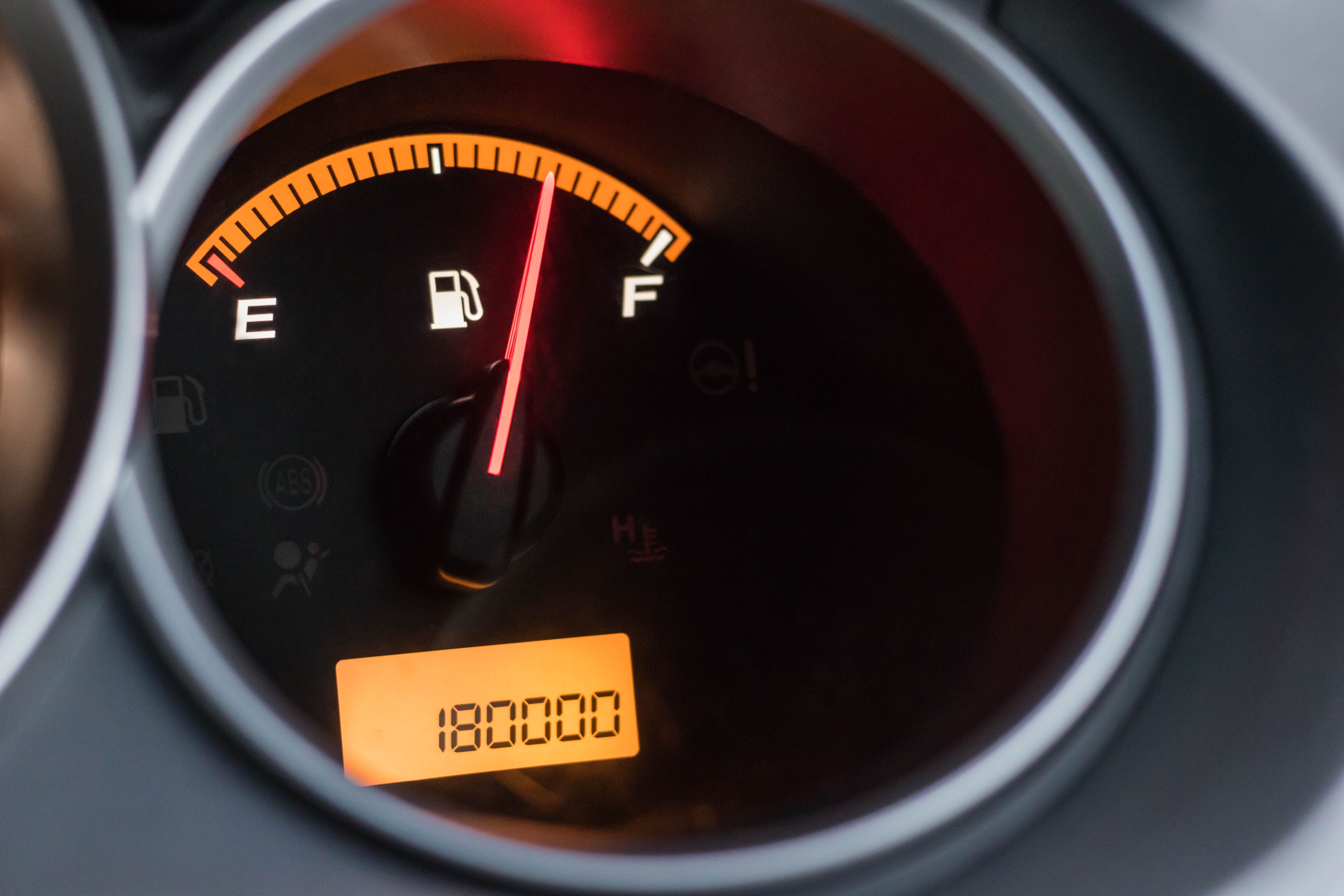
Hitting 100,000 miles doesn't mean your Toyota is on its last legs. With consistent maintenance, many Toyotas can continue delivering reliable transportation well beyond this milestone. However, reaching 100,000 miles is a good reason to take a closer look at components that may be approaching the end of their expected service life.
Exactly what your Toyota needs at 100,000 miles depends on the model, engine, year, and previous maintenance. Knowing what to look for can help you plan for upcoming maintenance rather than be surprised by an unexpected repair. If your Toyota is approaching this milestone, the Toyota of Katy service center can inspect your vehicle and help determine which services are actually due.
What 100,000 Miles Means for Your Toyota
There isn't one universal 100,000-mile checklist for every Toyota. A Camry, Corolla, Highlander, RAV4, Tacoma, and Tundra can have different engines, transmissions, components, and maintenance requirements.
Toyota's Warranty & Maintenance Guide for your specific vehicle is the best source for determining what is scheduled at this mileage. Depending on the model, 100,000-mile maintenance may include engine oil and filter service, inspections, fluid checks, spark plug replacement, coolant service, brake inspection, tire rotation, and other scheduled maintenance.
Some components may simply need to be inspected rather than automatically replaced. That's an important distinction. Reaching 100,000 miles doesn't mean every Toyota needs a new transmission, suspension, water pump, or set of brakes. Condition and the vehicle's maintenance history matter.
The benefit of a 100,000-mile inspection is that it gives you a chance to identify worn components before they become larger problems.
Timing Belt or Water Pump Replacement
One of the first things to determine is whether your Toyota's engine uses a timing belt or a timing chain.
Most newer Toyota engines use timing chains, which generally aren't replaced at a routine mileage interval. Some older Toyota engines use timing belts, however, and those belts have scheduled replacement intervals that vary by engine.
Why It Matters
A timing belt or chain keeps the engine's crankshaft and camshaft synchronized so the valves open and close at the correct time. Timing belts are made from reinforced rubber and eventually wear with age and mileage.
If your Toyota uses a timing belt and its replacement interval falls around your vehicle's current mileage, replacement should be treated as scheduled maintenance rather than something to postpone. Some older Toyota engines also have water pumps located in the same general area, which can make inspecting related components worthwhile while the belt is being serviced.
Your vehicle's maintenance guide can tell you whether timing belt replacement is actually part of your model's maintenance schedule.
Risks of Neglecting This Repair
A severely worn timing belt can eventually break or fail to maintain proper valve timing. Depending on the engine, that can cause significant internal damage.
If your Toyota uses a timing belt, find out when Toyota recommends replacing it rather than assuming that every Toyota needs one at 100,000 miles. Our technicians can help determine what your specific engine requires.
Spark Plug and Ignition System Replacement
Spark plugs gradually wear as your Toyota accumulates miles. That's why Toyota specifies replacement intervals based on the engine rather than treating 100,000 miles as a universal replacement point.
Why It Matters
Many Toyota engines use long-life iridium spark plugs, but the recommended replacement mileage varies by engine and vehicle. Some modern Toyota engines can go beyond 100,000 miles before spark plug replacement is scheduled.
Check your Toyota's Warranty & Maintenance Guide to determine the correct interval for your vehicle.
Risks of Neglecting This Repair
Worn spark plugs can contribute to symptoms such as rough idling, misfires, difficult starting, sluggish acceleration, or reduced fuel economy.
These symptoms don't necessarily mean the spark plugs are the problem, but they are a good reason to have the ignition system checked. Replacing spark plugs according to Toyota's recommended interval can help keep the engine running smoothly and efficiently.
Brake Component Wear and Replacement
Brakes don't have a universal replacement mileage. How long brake pads and rotors last depends on driving habits, vehicle weight, traffic conditions, terrain, and the materials used in the braking system.
At 100,000 miles, however, a thorough brake inspection is worthwhile, particularly if your Toyota spends a lot of time in stop-and-go traffic.
Why It Matters
Brake pads gradually lose friction material as they are used. Rotors can also become worn, scored, or develop thickness variations over time.
Pay attention to warning signs such as squealing, grinding, vibration while braking, a soft or spongy pedal, or a noticeable change in braking performance.
Rather than replacing brake components simply because your odometer reached 100,000 miles, technicians should measure and inspect them to determine whether replacement is necessary.
Risks of Neglecting This Repair
Ignoring brake noises or changes in braking performance can allow a relatively minor repair to become more expensive. For example, continuing to drive after brake pads are completely worn can damage the rotors.
If you've noticed unusual brake behavior, having the system inspected sooner can help identify the problem before additional components are affected.
Fluid Service: Coolant, Transmission, and Brake Fluid
Fluids play an important role in keeping your Toyota operating reliably as it accumulates miles. However, the correct service interval depends on the specific fluid, vehicle, and driving conditions.
Why It Matters
Toyota's Super Long Life Coolant is designed for extended service intervals, with replacement timing specified by the vehicle's maintenance schedule. Many Toyota models have an initial coolant replacement interval around 100,000 miles or 10 years, followed by shorter intervals, but the exact schedule varies by vehicle.
Transmission fluid is another area where Toyota's recommendations can differ. Some Toyota maintenance schedules call for inspection rather than routine replacement under normal driving conditions. Vehicles operated under certain special conditions, such as frequent towing or heavy loading, may require additional maintenance.
Brake fluid should also be inspected as part of regular maintenance. Because brake fluid can absorb moisture over time, its condition matters even when the vehicle's brakes appear to be operating normally.
Risks of Neglecting Fluid Maintenance
Old or contaminated fluids can contribute to reduced system performance and, in some cases, expensive repairs. Coolant problems can contribute to overheating, while degraded brake fluid can impair brake system performance.
If your Toyota is approaching 100,000 miles, check the maintenance schedule for your specific model instead of assuming every fluid needs to be flushed simply because the odometer reached six figures.
Before scheduling service, check Toyota of Katy's current service and parts specials for available offers.
Suspension Wear: Struts, Shocks, and Bushings
Suspension components don't have a universal replacement mileage. They wear according to driving conditions, road quality, vehicle use, and component design.
That makes 100,000 miles a good point for a careful inspection, particularly if your Toyota spends a lot of time on busy Houston-area roads.
Why It Matters
Shocks and struts help control body movement and keep the tires in contact with the road. Bushings and other suspension components help maintain proper alignment and absorb vibration.
Signs of suspension wear can include excessive bouncing, unusual body movement over bumps, uneven tire wear, pulling or wandering, knocking noises, or visible fluid leaking from a shock or strut.
Not every suspension component showing some wear automatically needs replacement. A technician can inspect the components and determine whether the wear is significant enough to affect ride, handling, or tire wear.
Risks of Neglecting Suspension Wear
Severely worn suspension components can affect handling, stability, tire wear, and braking performance. Catching the problem during routine maintenance gives you an opportunity to address it before it becomes a more noticeable driving or safety concern.
How Katy Roads and Climate Can Affect Your Toyota
Mileage isn't the only factor that determines how quickly a vehicle's components wear. Driving conditions matter too, and Katy and the greater Houston area present some unique challenges.
Hot temperatures can put additional stress on cooling systems, batteries, tires, and other vehicle components. Humidity and moisture can also contribute to corrosion and affect certain fluids and components over time.
Traffic is another consideration. Frequent stop-and-go driving requires more frequent braking and can place additional demands on some vehicle systems compared with steady highway driving.
Drivers who regularly commute through busy Houston-area routes, spend significant time idling, tow or haul heavy loads, or frequently drive in dusty conditions may also fall under Toyota's special operating conditions, depending on their vehicle.
That's why your actual driving habits matter when determining what maintenance your Toyota needs.
Trust Toyota of Katy With Your 100,000-Mile Service
Factory-Scheduled Maintenance You Can Count On
Toyota of Katy provides maintenance and repair services for Toyota drivers throughout Katy and the surrounding area. Our trained technicians can handle routine maintenance, inspections, and repairs for brakes, batteries, tires, fluids, and other vehicle systems.
Whether your Toyota needs scheduled maintenance or you're concerned about something you've noticed while driving, we'll start with your specific vehicle rather than assuming that every Toyota approaching 100,000 miles needs the same services.
That's especially important at this mileage. Some components may be due for scheduled replacement, while others may only need an inspection. Your vehicle's maintenance history, model, engine, and driving conditions all help determine what makes sense.
Schedule Your Toyota's 100,000-Mile Service in Katy
If your odometer is approaching six figures, 100,000 miles is a good time to review your Toyota's maintenance schedule and have the vehicle inspected.
Toyota 100,000-mile service costs vary considerably depending on the model and which services are actually due. A Camry may have different requirements than a Corolla, RAV4, Highlander, Tacoma, or Tundra, so an accurate estimate requires looking at the specific vehicle.
Toyota of Katy is located at 21555 Katy Freeway. You can schedule service online and check our current service and parts specials before your appointment.
Taking care of scheduled maintenance at 100,000 miles can help you get more dependable miles from your Toyota and identify potential problems before they turn into larger repairs.