

Blog

What Is Toyota i-FORCE MAX? How It Works & Which Models Have It

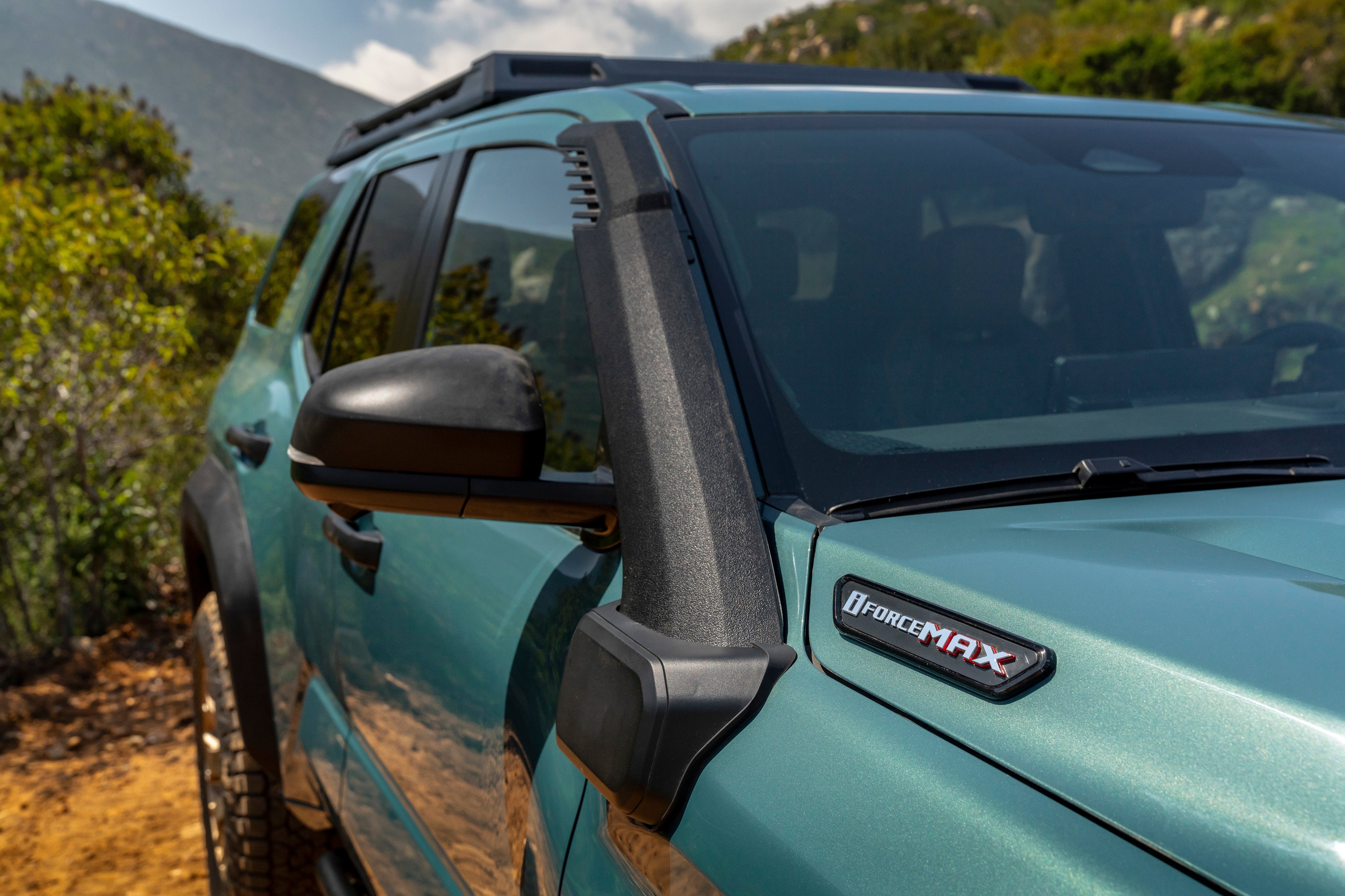
2026 Toyota 4Runner Trailhunter Everest I Force Max Logo

Toyota i-FORCE MAX pairs a turbocharged gasoline engine with an electric motor and appears in some of Toyota's most capable trucks and SUVs. If you drive in Katy or Greater Houston, you may have wondered what it adds over a standard engine. We help shoppers sort that out every day, and you can browse our new vehicles while you read.


What is Toyota i-FORCE MAX?

The name refers to the entire hybrid powertrain, including the gasoline engine. A turbocharged engine works with an electric motor and a battery to deliver strong torque, which is the twisting force that gets a heavy vehicle moving.


Toyota designed it for trucks and SUVs that tow and go off-road. Efficiency is a secondary goal. This is a conventional hybrid, so the battery is replenished by driving, and there's no charging cable to plan around.


i-FORCE MAX vs. Standard i-FORCE

Standard i-FORCE runs on gasoline alone, while i-FORCE MAX adds an electric motor. Compare equivalent models and model years because neither name describes a single universal engine.


The 2026 4Runner clearly shows the contrast. The standard 2.4-liter turbo makes up to 278 hp and 317 lb.-ft. of torque. The i-FORCE MAX version makes up to 326 hp and 465 lb.-ft. of torque. The standard engine carries a slightly higher EPA-estimated highway rating, 26 MPG vs. 24 MPG for i-FORCE MAX.


The 2026 Tundra tells a similar story. The standard twin-turbo V6 makes 389 hp and 479 lb.-ft. The 2026 Tundra i-FORCE MAX makes 437 net combined hp at 5,200 rpm and 583 lb.-ft. at 2,400 rpm. That is a system figure for the 2026 model.


Standard i-FORCE suits buyers who want a simpler gasoline setup and lighter-duty use. i-FORCE MAX makes more sense if you tow or want stronger response under load. The 2026 Tacoma offers both a 2.4-liter turbo i-FORCE engine and an available i-FORCE MAX hybrid.


How the i-FORCE MAX Hybrid Powertrain Works

Yes, i-FORCE MAX is a hybrid. It combines a turbocharged gasoline engine, an electric motor, a hybrid battery, and an automatic transmission. Electronic controls coordinate them based on driving demand and battery conditions.


Gas Engine, Electric Motor, and Power Delivery

This is a parallel hybrid, meaning the engine and motor can both drive the wheels through the same transmission. The motor sits between the engine and the transmission and backs up the gas engine. There is no separate electric axle.


Engine layouts vary by model. Toyota uses turbocharged four-cylinder versions in some and a twin-turbo V6 hybrid in others. Transmissions vary too, with eight-speed and ten-speed automatics across the lineup.


In the Tundra, a motor-generator and clutch sit in the bell housing between the twin-turbo V6 and the 10-speed automatic. Those hybrid parts start the engine, handle EV driving and electric assist, and recover energy through regeneration. The Land Cruiser pairs its turbo engine and bell-housing motor with an 8-speed automatic.


The Sequoia's motor is rated 48 hp and 184 lb.-ft. Its battery is a sealed nickel-metal hydride unit with a capacity of 1.87 kWh. The 437 hp and 583 lb.-ft. figures describe the whole system, so don't add them to the engine and motor ratings.


Boost, Regeneration and Everyday Driving Behavior

A turbo needs a moment to build pressure. The electric motor can fill in torque during that moment, much like a helper who gets the load rolling before the main engine takes over. That can help when pulling away and merging.


Regeneration means capturing energy as you slow down and storing it in the battery. The gas engine can also help charge the battery. You drive it like any automatic, because the system manages assistance on its own.


In general terms, this can matter in stop-and-go traffic on I-10 or the Grand Parkway, in highway merging, and when towing. On the trail, the motor can add low-speed torque. Assistance depends on conditions and is not continuous maximum boost. EV driving is limited and depends on the application. Drive mode names and functions vary by model and equipment.


Benefits of i-FORCE MAX: Performance, Efficiency and Capability

The main benefit is added torque and power from the combined system. Electric assistance matters most when you pull away or climb a grade with weight on board.


Capability comes first here, with efficiency trailing behind. Regenerative braking recovers energy that would otherwise be lost, but how much you save depends on the model, route, and load. Your driving style plays in too. Heavy towing and sustained high speeds can considerably affect real-world results.


More torque does not automatically mean a higher trailer rating than every non-hybrid version, so use the exact vehicle's ratings. Off-road, low-speed torque helps, but traction systems, tires, and ground clearance matter just as much.


Shoppers also ask whether i-FORCE MAX is a good engine. We can't make reliability claims here, but a test drive and a conversation with a sales specialist will tell you more about how it fits your driving.


Which Toyota Models Offer i-FORCE MAX?

Five models offer it, and they differ in size, seating, and use. Not every trim has it, so the table ties each model to its model year. Fuel economy, towing, and payload figures are EPA estimates or manufacturer ratings, and results vary with conditions, load, and configuration.


Model Engine Transmission Drivetrain Availability Horsepower/Torque
2026 Tacoma 2.4-liter turbo i-FORCE MAX hybrid 8-speed automatic 4WD standard on all i-FORCE MAX models; full-time 4WD on Limited Available on TRD Sport, TRD Off-Road, Limited. Standard on TRD Pro, Trailhunter Up to 326 hp / 465 lb.-ft.
2026 4Runner Turbo i-FORCE MAX hybrid Automatic 4WD standard on i-FORCE MAX Available on TRD Off-Road, TRD Off-Road Premium, Limited. Standard on Platinum, TRD Pro, Trailhunter 326 hp / 465 lb.-ft.
2027 Land Cruiser Turbo i-FORCE MAX hybrid 8-speed automatic Full-time four-wheel drive Both grades 326 net combined hp / 465 lb.-ft.
2026 Tundra Twin-turbo V6 i-FORCE MAX hybrid 10-speed automatic Varies by grade and configuration Limited, Platinum, 1794 Edition, TRD Pro, Capstone 437 net combined hp / 583 lb.-ft.
2026 Sequoia 3.4-liter twin-turbo V6 hybrid 10-speed automatic 2WD or part-time 4WD by grade Every grade 437 hp / 583 lb.-ft.


Toyota Tacoma i-FORCE MAX

The 2026 Tacoma offers i-FORCE MAX on TRD Sport, TRD Off-Road, and Limited. It is standard on TRD Pro and Trailhunter. Every hybrid model gets a 2400W AC power supply in the cabin and bed, and the 12.3-inch digital gauge cluster and Tow/Haul mode are standard.


The TRD Off-Road adds Bilstein shocks and 33-inch FALKEN WildPeak all-terrain tires on 18-inch alloys, with a Stabilizer Disconnect Mechanism available. The Limited leans toward comfort, with heated and ventilated SofTex-trimmed seats, a 14-inch touchscreen, JBL Premium Audio, and a Head-Up Display.


The Trailhunter comes only with the i-FORCE MAX and is paired with Old Man Emu forged monotube shocks. The TRD Pro also has the hybrid exclusively, and its shocks are TRD-tuned FOX QS3 adjustables. i-FORCE MAX Tacomas tow up to 6,000 lbs. when properly equipped, and a TRD Pro is EPA-estimated at 22/24/23 MPG city/highway/combined.


Toyota 4Runner i-FORCE MAX

Every 2026 4Runner with i-FORCE MAX comes with standard 4-Wheel Drive and a 2400W AC power supply in the cabin and cargo area. The hybrid is available on TRD Off-Road, TRD Off-Road Premium, and Limited. It is standard on Platinum, TRD Pro, and Trailhunter.


Trailhunter adds Old Man Emu shocks, 33-inch Toyo tires, an onboard air compressor, and an ARB roof rack. TRD Pro brings FOX QS3 shocks. Both include a Stabilizer Disconnect Mechanism. Platinum takes the family-comfort route with premium leather, a Head-Up Display, and heated second-row outboard seats.


i-FORCE MAX 4Runners tow up to 6,000 lbs. (TRD Off-Road, TRD Off-Road Premium, Limited) or 5,800 lbs. (Platinum, TRD Pro, Trailhunter) when properly equipped. For a closer look, read how a hybrid 4Runner holds up on Texas trails.


Toyota Land Cruiser i-FORCE MAX

For 2027, the Land Cruiser uses i-FORCE MAX in both grades, the Land Cruiser 1958 and the Land Cruiser. Each has full-time four-wheel drive with locking center and rear differentials. It is EPA-estimated at 23 MPG combined, with max towing of 6,000 lbs.


The 1958 keeps it simple with round LED headlamps, heated fabric-trimmed seats, CRAWL Control, and a trailer brake controller. The Land Cruiser grade adds heated and ventilated SofTex seats, Multi-Terrain Select, and Multi-Terrain Monitor. An available Premium Package adds 14-speaker JBL audio and a power moonroof.


Toyota Tundra i-FORCE MAX

The 2026 Toyota Tundra i-FORCE MAX appears on Limited, Platinum, 1794 Edition, TRD Pro, and Capstone. The TRD Pro has 18-inch BBS forged-aluminum wheels, FALKEN WildPeak tires, and FOX off-road suspension.


On the 2026 Tundra, i-FORCE MAX models tow up to 11,450 lbs. when properly equipped. The 2027 Tundra comes in seven grades (SR, SR5, Limited, Platinum, 1794 Edition, TRD Pro and Capstone), with both gas and i-FORCE MAX powertrains continuing, though Toyota hasn’t yet detailed hybrid availability by grade. An available Trailhunter package based on the SR5 adds an Old Man Emu suspension and underbody protection, and a 2.4kW inverter is offered on i-FORCE MAX grades.


Boat owners can read why Katy boaters choose the Tundra with i-FORCE MAX.


Toyota Sequoia i-FORCE MAX

Every 2026 Sequoia has i-FORCE MAX, and it seats a third row. Grades run SR5, Limited, Platinum, 1794, TRD Pro, and Capstone. SR5 and Limited come in 2WD or part-time 4WD, while part-time 4WD is standard on the rest.


Towing depends on grade and drivetrain. The SR5 4x2 is highest at 9,520 lbs., and the Capstone 4x4 is lowest at 8,980 lbs. EPA estimates are 21/24/22 MPG for 4x2 and 19/22/20 MPG for 4x4. The 1794, Platinum, and Capstone add massaging front seats. For 2027, Sequoia gains a Trailhunter package and a 2.4kW inverter.


Want to see which setup fits? Contact a sales specialist, and we can walk you through the details.


Is Toyota i-FORCE MAX Right for Your Lifestyle?

That depends on how you drive. Start with your real demands, then match them to a size and layout. If you want hybrid technology without making fuel savings your only goal, it deserves a look.


Picture an Energy Corridor commuter who wants a responsive daily driver for I-10 traffic. A 4Runner or Tacoma may fit, and a test drive will show how the low-speed response feels. A family with a boat or trailer should weigh loaded trailer weight, tongue weight, passengers, and cargo against the exact vehicle's towing and payload ratings. A Tundra or Sequoia is the natural place to start.


A weekend off-roader should look at trims. Trailhunter and TRD Pro versions bring suspension and equipment upgrades, and the Land Cruiser leans on its locking differentials. Compare hybrid and non-hybrid versions where both exist, including equipment and the value of stronger performance.


On a test drive, pay attention to a few things:

  • How does the vehicle respond when pulling away and merging?

  • How does the transmission behave at low speeds and under load?

  • What are the exact towing and payload ratings for this trim and drivetrain?

  • How do ride comfort, parking, and interior space fit your routine?

Explore i-FORCE MAX Toyota Models at Toyota of Katy

We serve Katy, Cypress, Fulshear, Richmond, and Rosenberg, and we can help you compare models by size, trim, and powertrain.


  • Browse online. Look through our current new vehicles by model and trim, then ask us about availability.

  • Talk to a specialist. Call 844-809-1063, Mon to Sat, 9 AM to 7 PM, or contact us to confirm ratings and request a test drive.

  • Plan for ownership. Our factory-trained Toyota service technicians at our service center can help keep your vehicle in top condition.
Recommended Posts

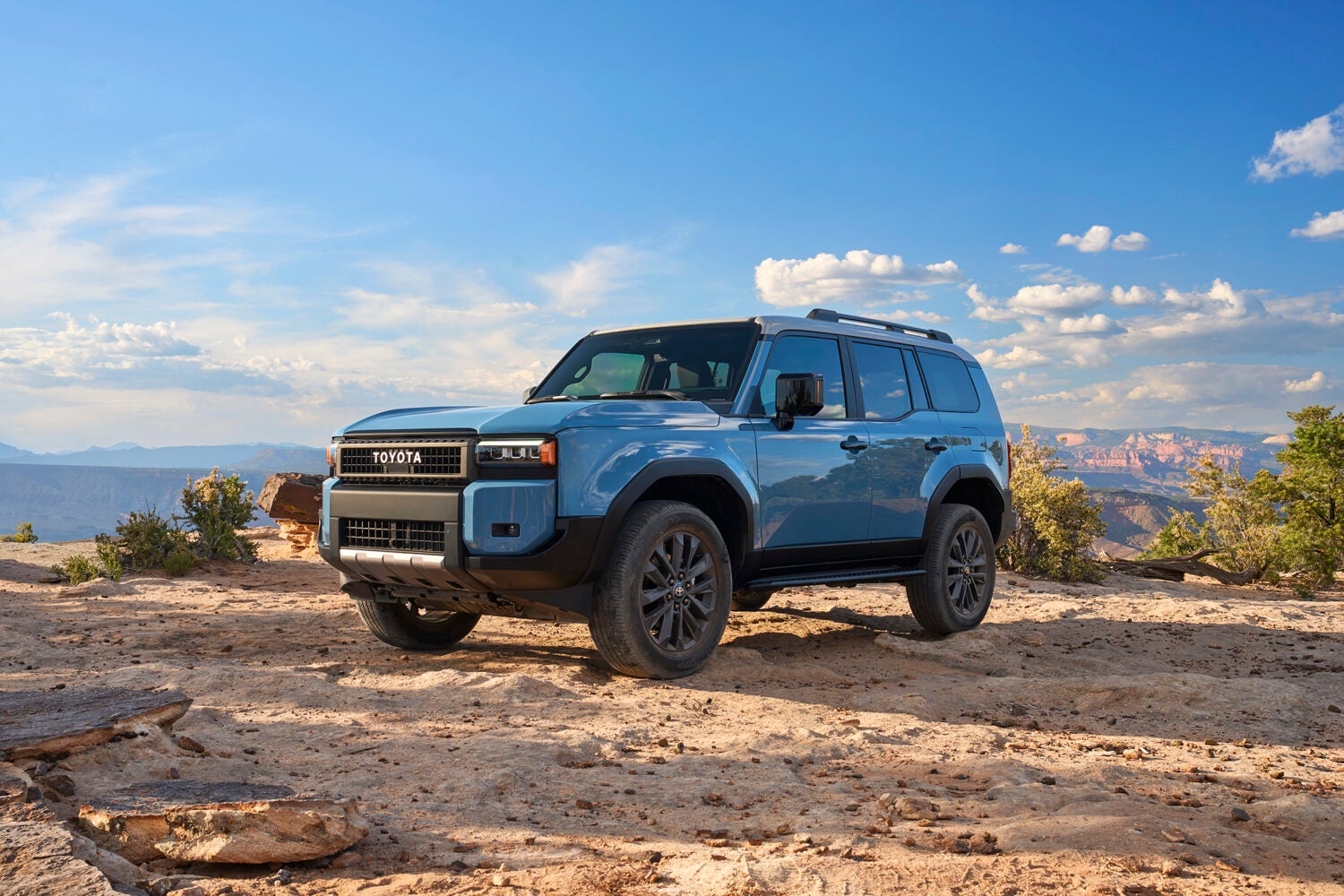
2027 Toyota Land Cruiser Blue

Is the Toyota Land Cruiser a Reliable SUV? Reliability, Maintenance & Ownership

If you're considering a Toyota Land Cruiser, reliability is probably one of the biggest factors in your decision. Known for its off-road heritage and reputation for durability, the Land Cruiser has long appealed to drivers who want an SUV built for the long haul. But how does its modern turbocharged hybrid powertrain fit into that reputation? And what should you expect from maintenance and ownership around Katy, TX? At Toyota of Katy, we help drivers compare Toyota SUVs and understand what it takes to own one. Here's what to know about Toyota Land Cruiser reliability, its hybrid system, maintenance requirements, warranty coverage, and long-term ownership. Is the Toyota Land Cruiser a Reliable SUV? The Toyota Land Cruiser has a longstanding reputation for durability, but reliability ultimately depends on the vehicle's maintenance history, driving conditions, and how well it's cared for. Its body-on-frame construction, proven off-road engineering heritage, and Toyota's experience with hybrid technology make it an interesting option for drivers prioritizing long-term ownership. The modern Land Cruiser also introduces a different powertrain from many of its predecessors. Rather than a traditional V8, it uses Toyota's i-FORCE MAX turbocharged hybrid system. That means buyers should consider both its mechanical capabilities and the additional components that come with hybrid technology. Here are some ownership factors worth considering: Toyota's established reputation for building durable SUVs. A turbocharged hybrid powertrain designed to balance performance and efficiency. Body-on-frame construction and full-time four-wheel drive. Factory warranty coverage for major vehicle components. Scheduled maintenance and hybrid system inspections to support long-term performance. Toyota Land Cruiser Hybrid Powertrain: Is the i-FORCE MAX Dependable? One of the biggest questions prospective owners have concerns the Land Cruiser's hybrid powertrain. Every current-generation Land Cruiser pairs a turbocharged 2.4-liter four-cylinder engine with Toyota's i-FORCE MAX hybrid system. The system places an electric motor between the engine and an eight-speed automatic transmission. Combined output reaches 326 horsepower and 465 lb-ft of torque, giving the Land Cruiser substantial power for highway driving, towing, and off-road situations. What Makes the i-FORCE MAX Different? Unlike a conventional hybrid designed primarily around maximizing fuel economy, the Land Cruiser's i-FORCE MAX system emphasizes torque and performance. The electric motor helps deliver strong low-speed response while working alongside the gasoline engine. Its hybrid components introduce additional technology, including a high-voltage battery, electric motor, and power control electronics. These components are designed to work together, but like any modern powertrain, they require appropriate maintenance and attention to warning lights or changes in performance. Fuel Economy and Everyday Driving The Land Cruiser earns an EPA-estimated 23 MPG combined. For an SUV with standard full-time four-wheel drive and substantial off-road capability, that provides a useful balance between performance and everyday usability. Whether you're commuting along I-10, traveling across the Grand Parkway, or heading out of Katy for a weekend trip, actual fuel economy will depend on traffic, driving habits, weather, and vehicle load. How Long Does a Toyota Land Cruiser Last? The Land Cruiser name has a long history of vehicles reaching high mileage when properly maintained. However, the lifespan of an individual vehicle depends on its service history, driving conditions, and the consistency with which the owner follows Toyota's maintenance recommendations. If you're purchasing a Land Cruiser for long-term ownership, focus on the maintenance schedule rather than assuming any particular mileage is guaranteed. Factors That Affect Land Cruiser Longevity Regular oil changes: Following Toyota's recommended oil and filter service intervals helps protect the engine. Transmission maintenance: Following applicable fluid inspection and service recommendations helps support transmission performance. Cooling system care: Proper cooling system maintenance is important for both engine and hybrid system operation. Tire maintenance: Regular rotations, alignment checks, and proper inflation help maintain handling and even tire wear. Hybrid system inspections: Addressing warning lights and having hybrid components inspected when needed can help identify problems early. For used Land Cruiser shoppers, service records are especially important. A well-maintained vehicle with documented maintenance is generally a better starting point than one with an unknown ownership history. Toyota Land Cruiser Maintenance Costs and Service Requirements Routine maintenance is an important part of keeping any SUV dependable. The Land Cruiser's turbocharged hybrid powertrain and four-wheel-drive hardware make it particularly important to follow the recommended service schedule. What Maintenance Does the Land Cruiser Need? Depending on mileage, driving conditions, and Toyota's maintenance schedule, routine service can include: Engine oil and filter changes. Tire rotations and pressure checks. Brake inspections and fluid checks. Engine air filter and cabin air filter replacement. Cooling system inspections. Four-wheel-drive system inspections. Hybrid system inspections when recommended or needed. Drivers who regularly tow, travel on dusty roads, or take their Land Cruiser off-road may need to pay closer attention to certain components. Always consult the owner's manual for the maintenance requirements that apply to your specific vehicle. Does the Land Cruiser Require Special Hybrid Maintenance? The hybrid system does not require owners to plug in the vehicle or perform separate charging routines. It automatically manages its battery and electric motor operation while driving. However, hybrid components are different from those in a conventional gasoline vehicle. Having technicians familiar with Toyota hybrid systems inspect the vehicle when necessary is important, particularly if a warning light appears or you notice unusual performance. At Toyota of Katy, our service department can help with routine maintenance, oil changes, tire rotations, battery service, and other vehicle care needs. Toyota Land Cruiser Warranty: What Does Toyota Cover? Warranty coverage is another important consideration when evaluating long-term ownership. Toyota provides several layers of factory protection for new Land Cruiser models. Basic warranty: 3 years or 36,000 miles, whichever comes first. Powertrain warranty: 5 years or 60,000 miles, whichever comes first. Hybrid battery warranty: 10 years or 150,000 miles, whichever comes first. Hybrid system component warranty: 8 years or 100,000 miles, whichever comes first, covering qualifying components, including the inverter and hybrid control module. ToyotaCare also covers normal factory-scheduled maintenance for two years or 25,000 miles, whichever comes first, on eligible new Toyota vehicles, along with Roadside Assistance for two years with unlimited mileage, subject to program terms. Confirm the coverage applicable to your specific vehicle and purchase date. These warranties provide additional peace of mind, although warranty coverage should not be confused with a guarantee against mechanical problems. Is the Toyota Land Cruiser a Good Long-Term Investment? The Land Cruiser offers several characteristics that appeal to long-term owners, including Toyota's reputation, four-wheel-drive capability, hybrid technology, and strong name recognition. However, purchase price, depreciation, insurance, fuel, maintenance, and repair expenses all contribute to the total cost of ownership. A vehicle's reputation alone cannot determine whether it will be an economical choice over the years. What About Buying a Used Toyota Land Cruiser? Used Land Cruiser shoppers should look beyond mileage and exterior condition. Maintenance records, accident history, ownership history, and a qualified technician's inspection can help you understand the vehicle's condition before purchasing. Pay particular attention to service documentation and any previous repairs involving the engine, transmission, four-wheel-drive system, or hybrid components. If you're comparing pre-owned Toyota SUVs, you can also explore our used vehicle inventory at Toyota of Katy. Is the Toyota Land Cruiser Worth Buying for Reliability? The Toyota Land Cruiser has a strong heritage of durability, but its modern hybrid powertrain means buyers should evaluate the vehicle as a whole rather than relying entirely on its historical reputation. It's worth considering if you want: A capable SUV with standard full-time four-wheel drive. A hybrid powertrain that combines strong torque with everyday efficiency. A body-on-frame vehicle designed for demanding driving conditions. Factory warranty coverage for major components. A Toyota SUV you intend to maintain according to factory recommendations. Ultimately, the best way to evaluate a Land Cruiser is to consider its features, ownership costs, warranty protection, and maintenance requirements alongside your driving needs. Explore the Toyota Land Cruiser at Toyota of Katy If you're researching Toyota Land Cruiser reliability, our team at Toyota of Katy can help you explore available models, compare features, and learn more about ownership. Visit us at 21555 Katy Freeway, Katy, TX 77450, to see the Land Cruiser in person. You can also browse our new Toyota inventory, explore used vehicles, or contact our team to schedule a test drive. Call Toyota of Katy at 844-809-1063 to get started.

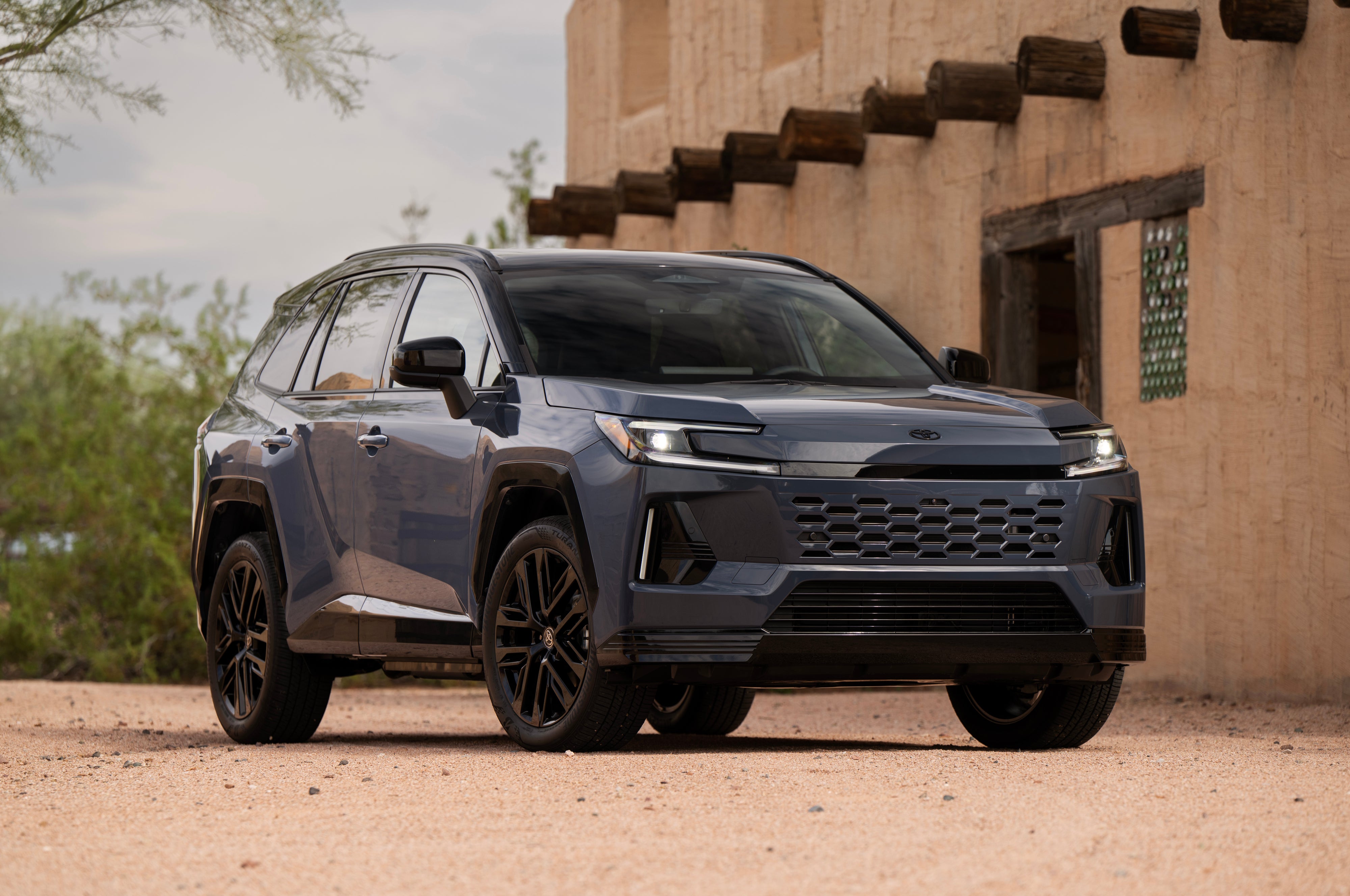
2027 Toyota RAV4 PHEV XSE StormCloud

Toyota RAV4 Hybrid vs. Plug-in Hybrid: Key Differences in MPG, Range & Performance

If you drive I-10 every day or juggle school runs and errands around Katy, the Toyota RAV4 Hybrid vs RAV4 Plug-in Hybrid question comes down to how far you drive and where you park. Cost matters too. Both are efficient, but each is better suited to a different kind of driver. This guide covers the real differences, using 2026 model-year figures. If you'd rather see them in person, you can browse our RAV4 Hybrid and RAV4 Plug-in Hybrid inventory at Toyota of Katy while you read. RAV4 Hybrid vs. RAV4 Plug-in Hybrid: The Core Difference at a Glance Both models pair a gas engine with electric motors. The RAV4 Hybrid recharges itself via the engine and regenerative braking, so it never needs to be plugged in. The RAV4 Plug-in Hybrid carries a much larger battery that you charge from an outlet or charger, which gives it real electric driving. For 2026, the RAV4 is hybrid only, with no gas-only version. Used-car shoppers may see the RAV4 Prime name. Earlier plug-in versions were marketed that way, so today the difference is simply the RAV4 Hybrid versus the RAV4 Plug-in Hybrid. The hybrid comes in LE, SE, XLE Premium, Woodland, XSE, and Limited grades, and now offers FWD for the first time, with AWD available as well. Every plug-in trim (SE, XSE, Woodland and GR SPORT) has standard AWD. Quick Comparison Table: Powertrain, Electric Range, Power, MPG, and Price Figures are EPA or manufacturer estimates and vary with driving, temperature, and charging. RAV4 Hybrid RAV4 Plug-in Hybrid Powertrain 2.5L four-cylinder, two motor-generators; AWD models add a rear electric motor 2.5L four-cylinder, two electric motors including a dedicated rear motor, high-capacity traction battery Drivetrain FWD or AWD Standard AWD Net combined horsepower 226 hp (FWD), 236 hp (AWD) 324 hp Electric range No rated electric-only range (EV mode for short, low-speed distances) Up to 52 miles (Woodland 49, GR SPORT 48) Fuel economy Up to 44 MPG combined (FWD) 40 MPG / 101 MPGe combined (SE) Cargo volume Up to 37.8 cu. ft.; 70.4 cu. ft. with rear seat folded 33.6 cu. ft. behind rear seats; 63.5 cu. ft. folded Price Lower upfront cost Higher upfront cost than the hybrid Electric Range and Fuel Economy: Which Saves More in Your Daily Driving? Start with how many miles you drive between charging stops rather than the highest MPG. A driver whose daily mileage fits within the electric range, and who can charge at home or work, can meaningfully cut fuel use. If you can't charge regularly, the plug-in's advantage shrinks. Here are the efficiency figures side by side. The RAV4 Hybrid LE is rated 47 city and 40 highway. The AWD XLE gets 41 MPG combined, and the AWD Woodland gets 38. The plug-in SE is rated 40 MPG and 101 MPGe combined, and the GR SPORT gets 37 MPG combined. MPG measures gasoline efficiency, while MPGe expresses energy efficiency on an equivalent basis. Neither number alone sets your real operating cost, so run your own mileage. Short Commutes Around Katy and West Houston Picture your whole day, including the return leg. A school drop-off, a grocery run, an errand across Katy, and the drive home all add up. If that loop fits inside the plug-in's range and you recharge each night, much of it can run on electricity. Treat range as an estimate. Highway speed, air conditioning use, weather, driving style, and load all change how far a charge lasts. In Texas summers, expect the A/C to matter. Long Highway Drives and Road-Trip Flexibility Once the plug-in's battery is depleted, it runs as a gas-electric hybrid. Long drives aren't limited by electric range, and you don't have to stop to charge. Both models refuel at a gas station like any other vehicle. On a road trip, the two behave similarly. The plug-in's electric miles trim gas use early in the trip, but its overall advantage depends on how often you charge compared with your total mileage. The hybrid never needs charging equipment at all. Power and Driving Feel: What the Plug-in Adds The plug-in's 324 hp compares with 226 hp for the FWD hybrid and 236 hp for the AWD hybrid. Its electric drive motor produces 203 hp and 201 lb-ft of torque, and Toyota lists 0-60 mph in 5.4 seconds. You'll notice the gap most when merging onto I-10, passing on the highway, or accelerating with passengers and cargo aboard. At low speeds on electric power, the plug-in is also quiet and responsive. The hybrid still gets electric-motor assistance and delivers plenty for economical daily driving. More horsepower doesn't mean better fuel economy, and plenty of buyers won't use the extra power. Our advice: drive both back-to-back. Pay attention to accelerator response and how smoothly the engine kicks in, then compare ride comfort and cabin noise. Horsepower alone shouldn't make the call. Charging the RAV4 Plug-in Hybrid: Home Setup, Speed, and Cost A plug-in pays off when charging is easy and repeatable. The battery is 22.7 kWh, and every grade includes a dual-voltage cable for 120V and 240V outlets. Where you park matters about as much as how far you drive. If you're weighing a plug-in, see our new RAV4 Plug-in Hybrid models and bring your parking situation to the conversation. We can help you think through whether it fits. Level 1 vs. Level 2 Charging Times Level 1 means the included cable plugged into a standard 120V household outlet. It's slow, though fine for overnight top-ups, and for shorter daily commutes it's often enough. Level 2 requires 240V equipment, and charging goes much faster. The onboard charger is 7 kW on the SE and GR SPORT and 11 kW on the XSE and Woodland. On Level 2, a full charge takes about 3.5 hours on the SE and GR SPORT and about 2.5 hours on the XSE and Woodland. Only the XSE and Woodland add DC fast charging, with about 30 minutes to charge from 10% to 80% under ideal conditions. A home Level 2 setup can involve an electrical assessment, equipment, and permitted installation, so have a qualified electrician review your plan. Estimate costs from your actual electricity plan. Can You Own a Plug-in Without a Home Charger? Yes, but think it through. If you rent, own a townhome, or live under an HOA, you can use a standard household outlet, charge at work, or use public stations. Check access, pricing, and the time each option takes. Without external charging, the plug-in runs like a conventional hybrid but loses its full electric benefit. You'd be paying a premium for capability you rarely use. If dependable charging doesn't fit your routine, the hybrid is usually the better match. Price, Incentives, and Long-Term Cost of Ownership The hybrid generally costs less up front. The plug-in costs more because of its larger battery, extra power, and electric driving. We recommend comparing similarly equipped trims rather than just the lowest advertised prices, and asking for an out-the-door figure that includes fees, taxes, and any financing costs. If you plan to finance, our financing application is a good place to start. Upfront Price Gap and Fuel Savings Break-Even A simple break-even divides the plug-in's net price premium by your estimated annual operating savings. Those savings depend on your annual mileage, how many miles you drive on electricity, your access to charging, and local gas and electricity costs. If savings are small, fuel alone may not recover the premium. Money isn't the only measure of value. Some buyers like quieter electric driving and stronger acceleration, and fewer gas stops appeal to them even when payback is long. Insurance and maintenance costs also belong in the comparison, along with resale value, though none of these are guaranteed. Tax Credits, Rebates, and Current Availability According to the IRS, the federal New Clean Vehicle Credit is not available for vehicles acquired after Sept. 30, 2025. Texas administers the TCEQ Light-Duty Motor Vehicle Purchase or Lease Incentive Program (LDPLIP), a grant program for eligible electric-drive vehicles, including plug-in hybrids. Vehicles must be on the TCEQ Eligible Vehicle List, applicants commit to operating and registering in Texas for at least one year, and grants are first-come, first-served. The program's funding appears to be depleted, and no reopening date has been announced. All of this is subject to change and eligibility. Please verify with a tax professional before you count on any incentive. We can't promise one. Toyota lists both the 2026 RAV4 and RAV4 Plug-in Hybrid for our area, but inventory changes. Contact us for current availability. Cargo Space, Features, and Battery Warranty: What Stays the Same and What Doesn't Both models fill the same compact-SUV role. All 2026 RAV4s have a 12.3-inch instrument panel and Toyota Safety Sense 4.0, and a 1500W rear cargo outlet is available. Features still vary by trim, so match trims when you compare. Cargo is where they differ. The plug-in offers 33.6 cu. ft. behind the rear seats and 63.5 cu. ft. folded, slightly less than the hybrid's 37.8 and 70.4. Check the load floor in person with your own gear, whether that's a stroller or a set of golf clubs. Both models carry the same battery coverage: the hybrid battery is warranted for 10 years or 150,000 miles, whichever comes first, and other hybrid system components (such as the hybrid control module and inverter) are covered for 8 years or 100,000 miles, with coverage transferring to future owners. Both share hybrid technology, so routine upkeep is similar, and our Service Center can help keep either one running well. Which RAV4 Fits Your Driving Needs? Neither model is the right answer for everyone. Pick the powertrain whose strengths you'll use every week. Base your decision on a typical week, since your shortest commute or an occasional road trip will mislead you. Choose the RAV4 Hybrid If… You can't reliably charge at home or work, such as in an apartment or an HOA community. Most of your driving is long highway miles beyond the plug-in's electric range. A lower upfront cost matters more to you than electric driving. You want a vehicle that never needs charging equipment. You want the available FWD configuration or the larger cargo volume. Choose the RAV4 Plug-in Hybrid If… You can plug in nightly, and your daily school runs and errands fit within the electric range. You value the extra power for merging and passing on I-10. You want standard AWD on every trim. You accept a higher upfront cost and understand savings depend on how often you charge. You're comfortable with the tradeoff that without charging, it behaves like a conventional hybrid. Frequently Asked Questions Is the Toyota RAV4 Hybrid a plug-in? No. The RAV4 Hybrid never plugs in. It recharges through the engine and regenerative braking. Does the RAV4 Plug-in Hybrid need a home charger? No. The included cable works with a standard 120V outlet. A Level 2 setup is faster, but it isn't required. Which is better for long drives? Both handle them well. The plug-in switches to hybrid operation once its battery is depleted, so you don't need to stop for charging. What happens when the plug-in's battery is depleted? It runs as a gas-electric hybrid. The engine and motors work together, as they do in the RAV4 Hybrid. Does the 2026 RAV4 come in a gas-only version? No. The 2026 RAV4 is hybrid only. Compare Available RAV4 Models at Toyota of Katy We've served the Katy community for over 20 years and sell new and used Toyota cars, trucks, and SUVs, with financing, service, genuine parts, and collision repair. The choice between the Toyota RAV4 Hybrid and RAV4 Plug-in Hybrid is easiest when both are in front of you. Compare current RAV4 models, drive them back-to-back, and bring your daily mileage and charging access, plus your budget. Ask for a clear estimate that separates vehicle price, financing, and any charging costs. Confirm the current inventory with us rather than assuming every trim is in stock. Ready to get started? Contact us online or call sales at 844-809-1063 to set up a test drive.

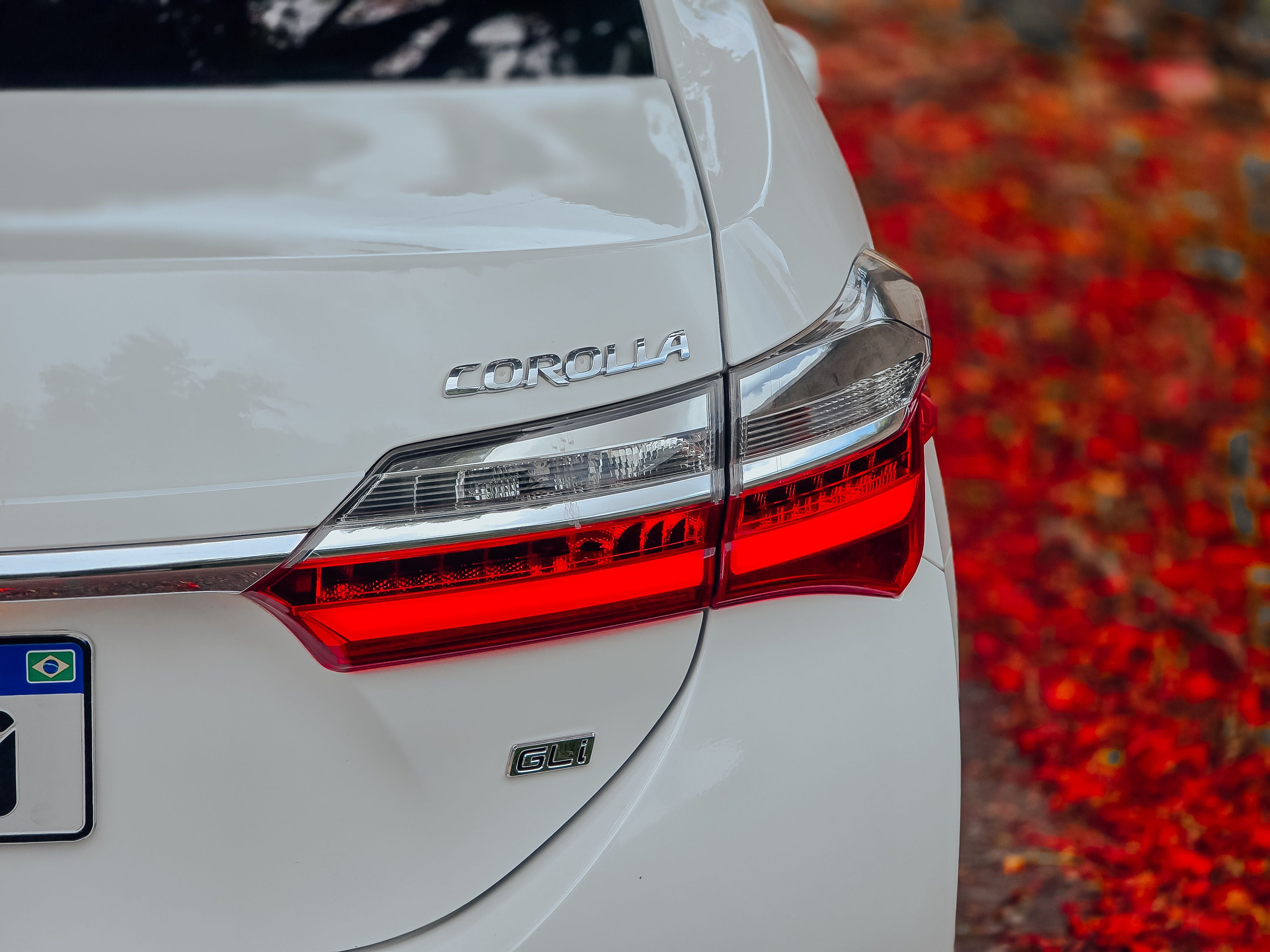
White Toyota Corolla taillight

Best Toyota Corolla Years to Buy Used

Shopping for the best used Toyota Corolla years comes down to your budget, the safety features you want, and the condition of the specific car. No single year wins for everyone. We'll walk through each generation so you can build a shortlist, then browse the used Corolla inventory at Toyota of Katy when you're ready. Best Used Toyota Corolla Years at a Glance Think of these as shopping groupings. They're not independent reliability rankings, and each one depends on the individual car's history and condition. Top Picks by Budget and Priority If you have a tight budget, look at 2003–2013 (9th and 10th generations), and inspect carefully. If safety technology matters most, consider 2017–2019 sedans (11th generation), which have standard forward collision warning and automatic emergency braking. The 2020 Corolla sedan adds Toyota Safety Sense 2.0 as standard equipment. For the newest used option, go with 2020 and newer (12th generation), which includes the Corolla Hybrid. If you're weighing a newer car, you can also compare new Toyota Corolla models. How We Evaluate Corolla Model Years We look at five factors: reliability record, safety equipment, fuel economy, technology, and ownership costs. On the first and last points, the Corolla starts strong: RepairPal rates it 4.5 out of 5.0 for reliability, first among 36 compact cars, with an average annual repair cost of $362. We don’t use a scoring system or claim internal testing. A model-year recommendation never replaces an assessment of the actual car. Keep comparisons to U.S. sedans, since hatchbacks, the GR Corolla, and the Corolla Cross are separate purchases. Used Toyota Corolla Generations Compared Corolla generation years in the U.S. run 2020 onward (12th), 2014–2019 (11th), 2009–2013 (10th), and 2003–2008 (9th). This table shows how Corolla models differ by year. Generation and years Powertrain Transmission Key safety or tech Fuel economy 12th, 2020 onward (figures shown are for the 2020 sedan) 1.8-liter (L, LE, XLE), 2.0-liter Dynamic Force, 169 hp (SE, XSE), Corolla Hybrid 1.8-liter, 121 hp CVT, six-speed manual Toyota Safety Sense 2.0, eight airbags, backup camera 2020 Hybrid 52 mpg combined, verify by trim 11th, 2014–2019 (engine, transmission, and equipment details shown are for 2014 unless noted) 1.8-liter, 132 hp. LE Eco 1.8-liter Valvematic, 140 hp Six-speed manual (L, S in 2014), automatic Eight airbags, Bluetooth. Forward collision warning and automatic emergency braking standard in 2017 LE Eco above 40 mpg highway (2014 estimate), verify by trim 10th, 2009–2013 1.8-liter, 132 hp; XRS 2.4-liter, 158 hp Five-speed manual; four-speed automatic (1.8-liter) or five-speed automatic (2.4-liter) Antilock brakes standard; verify by trim 1.8-liter 27 city / 35 highway mpg; verify by trim 9th, 2003–2008 1.8-liter, 130 hp; XRS (2005–2006) 1.8-liter, 170 hp Five-speed manual or four-speed automatic; XRS six-speed manual Verify by trim About 26 city / 35 highway / 29 combined mpg (revised EPA); verify by trim 12th Generation Corolla The 2020 redesign brought Toyota New Global Architecture, a new chassis, and a multi-link rear suspension that replaced the torsion-beam setup. It also introduced the first Corolla Hybrid in the U.S. Buyers get a more refined ride, hybrid efficiency, and newer technology. TSS 2.0, eight airbags, and a backup camera were standard across 2020 sedan grades. If you want the newest used Corolla with the latest safety equipment, start here. 11th Generation Corolla The 2014 lineup offered L, LE, LE Eco, and S grades. Eight airbags and Bluetooth were standard. Available extras included a touchscreen audio system, a backup monitor, Smart Key with push-button start, a moonroof, SofTex seats, paddle shifters, and a rear spoiler. You get a relatively modern sedan without paying for the newest design, and a manual transmission was available on the L and S trims. Later cars added active safety features, as forward collision warning and automatic emergency braking were standard on 2017 models. This generation suits shoppers who want affordability along with driver-assistance features. Equipment varies by year and trim, so verify each car. 10th and 9th Generation Corolla Models from 2009–2013 focused on style, with alloy wheels, body-colored ground effects and grille, an available rear decklid spoiler, and front fog lights. The 2003–2008 cars sit in the value-oriented, lowest-cost group. Entry cost is lower, and the technology is simpler. The trade-off is age-related wear and fewer modern safety conveniences. Budget-focused buyers who prioritize maintenance records and inspection results are the best fit. Best Used Toyota Corolla Years for Different Shoppers Which Corolla is best depends on what you value most. Here is how you can self-select. Best for Overall Value Value combines price, remaining life, maintenance needs, and operating costs, so the lowest sticker alone won't tell you much. Compare late 11th-generation sedans with early 12th-generation sedans and decide whether the newer design and features justify the difference. If you want a balance, prioritize cars with documented upkeep. If you need financing, our finance application is a simple first step. Best for Modern Safety and Technology If safety comes first, prioritize verified driver-assistance equipment over styling or trim badges. The 2020 sedan carries TSS 2.0. The 2025 Corolla Hybrid LE, SE, and XLE carry TSS 3.0. For tech, confirm touchscreen functionality, smartphone integration, and connectivity for the specific car, as availability varies within a generation. Best for Tight Budgets If money is tight, prioritize service records and inspection results over cosmetic extras. Leave room in the budget for tires and brakes. Sporty trims may come with different seats or suspension tuning, and they aren't always the most economical daily choice. Model Years to Research Carefully and Common Considerations People ask about Corolla years to avoid and Toyota Corolla problems. We'd rather say "research carefully," and always verify the individual car. Treat the following as reported concerns rather than comparative failure rates. Some early-2000s and 2009–2013 Corollas have had owner-reported oil consumption. Owners of 2003, 2009, and 2014 models have reported transmission hesitation or premature failure. Water-pump leaks have been reported on 2009 models. EVAP faults are possible on older Corollas. Some owners of 2019–2020 models have reported minor electrical or infotainment glitches. Cars over 100,000 miles may show strut and bearing wear. NHTSA lists 2003–2013 Corollas in the Takata airbag recall and offers a VIN-based recall lookup. Check any car you consider. The Corolla also appears on iSeeCars’ 2025 list of longest-lasting passenger cars, with a predicted chance of reaching 250,000 miles that’s 1.2 times the average, though maintenance history matters more than any statistic. Blue smoke at startup, rough or delayed shifting, coolant leaks, and persistent emissions-related check-engine lights all deserve a closer look. Key Features and Changes to Look For The evolution of Corolla equipment matters as much as the year. Don't assume a trim name means the same equipment across generations. Safety Features and Toyota Safety Sense Separate basic equipment, such as airbags, from newer driver-assistance systems. The 2025 Corolla Hybrid LE, SE, and XLE include TSS 3.0 with Pre-Collision System with Pedestrian Detection, Lane Departure Alert with Steering Assist, Auto High Beams, Radar Cruise Control, Road Sign Assist, and Lane Tracing Assist. These systems support attentive driving and do not replace it. Verify features like blind-spot monitoring individually. Fuel Economy, Engines, and Hybrid Options Compare engines by exact year and trim. The 2025 Corolla Hybrid uses a 1.8-liter four-cylinder with 138 horsepower of system output. EPA city/highway/combined estimates are 53/46/50 for LE and XLE, 51/44/48 for LE AWD, 50/43/47 for SE, and 47/41/44 for SE AWD. A Corolla Hybrid does not need to be plugged in. Weigh fuel savings against price, condition, and how long you'll keep the car. Choosing a Used Corolla for Katy and Greater Houston Area Driving Daily driving in Katy means stop-and-go traffic on I-10 and the Grand Parkway, plus commutes to West Houston and the Energy Corridor. If you commute daily in heavy traffic, a hybrid's efficiency is worth a look, but your annual mileage determines whether the price premium pays off. Texas heat is a good reason to scrutinize service records and test the air conditioning. For wet weather, check the tires, brakes, wipers, and visibility. Flood exposure is worth ruling out, so review the vehicle history and inspect for telltale signs. On a test drive, pay attention to seat comfort, road noise, and how the car merges. Pre-Purchase Checklist for a Used Corolla Use this list on every car, whatever the year. Run a vehicle history report. Review service records for gaps. Check open recalls by VIN. Inspect tire and brake wear. Check the suspension. Check oil level and look for leaks. Note transmission shift behavior during the test drive. Arrange a pre-purchase inspection. You can ask our team about an inspection through our service center. Frequently Asked Questions About Used Corolla Years What is the best year for a used Corolla? It depends on budget, desired safety equipment, ownership history, and inspection results. How much mileage is too much? Assess mileage with maintenance history. Low mileage doesn't outweigh neglect or poor repairs. Certified or standard used? Certified pre-owned vehicles follow a different process than standard used ones. See our certified pre-owned inventory and ask our team what applies to a specific car. Hybrid or gas? Compare the purchase price, annual mileage, driving conditions, and the hybrid system's condition. Is equipment the same every year? No. Trim and equipment vary by year, so confirm each car's features. How do I check recalls? Use the NHTSA VIN lookup on the specific car. Find the Right Used Toyota Corolla at Toyota of Katy The best used Corolla year is the one that fits your budget, offers the safety features you want, and has a clean history and solid maintenance records. With more than 20 years serving the Katy community, our team knows the Corolla inside and out, and we can help you compare generations, trims, and options side by side. Browse our used Corolla inventory, filter by model year, mileage, and trim, and build a shortlist of a few cars to compare. Then schedule a test drive, ask our service center about a pre-purchase inspection, or explore financing to see what fits your budget. Questions about a specific car’s history or equipment? Contact our team, and we’ll help you choose with confidence.

$(document).ready(function () { var $phoneSection = $('#rightBlockInfo'); if (!$phoneSection.length || $phoneSection.find('.custom-call-dropdown').length) { return; } var phoneDropdown = ` `; $('#telSet1, #telSet2').remove(); $phoneSection.find('li.googleTranslate').after(phoneDropdown); });