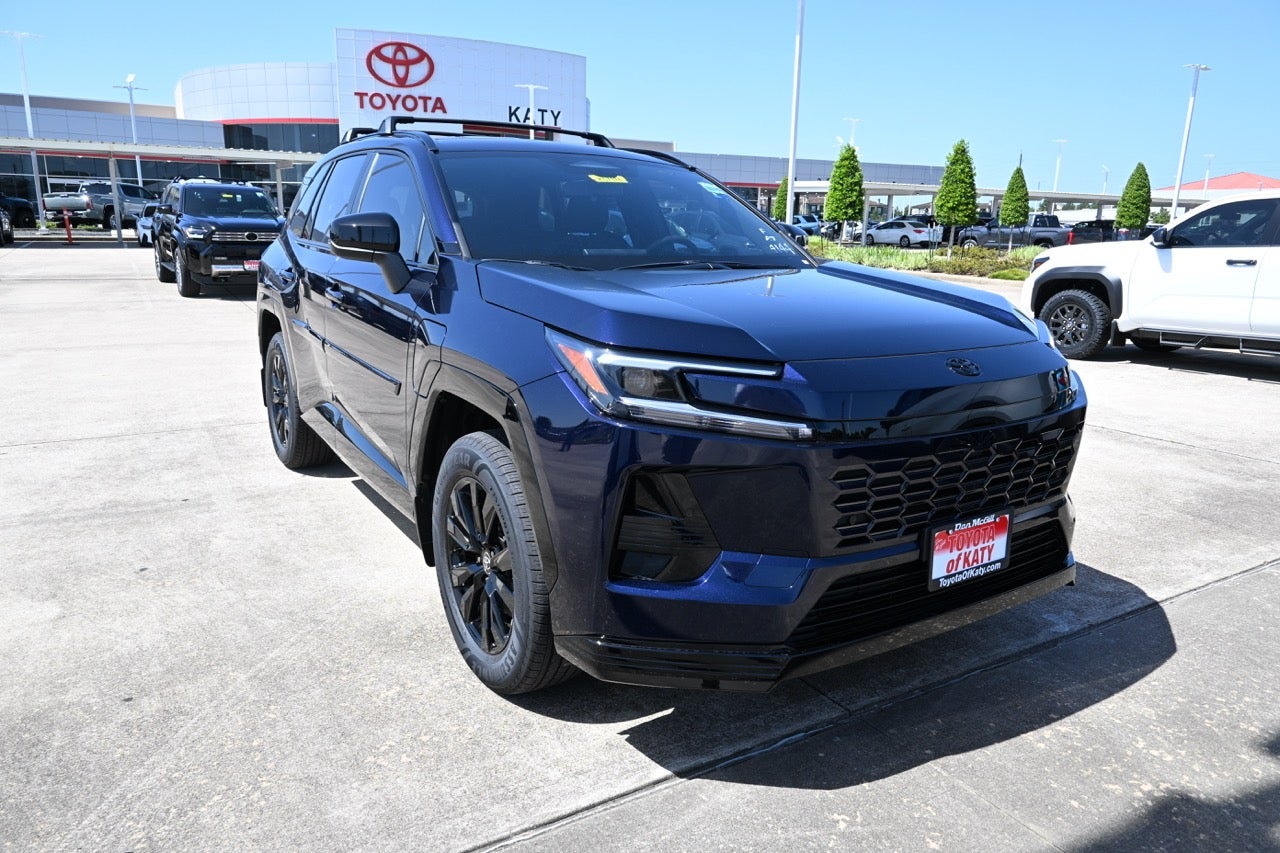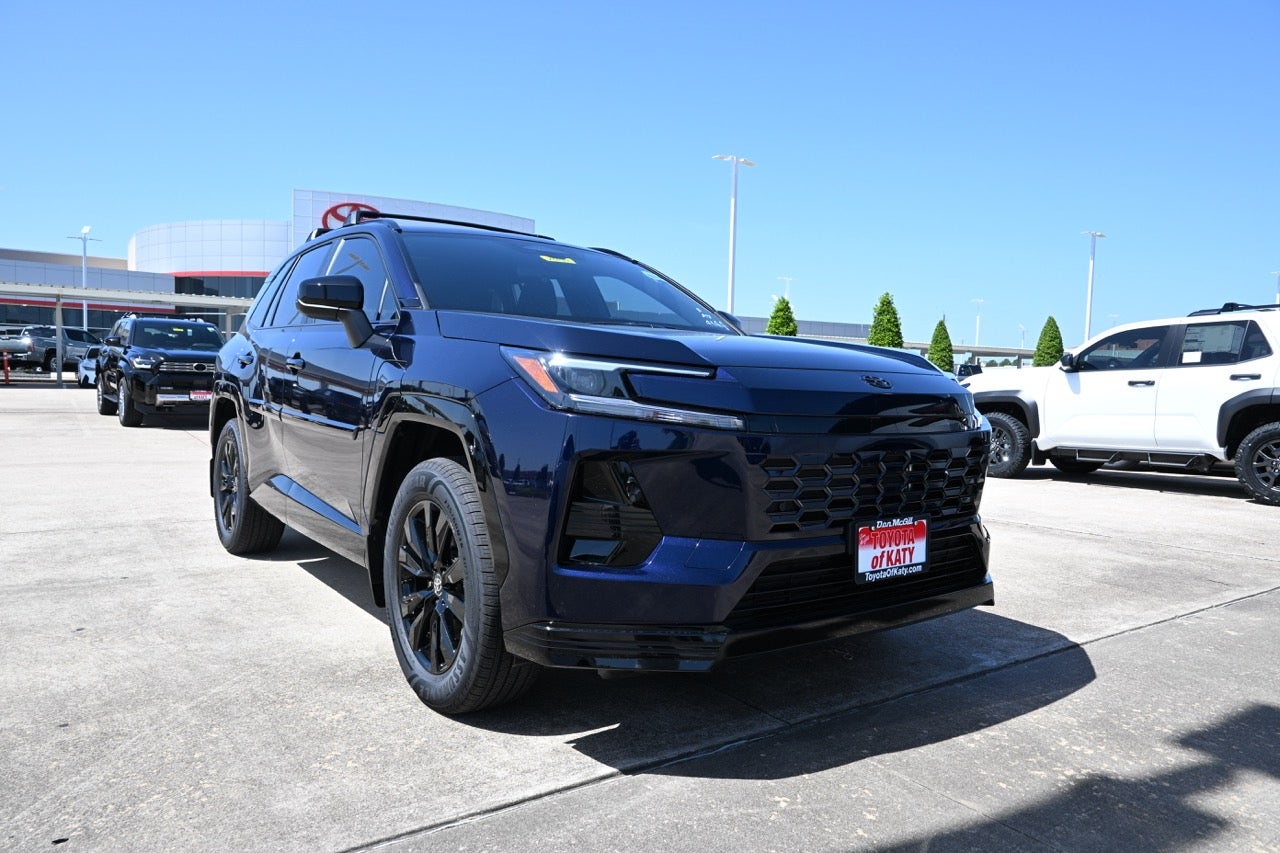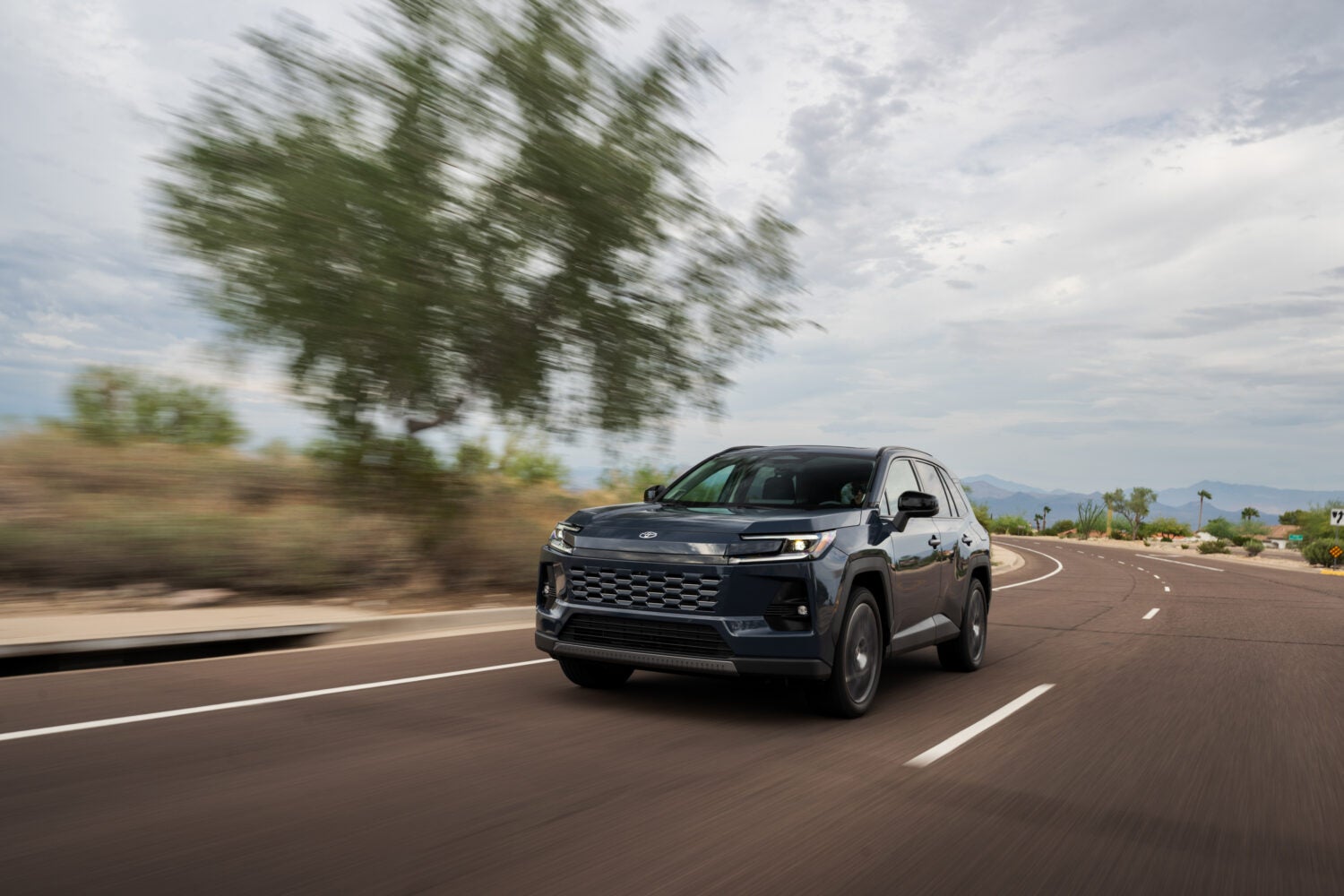


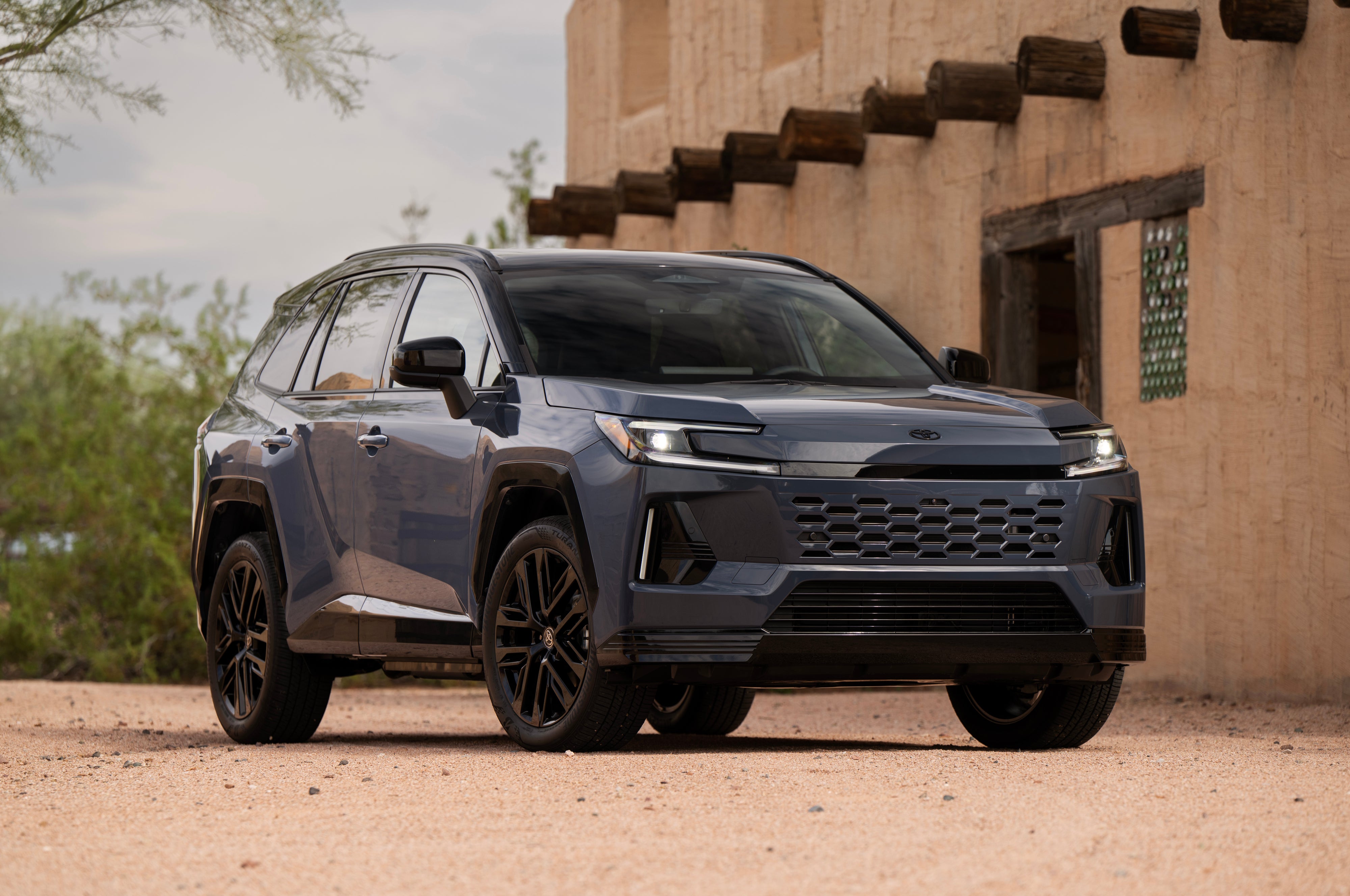
If you drive I-10 every day or juggle school runs and errands around Katy, the Toyota RAV4 Hybrid vs RAV4 Plug-in Hybrid question comes down to how far you drive and where you park. Cost matters too. Both are efficient, but each is better suited to a different kind of driver. This guide covers the real differences, using 2026 model-year figures. If you'd rather see them in person, you can browse our RAV4 Hybrid and RAV4 Plug-in Hybrid inventory at Toyota of Katy while you read.
RAV4 Hybrid vs. RAV4 Plug-in Hybrid: The Core Difference at a Glance
Both models pair a gas engine with electric motors. The RAV4 Hybrid recharges itself via the engine and regenerative braking, so it never needs to be plugged in. The RAV4 Plug-in Hybrid carries a much larger battery that you charge from an outlet or charger, which gives it real electric driving. For 2026, the RAV4 is hybrid only, with no gas-only version.
Used-car shoppers may see the RAV4 Prime name. Earlier plug-in versions were marketed that way, so today the difference is simply the RAV4 Hybrid versus the RAV4 Plug-in Hybrid. The hybrid comes in LE, SE, XLE Premium, Woodland, XSE, and Limited grades, and now offers FWD for the first time, with AWD available as well. Every plug-in trim (SE, XSE, Woodland and GR SPORT) has standard AWD.
Quick Comparison Table: Powertrain, Electric Range, Power, MPG, and Price
Figures are EPA or manufacturer estimates and vary with driving, temperature, and charging.
| RAV4 Hybrid | RAV4 Plug-in Hybrid | |
|---|---|---|
| Powertrain | 2.5L four-cylinder, two motor-generators; AWD models add a rear electric motor | 2.5L four-cylinder, two electric motors including a dedicated rear motor, high-capacity traction battery |
| Drivetrain | FWD or AWD | Standard AWD |
| Net combined horsepower | 226 hp (FWD), 236 hp (AWD) | 324 hp |
| Electric range | No rated electric-only range (EV mode for short, low-speed distances) | Up to 52 miles (Woodland 49, GR SPORT 48) |
| Fuel economy | Up to 44 MPG combined (FWD) | 40 MPG / 101 MPGe combined (SE) |
| Cargo volume | Up to 37.8 cu. ft.; 70.4 cu. ft. with rear seat folded | 33.6 cu. ft. behind rear seats; 63.5 cu. ft. folded |
| Price | Lower upfront cost | Higher upfront cost than the hybrid |
Electric Range and Fuel Economy: Which Saves More in Your Daily Driving?
Start with how many miles you drive between charging stops rather than the highest MPG. A driver whose daily mileage fits within the electric range, and who can charge at home or work, can meaningfully cut fuel use. If you can't charge regularly, the plug-in's advantage shrinks.
Here are the efficiency figures side by side. The RAV4 Hybrid LE is rated 47 city and 40 highway. The AWD XLE gets 41 MPG combined, and the AWD Woodland gets 38. The plug-in SE is rated 40 MPG and 101 MPGe combined, and the GR SPORT gets 37 MPG combined. MPG measures gasoline efficiency, while MPGe expresses energy efficiency on an equivalent basis. Neither number alone sets your real operating cost, so run your own mileage.
Short Commutes Around Katy and West Houston
Picture your whole day, including the return leg. A school drop-off, a grocery run, an errand across Katy, and the drive home all add up. If that loop fits inside the plug-in's range and you recharge each night, much of it can run on electricity.
Treat range as an estimate. Highway speed, air conditioning use, weather, driving style, and load all change how far a charge lasts. In Texas summers, expect the A/C to matter.
Long Highway Drives and Road-Trip Flexibility
Once the plug-in's battery is depleted, it runs as a gas-electric hybrid. Long drives aren't limited by electric range, and you don't have to stop to charge. Both models refuel at a gas station like any other vehicle.
On a road trip, the two behave similarly. The plug-in's electric miles trim gas use early in the trip, but its overall advantage depends on how often you charge compared with your total mileage. The hybrid never needs charging equipment at all.
Power and Driving Feel: What the Plug-in Adds
The plug-in's 324 hp compares with 226 hp for the FWD hybrid and 236 hp for the AWD hybrid. Its electric drive motor produces 203 hp and 201 lb-ft of torque, and Toyota lists 0-60 mph in 5.4 seconds. You'll notice the gap most when merging onto I-10, passing on the highway, or accelerating with passengers and cargo aboard.
At low speeds on electric power, the plug-in is also quiet and responsive. The hybrid still gets electric-motor assistance and delivers plenty for economical daily driving. More horsepower doesn't mean better fuel economy, and plenty of buyers won't use the extra power.
Our advice: drive both back-to-back. Pay attention to accelerator response and how smoothly the engine kicks in, then compare ride comfort and cabin noise. Horsepower alone shouldn't make the call.
Charging the RAV4 Plug-in Hybrid: Home Setup, Speed, and Cost
A plug-in pays off when charging is easy and repeatable. The battery is 22.7 kWh, and every grade includes a dual-voltage cable for 120V and 240V outlets. Where you park matters about as much as how far you drive.
If you're weighing a plug-in, see our new RAV4 Plug-in Hybrid models and bring your parking situation to the conversation. We can help you think through whether it fits.
Level 1 vs. Level 2 Charging Times
Level 1 means the included cable plugged into a standard 120V household outlet. It's slow, though fine for overnight top-ups, and for shorter daily commutes it's often enough. Level 2 requires 240V equipment, and charging goes much faster.
The onboard charger is 7 kW on the SE and GR SPORT and 11 kW on the XSE and Woodland. On Level 2, a full charge takes about 3.5 hours on the SE and GR SPORT and about 2.5 hours on the XSE and Woodland. Only the XSE and Woodland add DC fast charging, with about 30 minutes to charge from 10% to 80% under ideal conditions.
A home Level 2 setup can involve an electrical assessment, equipment, and permitted installation, so have a qualified electrician review your plan. Estimate costs from your actual electricity plan.
Can You Own a Plug-in Without a Home Charger?
Yes, but think it through. If you rent, own a townhome, or live under an HOA, you can use a standard household outlet, charge at work, or use public stations. Check access, pricing, and the time each option takes.
Without external charging, the plug-in runs like a conventional hybrid but loses its full electric benefit. You'd be paying a premium for capability you rarely use. If dependable charging doesn't fit your routine, the hybrid is usually the better match.
Price, Incentives, and Long-Term Cost of Ownership
The hybrid generally costs less up front. The plug-in costs more because of its larger battery, extra power, and electric driving. We recommend comparing similarly equipped trims rather than just the lowest advertised prices, and asking for an out-the-door figure that includes fees, taxes, and any financing costs. If you plan to finance, our financing application is a good place to start.
Upfront Price Gap and Fuel Savings Break-Even
A simple break-even divides the plug-in's net price premium by your estimated annual operating savings. Those savings depend on your annual mileage, how many miles you drive on electricity, your access to charging, and local gas and electricity costs. If savings are small, fuel alone may not recover the premium.
Money isn't the only measure of value. Some buyers like quieter electric driving and stronger acceleration, and fewer gas stops appeal to them even when payback is long. Insurance and maintenance costs also belong in the comparison, along with resale value, though none of these are guaranteed.
Tax Credits, Rebates, and Current Availability
According to the IRS, the federal New Clean Vehicle Credit is not available for vehicles acquired after Sept. 30, 2025.
Texas administers the TCEQ Light-Duty Motor Vehicle Purchase or Lease Incentive Program (LDPLIP), a grant program for eligible electric-drive vehicles, including plug-in hybrids. Vehicles must be on the TCEQ Eligible Vehicle List, applicants commit to operating and registering in Texas for at least one year, and grants are first-come, first-served. The program's funding appears to be depleted, and no reopening date has been announced.
All of this is subject to change and eligibility. Please verify with a tax professional before you count on any incentive. We can't promise one.
Toyota lists both the 2026 RAV4 and RAV4 Plug-in Hybrid for our area, but inventory changes. Contact us for current availability.
Cargo Space, Features, and Battery Warranty: What Stays the Same and What Doesn't
Both models fill the same compact-SUV role. All 2026 RAV4s have a 12.3-inch instrument panel and Toyota Safety Sense 4.0, and a 1500W rear cargo outlet is available. Features still vary by trim, so match trims when you compare.
Cargo is where they differ. The plug-in offers 33.6 cu. ft. behind the rear seats and 63.5 cu. ft. folded, slightly less than the hybrid's 37.8 and 70.4. Check the load floor in person with your own gear, whether that's a stroller or a set of golf clubs.
Both models carry the same battery coverage: the hybrid battery is warranted for 10 years or 150,000 miles, whichever comes first, and other hybrid system components (such as the hybrid control module and inverter) are covered for 8 years or 100,000 miles, with coverage transferring to future owners. Both share hybrid technology, so routine upkeep is similar, and our Service Center can help keep either one running well.
Which RAV4 Fits Your Driving Needs?
Neither model is the right answer for everyone. Pick the powertrain whose strengths you'll use every week. Base your decision on a typical week, since your shortest commute or an occasional road trip will mislead you.
Choose the RAV4 Hybrid If…
You can't reliably charge at home or work, such as in an apartment or an HOA community.
Most of your driving is long highway miles beyond the plug-in's electric range.
A lower upfront cost matters more to you than electric driving.
You want a vehicle that never needs charging equipment.
You want the available FWD configuration or the larger cargo volume.
Choose the RAV4 Plug-in Hybrid If…
You can plug in nightly, and your daily school runs and errands fit within the electric range.
You value the extra power for merging and passing on I-10.
You want standard AWD on every trim.
You accept a higher upfront cost and understand savings depend on how often you charge.
You're comfortable with the tradeoff that without charging, it behaves like a conventional hybrid.
Frequently Asked Questions
Is the Toyota RAV4 Hybrid a plug-in? No. The RAV4 Hybrid never plugs in. It recharges through the engine and regenerative braking.
Does the RAV4 Plug-in Hybrid need a home charger? No. The included cable works with a standard 120V outlet. A Level 2 setup is faster, but it isn't required.
Which is better for long drives? Both handle them well. The plug-in switches to hybrid operation once its battery is depleted, so you don't need to stop for charging.
What happens when the plug-in's battery is depleted? It runs as a gas-electric hybrid. The engine and motors work together, as they do in the RAV4 Hybrid.
Does the 2026 RAV4 come in a gas-only version? No. The 2026 RAV4 is hybrid only.
Compare Available RAV4 Models at Toyota of Katy
We've served the Katy community for over 20 years and sell new and used Toyota cars, trucks, and SUVs, with financing, service, genuine parts, and collision repair. The choice between the Toyota RAV4 Hybrid and RAV4 Plug-in Hybrid is easiest when both are in front of you. Compare current RAV4 models, drive them back-to-back, and bring your daily mileage and charging access, plus your budget. Ask for a clear estimate that separates vehicle price, financing, and any charging costs. Confirm the current inventory with us rather than assuming every trim is in stock.
Ready to get started? Contact us online or call sales at 844-809-1063 to set up a test drive.