

Blog / Toyota Hybrids

Blog

All Toyota Hybrids 2026 Toyota Tundra Toyota RAV4 Toyota Tacoma Toyota Camry 2027 Toyota Corolla Toyota Grand Highlander Toyota 4Runner Toyota Corolla Cross Toyota Highlander Toyota Land Cruiser Toyota Sequoia 2028 Toyota bZ Toyota Crown Toyota Prius Toyota Service Toyota Sienna
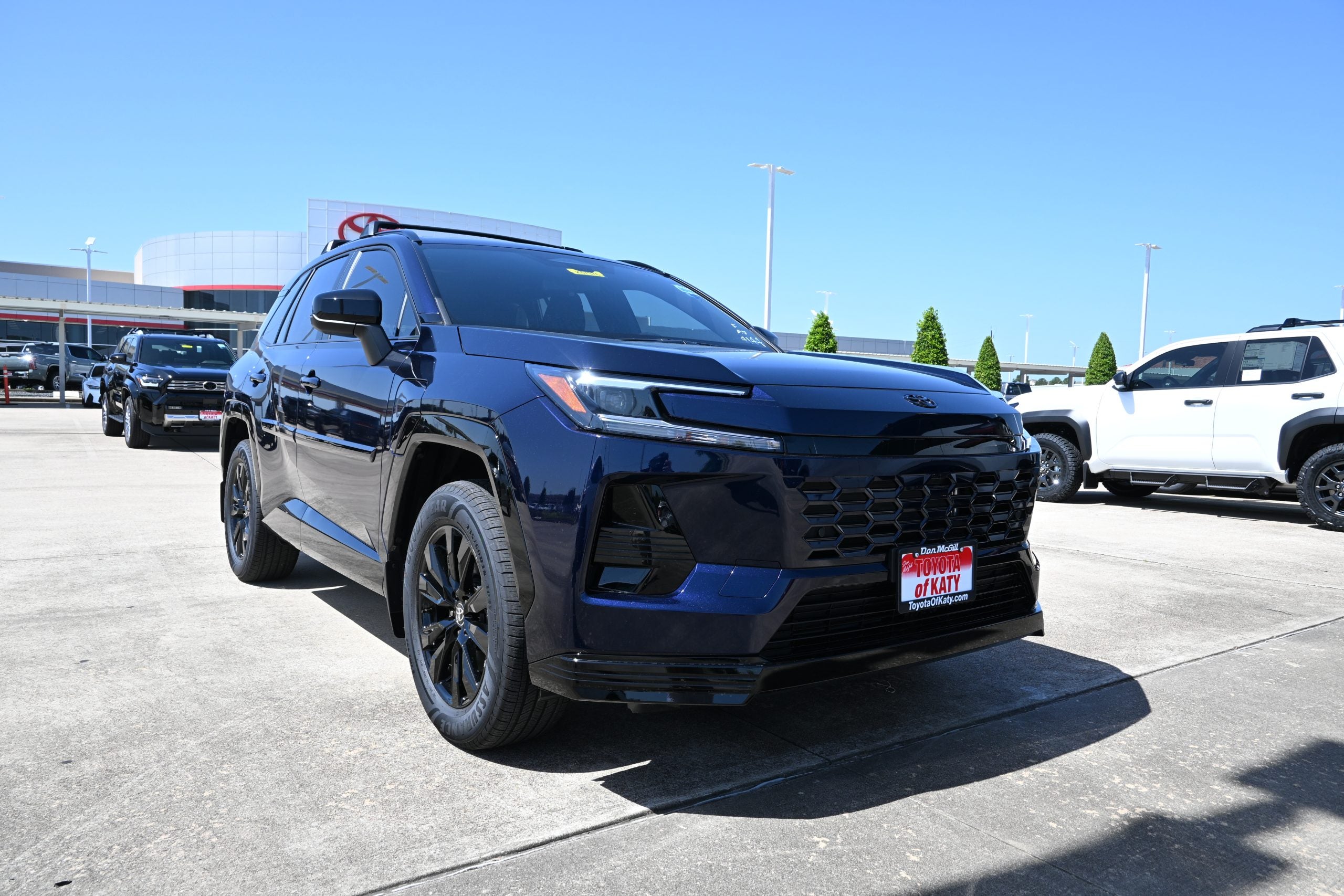
2027 Toyota RAV4 PHEV XSE StormCloud

Toyota RAV4 Hybrid vs. Plug-in Hybrid: Key Differences in MPG, Range & Performance

If you drive I-10 every day or juggle school runs and errands around Katy, the Toyota RAV4 Hybrid vs RAV4 Plug-in Hybrid question comes down to how far you drive and where you park. Cost matters too. Both are efficient, but each is better suited to a different kind of driver. This guide covers the real differences, using 2026 model-year figures. If you'd rather see them in person, you can browse our RAV4 Hybrid and RAV4 Plug-in Hybrid inventory at Toyota of Katy while you read. RAV4 Hybrid vs. RAV4 Plug-in Hybrid: The Core Difference at a Glance Both models pair a gas engine with electric motors. The RAV4 Hybrid recharges itself via the engine and regenerative braking, so it never needs to be plugged in. The RAV4 Plug-in Hybrid carries a much larger battery that you charge from an outlet or charger, which gives it real electric driving. For 2026, the RAV4 is hybrid only, with no gas-only version. Used-car shoppers may see the RAV4 Prime name. Earlier plug-in versions were marketed that way, so today the difference is simply the RAV4 Hybrid versus the RAV4 Plug-in Hybrid. The hybrid comes in LE, SE, XLE Premium, Woodland, XSE, and Limited grades, and now offers FWD for the first time, with AWD available as well. Every plug-in trim (SE, XSE, Woodland and GR SPORT) has standard AWD. Quick Comparison Table: Powertrain, Electric Range, Power, MPG, and Price Figures are EPA or manufacturer estimates and vary with driving, temperature, and charging. RAV4 Hybrid RAV4 Plug-in Hybrid Powertrain 2.5L four-cylinder, two motor-generators; AWD models add a rear electric motor 2.5L four-cylinder, two electric motors including a dedicated rear motor, high-capacity traction battery Drivetrain FWD or AWD Standard AWD Net combined horsepower 226 hp (FWD), 236 hp (AWD) 324 hp Electric range No rated electric-only range (EV mode for short, low-speed distances) Up to 52 miles (Woodland 49, GR SPORT 48) Fuel economy Up to 44 MPG combined (FWD) 40 MPG / 101 MPGe combined (SE) Cargo volume Up to 37.8 cu. ft.; 70.4 cu. ft. with rear seat folded 33.6 cu. ft. behind rear seats; 63.5 cu. ft. folded Price Lower upfront cost Higher upfront cost than the hybrid Electric Range and Fuel Economy: Which Saves More in Your Daily Driving? Start with how many miles you drive between charging stops rather than the highest MPG. A driver whose daily mileage fits within the electric range, and who can charge at home or work, can meaningfully cut fuel use. If you can't charge regularly, the plug-in's advantage shrinks. Here are the efficiency figures side by side. The RAV4 Hybrid LE is rated 47 city and 40 highway. The AWD XLE gets 41 MPG combined, and the AWD Woodland gets 38. The plug-in SE is rated 40 MPG and 101 MPGe combined, and the GR SPORT gets 37 MPG combined. MPG measures gasoline efficiency, while MPGe expresses energy efficiency on an equivalent basis. Neither number alone sets your real operating cost, so run your own mileage. Short Commutes Around Katy and West Houston Picture your whole day, including the return leg. A school drop-off, a grocery run, an errand across Katy, and the drive home all add up. If that loop fits inside the plug-in's range and you recharge each night, much of it can run on electricity. Treat range as an estimate. Highway speed, air conditioning use, weather, driving style, and load all change how far a charge lasts. In Texas summers, expect the A/C to matter. Long Highway Drives and Road-Trip Flexibility Once the plug-in's battery is depleted, it runs as a gas-electric hybrid. Long drives aren't limited by electric range, and you don't have to stop to charge. Both models refuel at a gas station like any other vehicle. On a road trip, the two behave similarly. The plug-in's electric miles trim gas use early in the trip, but its overall advantage depends on how often you charge compared with your total mileage. The hybrid never needs charging equipment at all. Power and Driving Feel: What the Plug-in Adds The plug-in's 324 hp compares with 226 hp for the FWD hybrid and 236 hp for the AWD hybrid. Its electric drive motor produces 203 hp and 201 lb-ft of torque, and Toyota lists 0-60 mph in 5.4 seconds. You'll notice the gap most when merging onto I-10, passing on the highway, or accelerating with passengers and cargo aboard. At low speeds on electric power, the plug-in is also quiet and responsive. The hybrid still gets electric-motor assistance and delivers plenty for economical daily driving. More horsepower doesn't mean better fuel economy, and plenty of buyers won't use the extra power. Our advice: drive both back-to-back. Pay attention to accelerator response and how smoothly the engine kicks in, then compare ride comfort and cabin noise. Horsepower alone shouldn't make the call. Charging the RAV4 Plug-in Hybrid: Home Setup, Speed, and Cost A plug-in pays off when charging is easy and repeatable. The battery is 22.7 kWh, and every grade includes a dual-voltage cable for 120V and 240V outlets. Where you park matters about as much as how far you drive. If you're weighing a plug-in, see our new RAV4 Plug-in Hybrid models and bring your parking situation to the conversation. We can help you think through whether it fits. Level 1 vs. Level 2 Charging Times Level 1 means the included cable plugged into a standard 120V household outlet. It's slow, though fine for overnight top-ups, and for shorter daily commutes it's often enough. Level 2 requires 240V equipment, and charging goes much faster. The onboard charger is 7 kW on the SE and GR SPORT and 11 kW on the XSE and Woodland. On Level 2, a full charge takes about 3.5 hours on the SE and GR SPORT and about 2.5 hours on the XSE and Woodland. Only the XSE and Woodland add DC fast charging, with about 30 minutes to charge from 10% to 80% under ideal conditions. A home Level 2 setup can involve an electrical assessment, equipment, and permitted installation, so have a qualified electrician review your plan. Estimate costs from your actual electricity plan. Can You Own a Plug-in Without a Home Charger? Yes, but think it through. If you rent, own a townhome, or live under an HOA, you can use a standard household outlet, charge at work, or use public stations. Check access, pricing, and the time each option takes. Without external charging, the plug-in runs like a conventional hybrid but loses its full electric benefit. You'd be paying a premium for capability you rarely use. If dependable charging doesn't fit your routine, the hybrid is usually the better match. Price, Incentives, and Long-Term Cost of Ownership The hybrid generally costs less up front. The plug-in costs more because of its larger battery, extra power, and electric driving. We recommend comparing similarly equipped trims rather than just the lowest advertised prices, and asking for an out-the-door figure that includes fees, taxes, and any financing costs. If you plan to finance, our financing application is a good place to start. Upfront Price Gap and Fuel Savings Break-Even A simple break-even divides the plug-in's net price premium by your estimated annual operating savings. Those savings depend on your annual mileage, how many miles you drive on electricity, your access to charging, and local gas and electricity costs. If savings are small, fuel alone may not recover the premium. Money isn't the only measure of value. Some buyers like quieter electric driving and stronger acceleration, and fewer gas stops appeal to them even when payback is long. Insurance and maintenance costs also belong in the comparison, along with resale value, though none of these are guaranteed. Tax Credits, Rebates, and Current Availability According to the IRS, the federal New Clean Vehicle Credit is not available for vehicles acquired after Sept. 30, 2025. Texas administers the TCEQ Light-Duty Motor Vehicle Purchase or Lease Incentive Program (LDPLIP), a grant program for eligible electric-drive vehicles, including plug-in hybrids. Vehicles must be on the TCEQ Eligible Vehicle List, applicants commit to operating and registering in Texas for at least one year, and grants are first-come, first-served. The program's funding appears to be depleted, and no reopening date has been announced. All of this is subject to change and eligibility. Please verify with a tax professional before you count on any incentive. We can't promise one. Toyota lists both the 2026 RAV4 and RAV4 Plug-in Hybrid for our area, but inventory changes. Contact us for current availability. Cargo Space, Features, and Battery Warranty: What Stays the Same and What Doesn't Both models fill the same compact-SUV role. All 2026 RAV4s have a 12.3-inch instrument panel and Toyota Safety Sense 4.0, and a 1500W rear cargo outlet is available. Features still vary by trim, so match trims when you compare. Cargo is where they differ. The plug-in offers 33.6 cu. ft. behind the rear seats and 63.5 cu. ft. folded, slightly less than the hybrid's 37.8 and 70.4. Check the load floor in person with your own gear, whether that's a stroller or a set of golf clubs. Both models carry the same battery coverage: the hybrid battery is warranted for 10 years or 150,000 miles, whichever comes first, and other hybrid system components (such as the hybrid control module and inverter) are covered for 8 years or 100,000 miles, with coverage transferring to future owners. Both share hybrid technology, so routine upkeep is similar, and our Service Center can help keep either one running well. Which RAV4 Fits Your Driving Needs? Neither model is the right answer for everyone. Pick the powertrain whose strengths you'll use every week. Base your decision on a typical week, since your shortest commute or an occasional road trip will mislead you. Choose the RAV4 Hybrid If… You can't reliably charge at home or work, such as in an apartment or an HOA community. Most of your driving is long highway miles beyond the plug-in's electric range. A lower upfront cost matters more to you than electric driving. You want a vehicle that never needs charging equipment. You want the available FWD configuration or the larger cargo volume. Choose the RAV4 Plug-in Hybrid If… You can plug in nightly, and your daily school runs and errands fit within the electric range. You value the extra power for merging and passing on I-10. You want standard AWD on every trim. You accept a higher upfront cost and understand savings depend on how often you charge. You're comfortable with the tradeoff that without charging, it behaves like a conventional hybrid. Frequently Asked Questions Is the Toyota RAV4 Hybrid a plug-in? No. The RAV4 Hybrid never plugs in. It recharges through the engine and regenerative braking. Does the RAV4 Plug-in Hybrid need a home charger? No. The included cable works with a standard 120V outlet. A Level 2 setup is faster, but it isn't required. Which is better for long drives? Both handle them well. The plug-in switches to hybrid operation once its battery is depleted, so you don't need to stop for charging. What happens when the plug-in's battery is depleted? It runs as a gas-electric hybrid. The engine and motors work together, as they do in the RAV4 Hybrid. Does the 2026 RAV4 come in a gas-only version? No. The 2026 RAV4 is hybrid only. Compare Available RAV4 Models at Toyota of Katy We've served the Katy community for over 20 years and sell new and used Toyota cars, trucks, and SUVs, with financing, service, genuine parts, and collision repair. The choice between the Toyota RAV4 Hybrid and RAV4 Plug-in Hybrid is easiest when both are in front of you. Compare current RAV4 models, drive them back-to-back, and bring your daily mileage and charging access, plus your budget. Ask for a clear estimate that separates vehicle price, financing, and any charging costs. Confirm the current inventory with us rather than assuming every trim is in stock. Ready to get started? Contact us online or call sales at 844-809-1063 to set up a test drive.
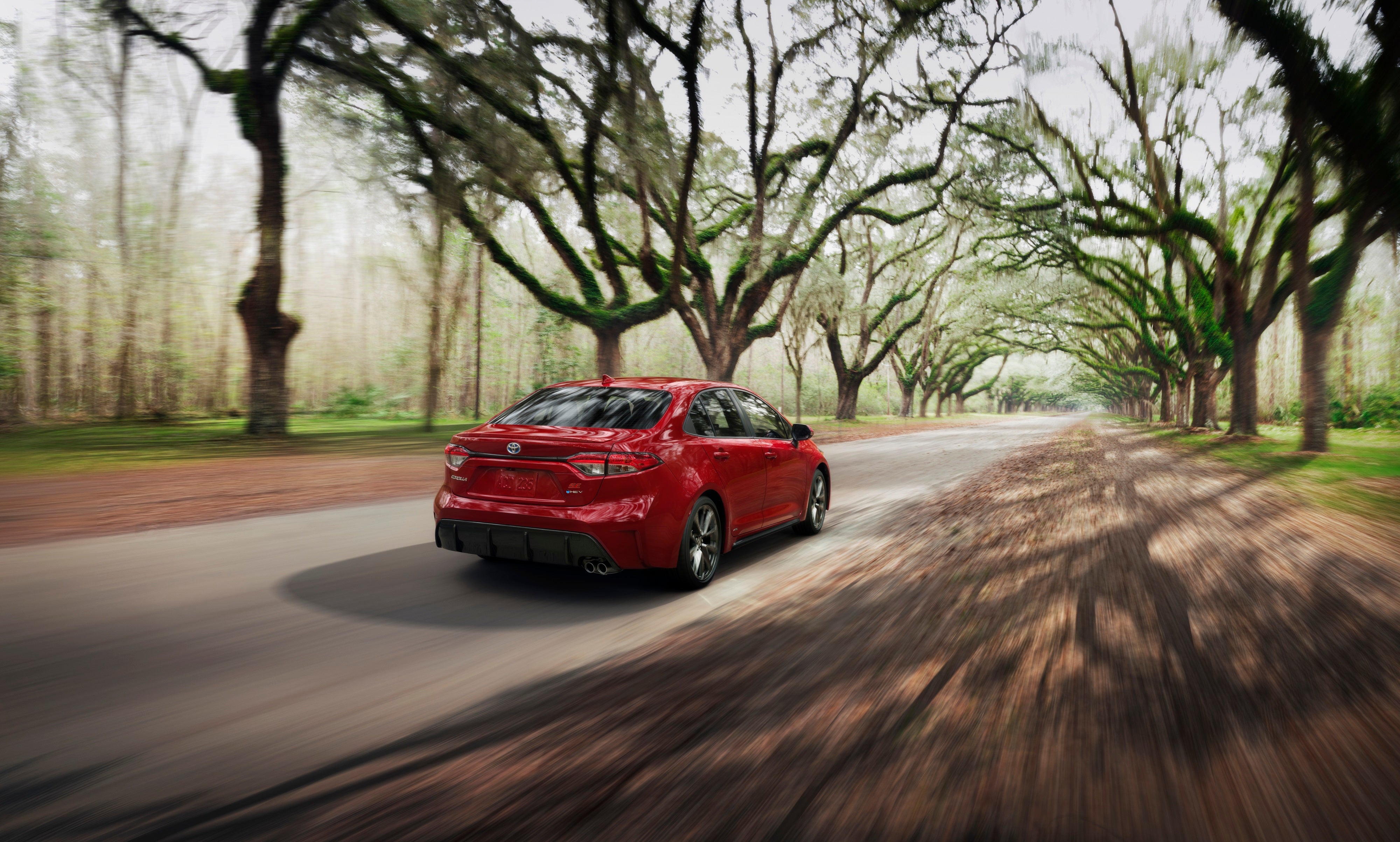
A red 2026 Toyota Corolla Hybrid racing down a forested road

Which Is Better for Katy Drivers, Toyota Hybrid or Gas Models?

Deciding between a Toyota hybrid and a gas model isn't as simple as picking the "greener" option. It comes down to how you actually drive: your commute, your road trip habits, and how you weigh sticker price against fuel savings. We put together this guide to help you cut through the noise and match a powertrain to your real routine. If you'd rather skip ahead and start comparing vehicles in person, you can always contact us at Toyota of Katy. Toyota Hybrid vs. Gas: Understanding the Real Difference Before comparing specific models, it helps to understand what actually separates hybrid vs gas systems under the hood. The difference isn't just about fuel economy numbers on a window sticker. It comes down to how each vehicle generates and manages power. How Hybrid Powertrains Work Toyota's hybrid electric vehicles pair a gas engine with one or more electric motors. They still run on gasoline and drive much like a traditional car, no plugging in required. At low speeds and during deceleration, the electric motor handles most of the work, so the gas engine isn't running constantly. That's why hybrids often post stronger MPG in the city than on the highway. Regenerative braking captures energy while slowing down and uses it, along with the gas engine, to keep the battery charged automatically. How Traditional Gas Engines Compare A gas-only Toyota relies entirely on its combustion engine, with no electric motor stepping in to share the load. The driving experience feels familiar and consistent across speeds, and fuel efficiency tends to hold steady or even improve at highway speeds rather than in stop-and-go conditions. A hybrid shines in city traffic; a gas engine shows its strength on the open road. Comparing Costs: Purchase Price vs. Long-Term Savings The cost of hybrid cars vs gas cars usually starts with a higher MSRP for the hybrid, followed by the question of whether fuel savings close that gap over time. There isn't a single answer. It depends on the model, how many miles you drive, and how much of that driving happens in traffic versus on the highway. Hybrid Price Premiums by Model The price difference between hybrid and gas cars varies quite a bit across Toyota's lineup. Some models, like the Camry and RAV4, are hybrid or plug-in hybrid only for the 2026 model year, so there's no direct gas trim to compare against. Others, like the Highlander and Corolla, still offer both. Depending on trim and equipment, the hybrid premium can land anywhere from a few hundred dollars up to around two thousand. Fuel Savings Over Time at Katy Gas Prices Fuel savings math depends heavily on local gas prices, and Houston-area drivers typically see some of the lowest in Texas. Check AAA's Texas tracker for today's number, then run it against your own mileage. Here's the shape of it, as an illustration rather than an official Toyota figure. Drive 15,000 miles a year, and a vehicle averaging 35 MPG uses roughly 429 gallons, while one averaging 50 MPG uses about 300. That's 129 gallons, or somewhere around $450 a year at current Houston prices. Against a hybrid premium of $1,750 to $2,000, you're looking at roughly four years to break even on fuel alone, sooner if you drive more than 15,000 miles or spend most of them in traffic, longer if your miles are mostly highway. If you keep vehicles past that point, the hybrid wins. If you trade every three years, the gas model's lower entry price may serve you better. If you want to explore hybrid gas mileage advantages firsthand, you can browse Toyota hybrid models in our current inventory. Before finalizing any purchase decision based on potential tax incentives, we'd recommend checking eligibility with a tax professional or through our financing team, since incentive programs change, and we don't want you relying on outdated figures. How Katy and West Houston Driving Impacts Your Choice Where and how you drive matters just as much as the vehicle you choose. Katy and the surrounding West Houston area offer a mix of driving conditions that can tilt the decision one way or another. I-10 Commuting and Highway Stretches At a steady 70 mph, a hybrid's electric motor has little to do. The gas engine is doing nearly all the work, regenerative braking barely engages, and the efficiency gap narrows considerably. That's why the Corolla Hybrid rates 53 in the city but 46 on the highway, while the gas Corolla holds closer to steady across both. So if your week is mostly open-road miles, running out toward Sealy and Columbus or making regular trips to San Antonio, the hybrid premium takes longer to pay back than the headline mpg suggests. A gas Corolla or Highlander is a sound choice, and the lower purchase price is money in your pocket on day one. Stop-and-Go Traffic Around Katy and the Grand Parkway On the flip side, drivers navigating stop-and-go traffic will get more value from a hybrid because the system shuts the gas engine off instead of idling, which is where a conventional engine wastes the most fuel. Sitting still burns nothing in a hybrid. Here's the wrinkle for Katy specifically: the "highway means gas" rule assumes the highway is actually moving. The I-10 stretch between the Grand Parkway and Beltway 8 at 7:30 on a weekday is a parking lot, and those miles behave like city miles no matter what the road is called. An Energy Corridor commuter crawling that stretch daily is in hybrid territory even though the whole trip is technically highway. A driver whose commute runs the Grand Parkway at steady speeds, or who regularly runs out on I-10 toward San Antonio, is closer to the gas case. Toyota Camry: Hybrid vs. Gas for Everyday Driving For the 2026 model year, the Camry is hybrid-only, starting at $29,600 and running on regular unleaded. There's no separate gas trim to weigh against it, so the real decision is FWD versus AWD. Front-drive is the efficiency pick at 51 mpg combined on the LE, while AWD adds $1,525 and rates 50 combined, a small efficiency cost for traction on wet Katy roads during storm season. Worth putting that 51 mpg in perspective: a midsize sedan now returns better fuel economy than most compact cars did a decade ago, which changes the calculation for anyone who's been holding onto an older Camry waiting for the numbers to make sense. If you're specifically hunting for a gas-powered Camry, our pre-owned inventory is where to look, though availability varies. Toyota RAV4: Hybrid vs. Gas for Families and Commuters The RAV4 conversation has shifted in a similar direction. For 2026, the lineup is hybrid and plug-in hybrid only, with no traditional gas trim offered. The choice here comes down to trim and range rather than powertrain type. RAV4 Head-to-Head Snapshot Trim Starting MSRP Power Notable Feature RAV4 Hybrid FWD $31,900 226 hp (236 hp AWD) Up to 48 mpg combined RAV4 Plug-in Hybrid SE $41,500 324 net combined HP 54-mile all-electric range Towing splits by drivetrain rather than by powertrain. The hybrid LE tows 1,750 lbs in either FWD or AWD, while AWD versions of the SE, XLE Premium, Limited, and Woodland reach 3,500. The plug-in hybrid tows 3,500 pounds on every trim except the GR Sport, where Toyota doesn't recommend towing. So if a boat or small trailer is in the picture, the trim and drivetrain matter more than whether you go plug-in. If a gas RAV4 is what you're after, it's worth checking our used inventory, since availability there can differ from new stock. Toyota Highlander: Hybrid vs. Gas for Road Trips and Hauling The Highlander comparison is one of the more clear-cut choices in Toyota's lineup, since both powertrains are still offered on real trims. Highlander Head-to-Head Snapshot Trim Starting MSRP Horsepower Combined MPG (est.) Highlander XLE Gas $46,270 265 hp (2.4-liter turbocharged four-cylinder) 24 MPG Highlander XLE Hybrid $48,020 243 net combined hp 35 MPG The gas Highlander keeps the higher-output turbocharged engine, which appeals to drivers who tow trailers or haul gear regularly and want stronger low-end torque; gas models offer up to 5,000 pounds of towing capacity against the hybrid's 3,500. The fuel math here is the most favorable in the lineup. At 15,000 miles a year, 24 mpg burns about 625 gallons, while 35 mpg burns about 429, a difference of about $650 annually. That clears the $1,750 premium in under three years, and Highlanders tend to stay in families longer than that. One thing to factor in: every Highlander Hybrid comes with all-wheel drive standard, while the gas XLE starts front-drive, so part of that gap is drivetrain rather than electrification. Compare an AWD gas Highlander against the hybrid for the honest premium. Toyota Corolla: Hybrid vs. Gas for Budget-Conscious Drivers This question is often most relevant with the Corolla, since it's Toyota's most budget-focused nameplate. The gas Corolla LE starts at $23,125 plus a $1,295 delivery fee, powered by a 2.0-liter four-cylinder producing 169 hp and 151 lb-ft through a CVT, rated up to 35 MPG combined. The Corolla Hybrid runs on the same regular unleaded, but the fuel efficiency picture looks quite different. The Corolla Hybrid LE uses a 1.8-liter 4-cylinder paired with an electric motor for 138 net combined hp and 105 lb-ft, rated up to 53 city, 46 highway, and 50 combined MPG. Toyota lists the Corolla Hybrid LE starting at $24,975. The premium over the gas model is modest, and for budget-conscious drivers who do a lot of city driving, the hybrid's fuel savings can add up meaningfully. Maintenance, Battery Life, and Ownership Considerations Hybrid ownership tends to be more balanced than people assume going in. Toyota backs its hybrid battery with a 10-year/150,000-mile limited warranty, and other hybrid components, including the battery control module, hybrid control module, and inverter/converter, carry an 8-year/100,000-mile warranty. Buyers worried about hybrid ownership costs get a lot of runway here before they need to think twice. On routine maintenance, Kelley Blue Book has noted that regenerative braking reduces wear on brake pads and rotors, which can extend service life compared to a traditional gas vehicle that relies solely on friction braking. As for Texas heat, modern hybrid batteries are engineered with thermal management systems built to handle high-temperature climates, so Katy's summers shouldn't be a source of unusual concern for hybrid owners. Our service center can help keep either powertrain running well for the long haul. Which Powertrain Fits Your Katy Lifestyle? There's no universal answer here. It depends on your specific routine, and being honest about your driving habits is the best way to choose correctly. Choose Hybrid If You Drive Mostly Local, Congested Routes If your daily miles are dominated by Katy traffic, school runs, or short hops around the Energy Corridor, a hybrid's ability to lean on electric power at low speeds will likely translate into real savings at the pump, along with a quieter ride and potentially lower brake maintenance over time. Choose Gas If You Prioritize Upfront Savings or Frequent Long Drives If you frequently drive long stretches of I-10 or prioritize a lower purchase price over incremental fuel savings, a gas model, if still available, remains a perfectly sound choice. Gas engines perform efficiently at steady highway speeds, and the lower upfront cost can matter more than fuel savings for drivers who don't rack up heavy city mileage. Explore Toyota Hybrid and Gas Models at Toyota of Katy Whether you're drawn to the efficiency of a hybrid or the straightforward simplicity of a gas engine, the best way to decide is to get behind the wheel. Talk to Our Team Our team at Toyota of Katy can walk you through the tradeoffs for your specific commute, whether that's daily stop-and-go traffic or regular trips out toward the Hill Country. Ready to Compare? The most useful thing you can do is drive both. Search our new inventory to see what's on the lot, then come by 21555 Katy Fwy and take a hybrid and its gas counterpart out on the same route, ideally the one you actually commute. Fifteen minutes in traffic tells you more about which powertrain fits your week than any spec sheet, ours included.

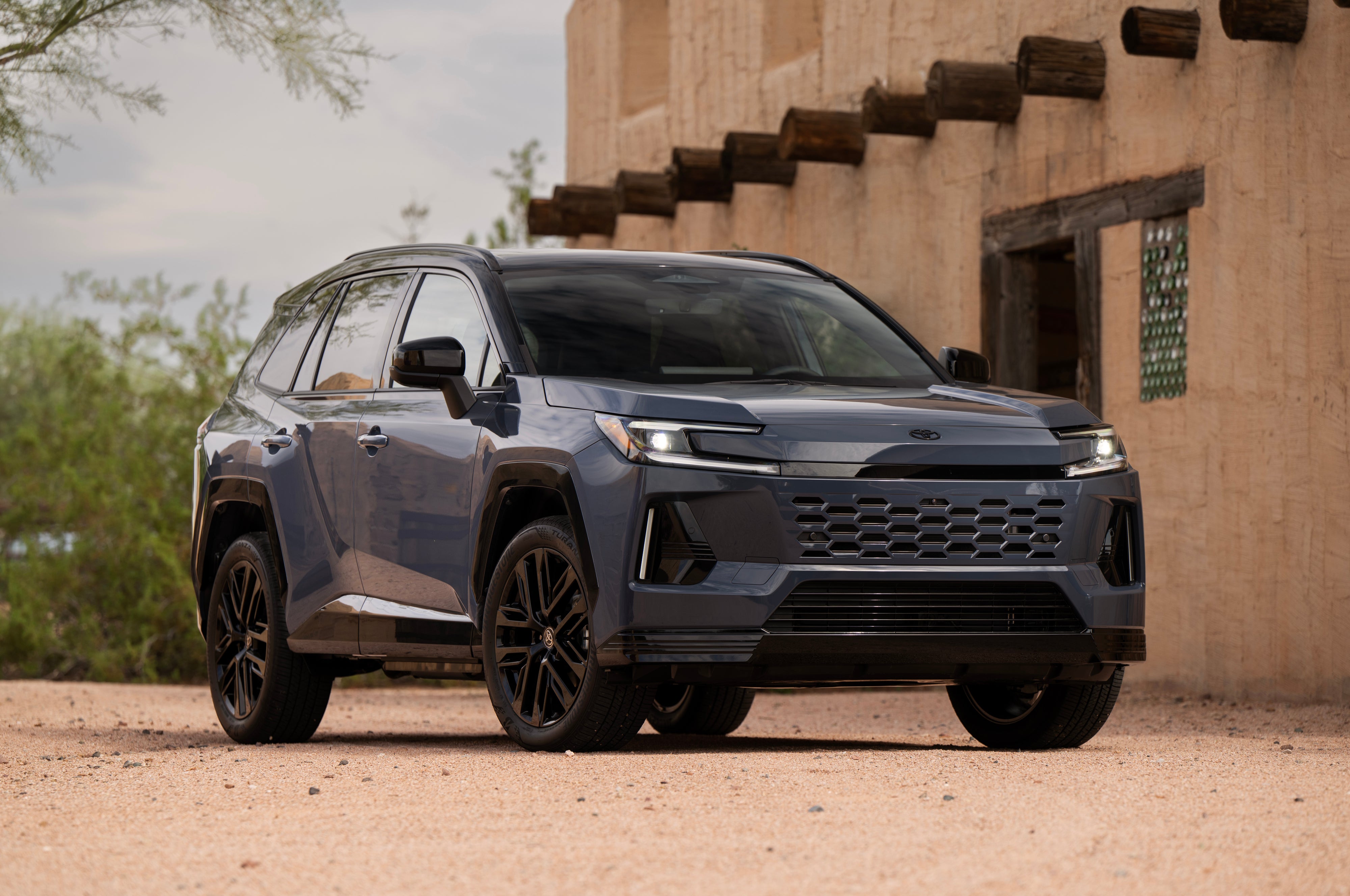
A dark blue Toyota RAV4 on the Toyota of Katy dealership lot

Best Toyota Hybrids for the Katy to Downtown Houston Commute

If you drive I-10 from Katy to Downtown Houston every day, you already know what it costs you. The stretch between the Grand Parkway and Downtown ranks among the most congested in Texas, and it drains your wallet at the pump if you're behind the wheel of a conventional gas-powered vehicle. Choosing the right Toyota hybrid for this specific route can flip that script, turning daily stop-and-go traffic into a surprisingly efficient drive. Explore Toyota's hybrid and electrified lineup to see which model fits your commute before you read on. Why the Katy-to-Downtown I-10 Commute Calls for a Hybrid This particular stretch of highway punishes conventional engines in ways many drivers don't fully grasp until they see their fuel bill. Stop-and-Go Traffic and Fuel Drain on I-10 A gas engine burns fuel whether the car is moving or not. During the crawl through the Katy Freeway's congestion zones, especially between Barker Cypress and the Loop, conventional engines idle constantly. Every red light, every brake tap, every crawling acceleration cycle bleeds fuel without moving you forward. Over a typical 40-plus-mile round trip, five days a week, that adds up fast. The corridor is also unusually variable, with drivers cruising at highway speed past Fry Road one moment and braking to a near-stop by Beltway 8 the next. That constant back-and-forth between highway and city-style driving is exactly where conventional powertrains struggle, and where hybrids do their best work. How Hybrid Technology Turns Your Commute into Savings Toyota's hybrid system, the Toyota Hybrid Synergy Drive, is designed around the driving patterns of urban and suburban commutes. When you decelerate or brake, the electric motor works as a generator, recovering kinetic energy and storing it in the battery. That energy then powers the electric motor during low-speed acceleration and EV-mode driving, so the gas engine doesn't have to work as hard when you're merging back into traffic. On a route like I-10 West, this regenerative braking cycle repeats dozens of times per commute, and hybrids tend to hit their best real-world fuel economy in exactly the conditions where gas-only vehicles suffer most. Best Toyota Hybrids for the Katy Commuter Toyota offers a range of hybrid models, and the differences between them matter when you're choosing based on a specific commute. Each brings something different to the I-10 route. Toyota Prius: Maximum MPG for Budget-Focused Drivers The Prius remains the benchmark for fuel economy in Toyota's lineup, rated at 57 city / 56 highway / 57 combined MPG. Its aerodynamic profile and refined hybrid powertrain deliver efficiency that's hard to match at any price point. If cutting fuel cost on the daily Katy commute is your top priority, the Prius gets you there most directly, and the current generation pairs that efficiency with sharper styling and a cleaner, more driver-focused cabin. Toyota Corolla Cross Hybrid: Compact Efficiency for Downtown Parking Finding parking Downtown changes when you're driving a compact car. The Corolla Cross Hybrid, rated at 46 city / 39 highway / 42 combined MPG, threads a useful needle between SUV versatility and car-like maneuverability, making it a practical choice for commuters who also need to navigate Houston's Downtown parking structures. Its slightly elevated ride height gives the driver better sightlines in congested traffic, and it handles weekend errands around Katy just as well as it handles the weekday grind Downtown. Toyota Camry Hybrid: Smooth Highway Merging and Comfort The Camry Hybrid pairs commuter efficiency with genuine driving comfort, rated at 53 city / 50 highway / 51 combined MPG on the LE FWD trim, with 225 hp in FWD configuration and 232 hp available in AWD. That power advantage matters when merging onto I-10 from a Katy on-ramp and needing to match highway speed quickly. Inside, the Camry offers a 12.3-inch touchscreen, a 12.3-inch digital instrument cluster on XLE and XSE trims, and an available 10-inch head-up display, all backed by Toyota Safety Sense 3.0, which includes pre-collision detection, adaptive cruise control, and lane-following assist. Long commutes feel less draining when the ride is smooth and noise is well-managed, and the Camry excels on both counts. Toyota RAV4 Hybrid: Versatile Power for Commute and Weekend The RAV4 Hybrid brings a well-rounded package to the lineup, rated at 41 city / 38 highway / 39 combined MPG with 219 hp. It pairs a capable AWD system with strong hybrid efficiency, matching the performance of non-hybrid compact SUVs while still saving real money at the pump. For Katy families who use one vehicle for everything, the RAV4 Hybrid's elevated ride height and cargo versatility make it just as ready for a weekend trip as it is for the daily commute. Comparing MPG, Comfort, and Value for the I-10 Route Choosing between these models comes down to how you weigh fuel savings against comfort, size, and highway feel. Fuel Economy and Cost Savings Over a Typical Commute A typical Katy-to-Downtown round trip on I-10 runs 40 miles or more, depending on your starting point, and, driven five days a week, that mileage adds up fast. The combined MPG figures break down like this: Model Combined MPG Estimated Monthly Fuel Cost* Prius 57 Lowest of the group Camry Hybrid 51 Slightly higher than Prius, well below non-hybrids Corolla Cross Hybrid 42 Moderate RAV4 Hybrid 39 Highest of the group, still well below non-hybrid SUVs \*Estimates based on typical I-10 commute mileage and Houston-area fuel pricing. Actual costs vary with driving habits and local gas prices. The Prius leads on pure MPG, followed by the Camry Hybrid, then the Corolla Cross Hybrid and RAV4 Hybrid. All four beat their non-hybrid counterparts by a meaningful margin, and for commuters driving this route five days a week, any of them is a real upgrade over a conventional gas engine. Cabin Comfort and Tech for Stop-and-Go Traffic Comfort matters more on a long commute than most buyers account for. Sitting in traffic for 30 to 60 minutes each way takes a real physical and mental toll over time. The Camry Hybrid offers the most refined cabin experience of the group, with available heated and ventilated seating, a quiet ride, and supportive seats. The RAV4 Hybrid comes close while adding SUV versatility. The Prius and Corolla Cross Hybrid are comfortable for their size but feel more compact inside. All four models are backed by Toyota Safety Sense, and on a stop-and-go interstate, features like lane-keeping assist and adaptive cruise control do real work, reducing fatigue. Which Toyota Hybrid Handles Daily Highway Driving Best Highway driving is where the Camry Hybrid and RAV4 Hybrid pull ahead of the smaller models. Their powertrains offer more passing power, better high-speed stability, and a more planted feel at sustained freeway speeds. When I-10 opens up west of the Grand Parkway, these two give you confidence that the compact models can't fully match. That said, the Prius and Corolla Cross Hybrid are fully capable highway vehicles. Their efficiency advantage is most evident in city driving, but they handle freeway segments of the commute without issue. Drivers who want a more composed highway feel should lean toward the Camry or RAV4. Drivers chasing raw efficiency will find the Prius holds its ground. Our Recommendation: Best Toyota Hybrid for This Commute For most Katy commuters driving I-10 to Downtown Houston, we recommend the Camry Hybrid. It strikes the strongest balance of the group, delivering real fuel savings in stop-and-go traffic while still having the power to merge confidently onto I-10 and the comfort to make a long stretch through the Energy Corridor bearable. Runner-Up Picks Based on Your Priorities The Prius is the strongest runner-up if maximizing fuel economy is your single top priority. The RAV4 Hybrid earns its spot for commuters who also need cargo space and AWD confidence during Houston's sudden rainstorms. The Corolla Cross Hybrid is the right call for drivers who want a compact SUV footprint that parks easily Downtown and handles the mixed-use nature of the I-10 commute well. Test Drive Your Best Toyota Hybrid at Toyota of Katy You don't have to guess which hybrid fits your commute. Toyota of Katy carries the full Toyota hybrid lineup, including the Prius, Corolla Cross Hybrid, Camry Hybrid, and RAV4 Hybrid, so you can compare them side by side and get behind the wheel before deciding. We're located at 21555 Katy Freeway, Katy, TX 77450, right on the same highway you drive every day, and our team understands the Katy-to-Downtown corridor because we're part of this community. Local Financing, Incentives, and Trade-In Options We offer financing and leasing options tailored to a range of budgets, including access to Toyota Financial Services programs that can make hybrid ownership more accessible than many buyers expect. We also accept trade-ins, which can offset a significant portion of the cost of switching to a hybrid. Our finance team can walk you through current incentives, available rate programs, and how your trade-in factors into the deal. Schedule Your Test Drive Near Katy and West Houston Ready to find your best Toyota hybrid for the I-10 commute? Contact Toyota of Katy or call us at 844-809-1063 to schedule a test drive, check hybrid inventory by model and trim, or ask about current offers. Our service department is also on-site for maintenance and warranty work, so Toyota of Katy stays with you well past the sale as a long-term partner for hybrid ownership in Katy and the Greater Houston area.

Contact Us

Fill out this form below and we'll contact you shortly
*Required Fields
$(document).ready(function () { var $phoneSection = $('#rightBlockInfo'); if (!$phoneSection.length || $phoneSection.find('.custom-call-dropdown').length) { return; } var phoneDropdown = ` `; $('#telSet1, #telSet2').remove(); $phoneSection.find('li.googleTranslate').after(phoneDropdown); });