Blog

2026 Toyota Tundra vs. 2026 GMC Sierra 1500: Which Truck Dominates Texas Roads?

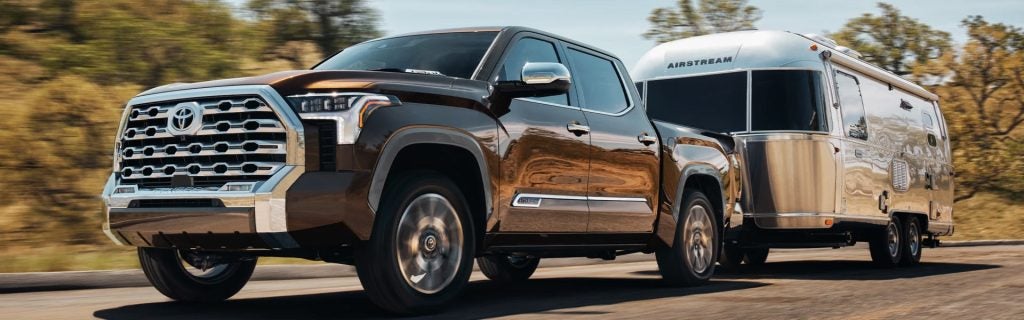
A brown Toyota Tundra truck towing a silver Airstream trailer down a road.

Texas truck drivers know what they want: serious towing power, refined comfort, and bulletproof dependability. The 2026 Toyota Tundra and the 2026 GMC Sierra 1500 both offer compelling features for full-size pickup buyers, but which one offers the best blend of strength, innovation, and value? Our team at Toyota of Katy compares these two heavy hitters to help you make the smart call for your needs.

Tundra vs. Sierra 1500: Comparison Overview

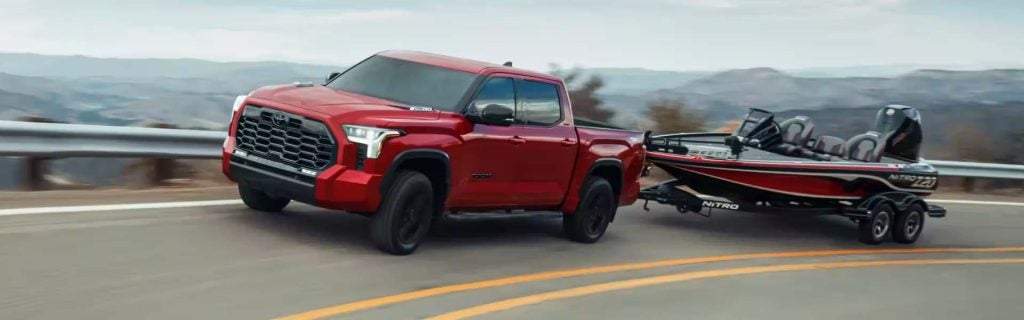
Red pickup truck towing a black and red boat on a trailer

The 2026 Toyota Tundra and GMC Sierra 1500 appeal to different priorities. The Tundra leans on Toyota's legendary reliability, enhanced hybrid power, and cutting-edge driver assistance tech, while the Sierra counters with traditional V8 muscle and luxurious trims like the Denali and AT4.

Feature2026 Toyota Tundra2026 GMC Sierra 1500
CategoryFull-Size PickupFull-Size Pickup
Best Suited ForWork and towing, hybrid power, modern safetyV8 power, luxury interiors, traditional towing
Trims ComparedSR, SR5, Limited, 1794 Edition, TRD Pro, CapstonePro, SLE, Elevation, SLT, AT4, Denali, Denali Ultimate
Electrified OptionsYes (i-FORCE MAX Hybrid)No Hybrid Options

Performance & Capability: Powertrains and Towing

Both trucks deliver muscle, but they do it differently. The Tundra features a twin-turbo V6 in standard and hybrid (i-FORCE MAX) forms, while the Sierra offers a range of gas and diesel engines, including a 6.2L V8 and Duramax diesel.

Specification2026 Toyota Tundra2026 GMC Sierra 1500
Engine Options3.4L Twin-Turbo V6, i-FORCE MAX Hybrid2.7L Turbo I4, 5.3L V8, 6.2L V8, 3.0L Duramax Diesel
Max Horsepower437 hp (Hybrid)420 hp (6.2L V8)
Max Torque583 lb-ft (Hybrid)495 lb-ft (Diesel)
Max TowingUp to 12,000 lbsUp to 13,200 lbs
Max Payload1,940 lbs2,240 lbs

While the Sierra edges out in max towing, the Tundra's hybrid torque and off-road-focused trims make it a standout for mixed-use drivers who want work-ready capability and weekend adventure potential.

Interior, Tech, and Comfort

Toyota and GMC both deliver high-end cabins, especially in their premium trims. The Tundra offers standard digital gauges and a massive touchscreen, while the Sierra leans into plush leather and upscale Denali interior finishes.

Feature2026 Toyota Tundra2026 GMC Sierra 1500
Passenger CapacityUp to 5Up to 5
Display System8″ standard, 14″ available13.4″ touchscreen
Digital Cluster12.3″ standard12.3″ standard
Premium AudioJBL PremiumBose Premium
Interior ThemesSporty, modern, ruggedLuxury-focused (Denali), rugged (AT4)

Advanced Safety and Driver Assistance

Both trucks offer driver aids, but the Tundra includes Toyota Safety Sense 3.0 standard across the board, which includes lane tracing, adaptive cruise, and emergency steering assist. GMC provides its Pro Safety Suite, with enhanced options available at higher trims.

Safety Feature2026 Toyota Tundra2026 GMC Sierra 1500
Safety SuiteToyota Safety Sense 3.0GMC Pro Safety & Pro Safety Plus
Blind Spot MonitoringStandardAvailable
Adaptive CruiseStandardAvailable
Lane CenteringYesNo
360° CameraAvailableAvailable

Tundra offers a more complete safety package standard, making it ideal for families and daily commuters who prioritize protection.

Which Truck Is Best for Texas Drivers?

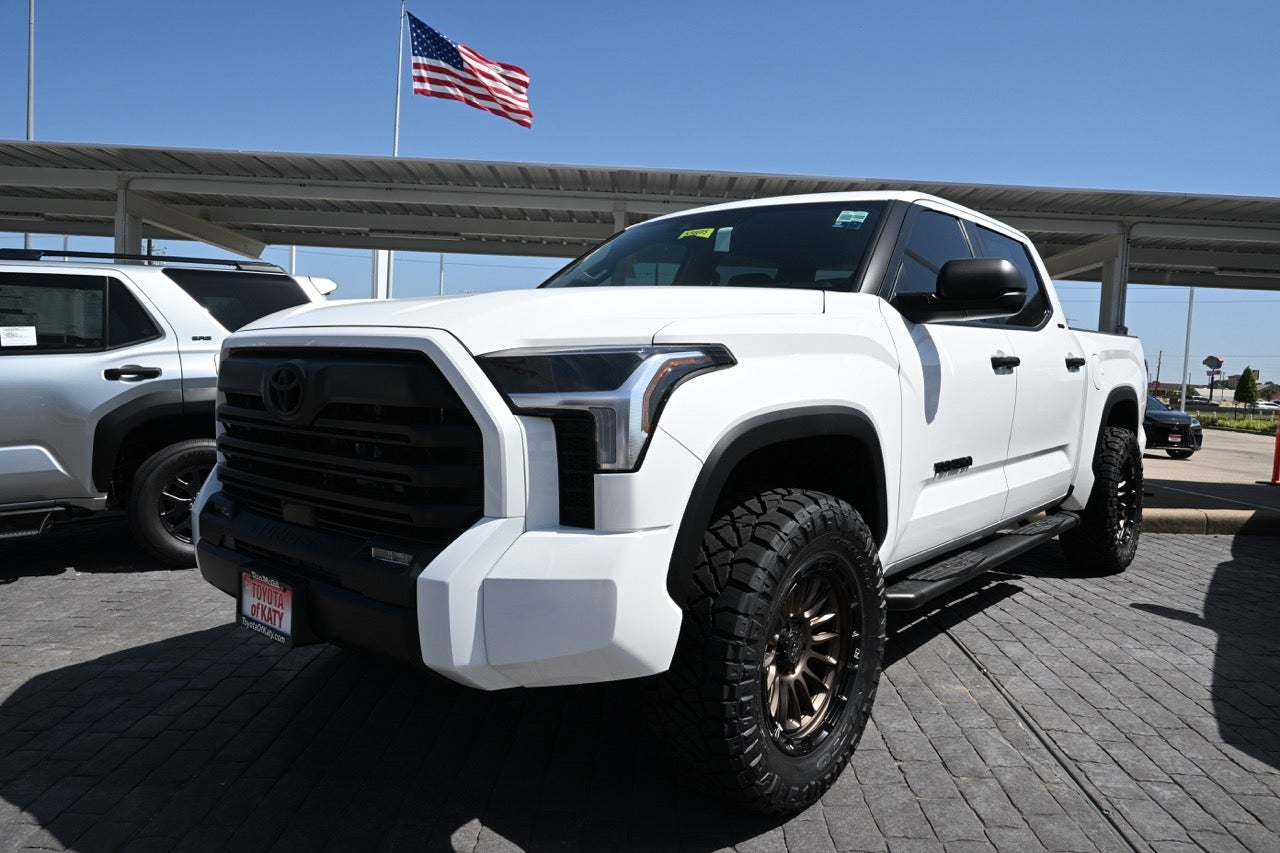
2025 TUNDRA

When choosing between the 2026 Toyota Tundra and GMC Sierra 1500, it comes down to your priorities. If you want max towing and diesel availability, the Sierra is a strong contender. But if you want hybrid torque, advanced safety standard, Toyota reliability, and off-road strength, the Tundra offers serious value.

Visit Toyota of Katy at 21555 Katy Freeway, Katy, TX 77450 or call 844-809-1063 to schedule your Tundra test drive today.

You May Also Be Interested In:

New Toyota Specials | Toyota New Model Research | Toyota Incentives & Offers | Service Center | Finance Center

New Toyota Dealership Near:

Fulshear | Brookshire | Rosenberg | Houston | Cypress | Richmond | Hockley | Bridgeland

Recommended Posts

2027 Toyota Camry XSE 007

Toyota Camry LE vs. XSE: Differences in MPG, Features & Price

The choice between the Toyota Camry LE and XSE comes down to what you value in the daily drive. The LE is rated at 51 mpg combined in FWD form, while the XSE FWD gets 46 mpg combined. What the XSE offers in return is larger screens, 19-inch wheels, and a sport-tuned setup. Both are hybrid-only, so the core powertrain is the same either way. Toyota Camry LE vs. XSE: Quick Verdict for Katy Commuters For most Katy commuters, the LE is the smarter choice if mileage and monthly costs drive your decision. The XSE makes sense if you spend long hours in the car and want its equipment and sportier setup. Compare FWD with FWD and AWD with AWD, and you'll see the real differences. You can also check the new Toyota Camry inventory in Katy to see what's in stock. The table below sets the Toyota Camry LE and XSE side by side for each drivetrain. Feature LE FWD LE AWD XSE FWD XSE AWD Powertrain 2.5-liter four-cylinder hybrid 2.5-liter four-cylinder hybrid 2.5-liter four-cylinder hybrid 2.5-liter four-cylinder hybrid Horsepower 225 net-combined hp 232 net-combined hp 225 net-combined hp 232 net-combined hp Transmission Electronically controlled CVT Electronically controlled CVT Electronically controlled CVT Electronically controlled CVT EPA city/highway/combined MPG 52/49/51 50/49/50 47/45/46 43/43/43 Wheels 16-inch alloy 16-inch alloy 19-inch black and smoke-gray-finished alloy 19-inch black and smoke-gray-finished alloy Suspension Standard Standard Sport-tuned Sport-tuned Front seats Fabric-trimmed Fabric-trimmed Leather-trimmed Leather-trimmed Display and cluster 8-inch touchscreen, 7-inch digital cluster 8-inch touchscreen, 7-inch digital cluster 12.3-inch touchscreen, 12.3-inch digital cluster 12.3-inch touchscreen, 12.3-inch digital cluster Audio Six-speaker Six-speaker Six-speaker standard Six-speaker standard Standard safety suite Toyota Safety Sense 3.0 Toyota Safety Sense 3.0 Toyota Safety Sense 3.0 Toyota Safety Sense 3.0 Cargo 15.1 cu. ft. 15.1 cu. ft. 15.1 cu. ft. 15.1 cu. ft. Price and Monthly Payment: What Separates the LE From the XSE The Camry LE starts at $29,600 ($31,125 with AWD), while the XSE starts at $36,000 ($37,525 with AWD), and both include a $1,295 destination charge. That roughly $6,400 difference buys leather seats, larger screens, 19-inch wheels, and the sport suspension. Both trims share the same hybrid system, so the extra money goes to features and styling, not power. The LE's higher fuel economy is the other half of the value picture. A lower sticker price and better MPG work together over years of commuting. The monthly payment depends on the financing terms and the trim. If you want to see how each trim might fit your budget, start with our finance application. If you're budget-minded, our certified pre-owned vehicles are another route worth a look. Fuel Economy and Powertrain for I-10 and Grand Parkway Driving Whether you merge onto I-10 or settle into the Grand Parkway, both trims drive the same way mechanically. You'll notice the gap at the pump. Shared Hybrid Powertrain and Performance Every Toyota Camry uses a 2.5-liter four-cylinder with Toyota's fifth-generation hybrid system and an electronically controlled CVT. Drivetrain sets the output. FWD makes 225 net-combined hp, and AWD makes 232 net-combined hp. Stepping up to the XSE adds no power. Electronic On-Demand AWD controls torque distribution to the rear wheels when it detects slippery road conditions or a loss of tire grip. That helps traction, but it doesn't make wet roads or flooded streets safe to enter. MPG Differences and Estimated Fuel Costs EPA-estimated ratings are city/highway/combined: LE FWD: 52/49/51. LE AWD: 50/49/50. XSE FWD: 47/45/46. XSE AWD: 43/43/43. Here is an illustration of the method, not a prediction. Multiply miles per day by days driven, then divide by mpg to get gallons. Take a Katy-to-Energy Corridor style commute. Over the same miles, the LE FWD at 51 mpg combined uses fewer gallons than the XSE FWD at 46. Use your own mileage to run the numbers. EPA figures are estimates. Real-world results vary with driving habits, traffic, and conditions. Want to feel the difference yourself? Contact us to set up a test drive. Ride Comfort and Driving Feel in Katy Traffic Toyota says the Camry's suspension delivers both handling and a smooth ride. Trim-level tuning is where the two diverge, and your own route will tell you the most. Suspension Tuning and Wheel Size The LE rides on 16-inch alloy wheels. On the XSE, you get 19-inch black and smoke-gray-finished alloy wheels plus a sport-tuned suspension with front and rear shock absorbers. It also has a larger-diameter front stabilizer bar than the LE. Toyota says this is intended to support comfort, stability, and handling. The XSE also adds paddle shifters. Its sportier tuning and larger wheels are aimed at handling. Road Noise and Stop-and-Go Commutes In stop-and-go traffic, the hybrid system's electric assistance helps low-speed movement feel smooth. Road noise depends on tires and pavement, so we won't rank the trims here. Drive both over a rough stretch and a freeway run, and trust your own ears. Interior, Seats, and Cargo Space Both trims seat five, with 15.1 cu. ft. of cargo space, 42.1 inches of front legroom, and 38.0 inches of rear legroom. Moving up to the XSE changes materials and amenities, while usable space stays the same. The LE has fabric-trimmed front seats with 6-way manual adjustment for both the driver and passenger, and an 8-way power driver’s seat with power lumbar is available through the Convenience Package, along with available heated front seats. The XSE has leather-trimmed front seats, an 8-way power driver’s seat with power lumbar and an 8-way power passenger seat, with heated front seats standard. That matters in a household where passengers often ride along. Both trims come with dual-zone automatic climate control with rear-seat vents, which helps on hot Katy afternoons. If style is part of your decision, see our guide to Camry colors for drivers in Katy and West Houston. Technology, Connectivity, and Safety Features Connectivity is a strong point for both trims. Screens and audio are where they differ most. Screen, Audio, and Smartphone Integration The LE has an 8-inch Toyota Audio Multimedia touchscreen, a 7-inch digital gauge cluster, and a six-speaker audio system. The XSE has a 12.3-inch touchscreen and 12.3-inch digital gauge cluster. Six-speaker audio is standard, and a nine-speaker JBL Premium Audio system with subwoofer and amplifier is available. Wireless Apple CarPlay and wireless Android Auto are standard across grades. You also get simultaneous Bluetooth for two phones, and a Wi-Fi Connect trial or subscription offers 4G connectivity for up to five devices. Driver-Assist Features for Daily Commuters Toyota Safety Sense 3.0 includes the Pre-Collision System with Pedestrian Detection, Full-Speed Range Dynamic Radar Cruise Control, Lane Departure Alert with Steering Assist, Lane Tracing Assist, Road Sign Assist, Automatic High Beams, and Proactive Driving Assist. Blind Spot Monitor comes standard too. Radar cruise is designed to operate above 20 mph. Lane Departure Alert detects lane markings or the road edge above 30 mph. Lane Tracing Assist helps keep the car centered while Dynamic Radar Cruise Control is active. On the XSE, the available Premium Plus Package adds Traffic Jam Assist (not offered on the LE), which is designed for controlled-access freeways at 25 mph or less. It requires Lane Tracing Assist and an active Drive Connect subscription to be active, and it is not an automated driving system, so it requires driver supervision at all times. How to Decide: Match Your Commute to the Right Trim Start with your daily miles and budget, then consider what you want from the interior. AWD is a separate decision that depends on how much traction you need. After that, drive both trims back-to-back because specs only go so far. Choose the LE for Value and Efficiency You want the best EPA ratings, at 51 mpg combined in FWD form. You want standard Toyota Safety Sense 3.0 and wireless smartphone connectivity. You'd rather keep the purchase price lower and put your budget elsewhere. You like the 16-inch wheels and comfort-focused setup. Choose the XSE for Style, Comfort, and Tech You want leather-trimmed seats and standard heated front seats. You want the 12.3-inch screen and 12.3-inch digital gauge cluster for easier reading. You like the sport-tuned suspension and paddle shifters, and you want the 19-inch wheels. You're comfortable with EPA ratings below the LE's in both FWD and AWD. Compare Camry Trims in Person at Toyota of Katy The best way to settle the Toyota Camry LE vs XSE question is to drive both on your real commute. Toyota of Katy sells new and used Toyota cars, trucks, and SUVs and offers financing, service, genuine parts, and collision repair at 21555 Katy Fwy, Katy, TX 77450, serving Katy and the Greater Houston area. Bring your usual route, whether that's I-10 or the Energy Corridor, and we'll help you compare trims back to back. Contact us to request a test drive, or call sales at 844-809-1063 (Mon–Sat 9 AM to 7 PM). You can also browse our new Toyota Camry inventory in Katy and start your financing application when you're ready.

2027 Toyota Camry XSE AWD Heavy Metal Black

2027 Toyota Camry: What We Know So Far

Toyota announced the 2027 Toyota Camry on October 13, 2026, and shoppers across Katy and West Houston are already asking what it means for them. We want to give you a straight answer, separating what Toyota has confirmed from what remains open. If you'd rather look at vehicles while you read, you can browse our current Camry inventory. What Toyota Has Confirmed for 2027 Here’s what Toyota’s official announcement covers. Toyota has published the grade lineup and hybrid powertrain details, along with manufacturer-estimated fuel economy and pricing. The 2027 Camry starts at $29,700 for the LE, followed by the SE at $32,200, the Nightshade at $33,200, the XLE at $34,900, and the XSE at $36,100, with AWD adding $1,525 on any grade (prices exclude the $1,295 dealer processing and handling fee). Toyota expects the model to be at dealerships in fall 2026, but a specific on-sale date hasn’t been announced. Specifications and availability may change without notice, so please confirm details with Toyota or with our dealership before you decide. What Carries Over From the 2026 Camry Toyota describes the 2027 grades, features, and options as carryovers, confirming continuity. The 2027 Camry looks like the current car, with the same five grades, wheel designs, and colors we cover below. Toyota has not announced a redesign date or details of a next-generation Camry, and we won't guess at one. Hybrid-Only Powertrain and Everyday Driving in Katy Every 2027 Toyota Camry uses Toyota's fifth-generation Toyota Hybrid System (THS 5), with a 2.5-liter four-cylinder engine and an eCVT. Output is 225 net combined horsepower with FWD and 232 with AWD. The AWD system is Electronic On-Demand All-Wheel Drive, with an electric motor-generator on the rear axle. The suspension is MacPherson strut up front and multi-link in the rear, and the SE, Nightshade, and XSE get sport-tuned suspensions. For local driving, a hybrid sedan suits the stop-and-go stretches of I-10 and the Katy Freeway, errands around Katy, and runs out the Grand Parkway. It also suits the trips into Houston and the Energy Corridor commutes many of our neighbors make. A conventional hybrid like this one needs no plug-in charging, since the vehicle manages its own battery. Your fuel economy will still vary with grade, drivetrain, traffic, and driving style. AWD can add traction in suitable conditions, but a sedan stays a sedan, and AWD never makes driving through flooded roads safe. If you're weighing sedans from Toyota, our post on the 2026 Toyota Crown vs. Camry for Katy commuters is a useful Toyota-to-Toyota resource. The LE, SE, Nightshade, XLE and XSE Grades The 2027 Camry keeps five grades, and the differences go beyond styling. Wheels and touchscreens change as you move up, along with seating and mpg. The mpg figures below are manufacturer-estimated, listed as city/highway/combined. Grade Wheels Touchscreen and gauge cluster FWD mpg AWD mpg LE 16-inch alloy 8-inch / 7-inch 52/49/51 50/49/50 SE 18-inch black-finished alloy 8-inch / 7-inch 47/45/46 46/46/46 Nightshade 19-inch satin black-finished alloy 8-inch / 7-inch 47/45/46 46/46/46 XLE 18-inch two-tone machined and black-finished alloy 12.3-inch / 12.3-inch 47/45/46 46/46/46 XSE 19-inch black and smoke-gray-finished alloy 12.3-inch / 12.3-inch 47/45/46 43/43/43 A Multimedia Upgrade Package with the 12.3-inch touchscreen is listed for the SE and Nightshade. Those two grades are the ones to look at if you want the SE look with a larger screen. The XSE follows the same sport-tuned approach with its own wheels and trim. Sport styling and tuned suspension come with the same engine, though, so judge each grade on the features you'll actually use. Interior and Comfort by Grade The 2027 Toyota Camry interior also varies by grade: The LE has woven-fabric seating. The SE and Nightshade have SofTex-trimmed seats. The XLE has leather and Dinamica microfiber trim. The XSE has leather-trimmed seating. Heated front seats are standard on the XLE and XSE and available on select other grades. Ventilated front seats are available on the XLE and XSE. Wireless Apple CarPlay and Android Auto are standard, as are dual-zone automatic climate control with rear vents and Push Button Start. Standard Safety Features Toyota Safety Sense 3.0 is standard. It includes Pre-Collision System with Pedestrian Detection, Full-Speed Range Dynamic Radar Cruise Control, Lane Departure Alert with Steering Assist, Lane Tracing Assist, Road Sign Assist, Automatic High Beams, and Proactive Driving Assist. Blind Spot Monitor with Rear Cross-Traffic Alert and Safe Exit Alert are standard across grades. What’s Still Unknown Toyota has not announced an on-sale date for the 2027 Camry. The only timing it offers is a season: fall 2026, so the release date has no exact answer yet. We also can't say when any unit will reach Toyota of Katy, and we're making no claim about local arrival or allocation. Toyota has also not announced a redesign date, future trim revisions, or extra equipment beyond the published carryover. If a website tells you otherwise, ask where it got the information. We'd rather say "not announced" than fill the gap with a guess. What’s Changed for 2027: Pricing, Not Equipment Because the grades, features, and options all carry over, the main change for 2027 is pricing, which is slightly higher than the 2026 model. The color palette carries over too: Ocean Gem, Heavy Metal, Ice Cap, Wind Chill Pearl, Celestial Silver Metallic, Underground, Midnight Black Metallic, Supersonic Red, Reservoir Blue, and Dark Cosmos. Availability varies by grade. The Nightshade comes in Ice Cap, Supersonic Red, and Midnight Black Metallic. The XSE offers select colors with a Midnight Black Metallic roof. Which colors and grades actually reach our area are still open questions, and that's the part to confirm with us once vehicles are on the way. Should You Wait for the 2027 Camry or Explore the 2026 Model? There’s no universal right answer, because it depends on your timeline and what you need from the car. Since the 2027 grades, features, and options carry over, the two model years drive and feel the same. The practical differences are the model-year label, slightly higher 2027 pricing, and the timing of when you can get behind the wheel, which makes a 2026 Camry available today worth a close look. Who May Want to Wait Waiting makes sense if you specifically want the 2027 model year and your timeline is flexible. If your current vehicle is running fine, you can watch Toyota's rollout and compare configurations when they're available. Just remember that waiting only gets you a later outcome, and a better one isn't guaranteed. Who May Want to Buy Now Buying now fits if you need a vehicle soon or prefer the current model. It also fits if you have trade-in timing to consider or financing to sort out. A car you can see and drive today beats one defined only by a season. If that sounds like you, contact our team about availability. We can't promise notifications or preorders, and allocations are out of our hands too, but we can tell you what we know. Whichever way you lean, keep an eye on these: Arrival timing from Toyota Availability by grade and color Local availability at Toyota of Katy Explore the Current 2026 Camry at Toyota of Katy The 2026 Camry was also exclusively hybrid, with the same five grades. The Nightshade debuted for 2026, based on the SE. Our online Camry inventory displays 2026 listings, including LE, SE, XLE, and Nightshade examples. Availability changes, so check the live inventory for what's listed today. You can also start at our new Toyota Camry for sale in Katy, TX. Toyota of Katy sells new and used Toyota cars, trucks, and SUVs and offers financing, service, genuine parts, and collision repair in Katy, TX. We help shoppers compare trims, features, technology, and financing options. If a test drive is next, pay attention to ride comfort, rear-seat room, and how the controls feel. You can also start a finance application before you visit. Once you own a Toyota, our service department is here to help with maintenance. Visit us at 21555 Katy Freeway, Katy, TX 77450. Sales hours are 9:00 a.m. to 7:00 p.m. Monday through Saturday.

2026 White Toyota Tundra in Katy, TX

Best Toyota Tundra Years to Buy Used

Shoppers ask us which Tundra year is the safe bet, and the honest answer is a short list with conditions attached. Toyota of Katy is a Toyota dealership in Katy, TX, that sells new and used Toyota vehicles and offers financing and service. We've spent over 20 years helping drivers pick trucks. Below are the best years for used Toyota Tundras, in our view, along with our reasons. Best Used Toyota Tundra Years at a Glance Our recommended sweet spot is 2018 through 2021. Those trucks pair the standard Toyota Safety Sense-P suite with the proven V8 platform, and the 5.7L V8 was the only engine on 2020 and 2021 trucks. The Tundra also has a strong long-term track record: iSeeCars’ 2025 study found it has a 30% chance of reaching 250,000 miles, the highest of any light-duty pickup and 6.3 times the average vehicle. Treat any model-year list as a starting point, though, because service history and how the truck was used matter more than the year alone. Top Picks by Priority: Reliability, Value and Modern Features Consumer Reports rates 2011, 2016, and 2020 as more reliable than other vehicles from their model years, and it rates 2008 as about average. For modern features, 2018 is the year Toyota Safety Sense-P became standard on all trims. It adds forward-collision warning with automatic braking and pedestrian detection, lane-departure warning, and adaptive cruise control. Trucks from 2007 to 2017 cost less, but their cabins feel older, and they lack the standard driver-assist suite. For towing, the 2020 and 2021 trucks are our top used pick, with the 5.7L V8 and the Tow Package. Matching that to your needs looks like this: Towing: 2020–2021 with the 5.7L V8. Commuting: 2018–2021 for the standard safety suite. Budget: 2011 or 2016 for the Consumer Reports ratings, and 2007–2017 generally for lower cost. Modern tech: 2021 SR with a standard 7-inch touchscreen and Apple CarPlay and Android Auto, or a third-generation truck with larger screens. Model Years to Approach With Caution These years deserve a close inspection, and none should be written off automatically. For each of them, run the VIN to check for open recalls before you commit. The 2007 and 2008 trucks mark the start of the second generation. Consumer Reports rates 2008 as about average, so confirm repair history. Reports for 2012 are mixed, so judge each truck on its own records. Consumer Reports rates the 2022 Tundra much less reliable than other vehicles from its model year and lists 13 recalls for 2022–2023. Toyota Tundra Generations Compared There are three generations, and the second is the one most used shoppers should spend their time in. First Generation Tundra The first generation ran from 2000 to 2006. Consumer Reports describes the 2000 as comfortable and quiet, with a smooth powertrain and convincing towing and hauling. A crew cab and optional stability control arrived for 2004. These trucks are older now, so condition matters more than the badge. Second Generation Tundra The second generation runs from 2007 to 2021. Buyers could choose from three cab sizes and three bed lengths, and 4WD is part-time. The table below compares it with the redesigned third generation. Generation/Years Engine options Transmission Horsepower/Torque Max towing Second generation, 2007–2021 4.0L V6 (through 2014), 4.7L V8 (2007–2009), 4.6L V8 (2010–2019), 5.7L V8 Six-speed automatic (2020–2021) 5.7L: 381 hp, 401 lb.-ft. 4.6L: 310 hp, 327 lb.-ft. 10,200 lb. (2021, SAE J2807) Third generation, 2022 onward Twin-turbo i-FORCE V6, i-FORCE MAX hybrid 10-speed automatic V6: up to 389 hp, 479 lb.-ft. Hybrid: up to 437 hp, 583 lb.-ft. Up to 12,000 lb. Those towing figures are the maximums for each model year, and many configurations rate lower. Third Generation Tundra The third generation brought a boxed steel-ladder frame and an aluminum-reinforced composite bed designed to resist dents and rust. A multi-link coil-spring rear suspension replaced leaf springs. Toyota Safety Sense 2.5 and Blind Spot Monitor come standard, along with Rear Cross Traffic Alert, and a 14-inch touchscreen is available. Wireless Apple CarPlay and Android Auto, along with over-the-air updates, are included. If you would rather buy a new Toyota Tundra, this is the generation you would be shopping. Best Used Toyota Tundra Years to Buy If you want the best year for a used Toyota Tundra, start with the late second generation. We recommend 2018–2021 for most buyers, with 2020 and 2021 at the top. Second-Generation 5.7L V8 Years The 5.7L V8 makes 381 hp and 401 lb.-ft. with a six-speed automatic. For 2020, Toyota powered every Tundra with the 5.7L V8. We point to 2020–2021 because that pairing is well established. Later Second-Generation Years Consumer Reports rates the 2020 model year as more reliable than other model years. The 2021 includes Toyota Safety Sense-P on every grade, plus Blind Spot Monitor and Rear Cross Traffic Alert. Those two are available on SR5 and Limited and standard on Platinum and 1794 Edition. The SR has a 7-inch touchscreen with Apple CarPlay and Android Auto. The 2021 was assembled at Toyota's San Antonio plant. For towing, 2020 trucks reach up to 10,200 lb. on a 4x2 Double Cab, 10,100 lb. on a 4x2 CrewMax, 9,900 lb. on a 4x4 Double Cab, and 9,800 lb. on a 4x4 CrewMax. The Tow Package includes a receiver hitch, TOW/HAUL mode, and a trailer brake controller, plus supplemental coolers. If you want a Tundra with a certified history, explore our Toyota Certified Used Vehicles. Budget-Friendly Older Tundra Options Trucks from 2007 to 2017 cost less, and 2011 and 2016 carry the better Consumer Reports ratings. The tradeoff is an older-feeling cabin and no standard driver-assist suite. A documented, well-kept older truck beats a neglected one from a preferred year. If budget is the deciding factor, explore financing options to plan your purchase. For first-generation trucks, condition is the whole story. Used Tundra Years and Problems to Watch For Searches for Toyota Tundra problems by year often rely on complaint totals alone. We wouldn't. A truck's age, how many were sold, and how owners report issues all skew those numbers, so inspect the truck in front of you. Anyone asking about years to avoid should hear the same advice: check recalls by VIN, every time. For 2022–2023, the most important is an engine recall: certain non-hybrid trucks with the twin-turbo V6 may have machining debris left in the engine, which can cause knocking, rough running, or stalling, and Toyota replaces the engine assembly free of charge. The recall was later expanded to certain trucks built through April 2024. Other recalls include fuel tube chafing on certain 2022–2023 trucks, rear-axle flange nuts that may loosen on certain 2022 trucks, and rearview-image software and reverse-light moisture on certain 2022–2025 trucks. On any 2022–2024 Tundra, ask for proof that the engine recall work was completed. The 2018–2021 era has its own items. They include a headlight circuit recall for certain 2018–2021 trucks, a fuel pump recall for certain 2019–2020 trucks, and a turn-signal wiring recall for certain 2018–2020 trucks with LED headlights. Ask for proof the work was done. Choosing the Right Engine, Cab Style and Drivetrain Three trade-offs come up most often. V8 versus V6: The 5.7L V8 is our pick for regular towing and hauling. A third-generation twin-turbo V6 offers up to 389 hp and 479 lb.-ft. with a 10-speed automatic, so it suits shoppers who want newer technology. Double Cab versus CrewMax: The Double Cab offers a 6.5-ft. or 8.1-ft. bed and 34.7 in. of rear legroom in 2021. The CrewMax has a 5.5-ft. bed and 42.3 in. of rear legroom. If the truck is mostly for work, the Double Cab fits. Families will likely prefer the CrewMax. 4x2 versus 4x4: A 4x2 tows slightly more on paper in 2020. A 4x4 helps with traction on muddy ranch roads and boat ramps. Mileage is the other tradeoff. A high-mileage truck with full records usually beats a lower-mileage one with none. Service records and towing use matter more than the odometer alone. What Katy, TX Truck Shoppers Should Consider Shoppers in Katy and the Greater Houston area tend to ask the same practical questions. Match the truck to the job first, then compare years. Everyday Driving, Towing and Hauling in Texas Daily runs on I-10 and the Grand Parkway, or drives into the Energy Corridor, reward a truck with the standard safety suite and adaptive cruise control. That points to 2018 and newer. Weekend towing to a lake, a ranch, or a livestock show calls for a 5.7L V8 with the Tow Package. Always compare the truck's actual ratings with those for your loaded trailer. Heat, Humidity and Gulf Coast Wear Checks Run the A/C throughout every test drive, at idle and at speed. Toyota's 2021 High Solar Energy-Absorbing glass filters solar heat and UV that could damage cabin materials, a useful feature if you park outside. On any truck, look under the truck at the hitch and frame for signs of hard towing. How to Inspect a Used Toyota Tundra Before Buying Start with paperwork, then move to the truck. Ask about towing history, and request maintenance records and vehicle history. Run a VIN recall check. Then check these items: Look under the truck at the hitch and frame for signs of hard towing. Check the tow hitch and wiring condition. Look at brake and suspension wear. Drive at highway speed and listen for sounds that change with road speed. Run the A/C the whole drive. On 2022 and newer trucks, check how the transmission behaves in traffic. Our service center can help you plan a pre-purchase look. You can reach it at 832-772-1700, Monday through Friday, 7 AM to 6 PM, and Saturday, 7 AM to 5 PM. Frequently Asked Questions What is the most reliable Toyota Tundra year? No single year fits every buyer. Consumer Reports rates the 2011, 2016, and 2020 models as more reliable than other vehicles from those model years. For modern safety gear, we suggest 2018–2021. Maintenance and prior use still matter most. Is a high-mileage Tundra worth buying? Often yes, when records back it up. RepairPal rates the Tundra 3.5 out of 5.0 for reliability, with an average annual repair cost of $606 and major repairs that occur less often than average for full-size trucks. Service records and towing use still matter more than the odometer alone, so inspect the hitch and frame, check the brakes and suspension, and run the VIN for recalls before you decide. Which used Tundra is best for towing? Start with a 2020 or 2021 with the 5.7L V8 and the Tow Package. The 2021 model-year maximum is 10,200 lb. under SAE J2807, and actual figures depend on equipment. Third-generation trucks go up to 12,000 lb., though that is the top figure for the model year and many configurations rate lower. Final Verdict: Browse Used Toyota Tundra at Toyota of Katy Our shortlist is simple. Target 2018–2021 for the best mix of safety equipment and a proven V8, with 2020 and 2021 first for towing. Consider 2011 or 2016 if you want a lower cost of entry. Inspect 2007–2008, 2012, and 2022–2023 closely (on early third-generation V6 trucks, confirm the engine recall work was completed), and run the VIN for open recalls on all of them. Tundra reliability comes down to the year, the individual truck, and the condition of the one you're looking at; its records will tell you most of what you need to know. Ready to compare in person? Browse our used Toyota Tundra trucks in Katy, then contact us or call sales at 844-809-1063, Monday through Saturday, 9 AM to 7 PM. We are proud to be the number 1 volume certified Toyota dealer and a Toyota President's Award winner, and we are glad to help you find the right truck.


$(document).ready(function () { var $phoneSection = $('#rightBlockInfo'); if (!$phoneSection.length || $phoneSection.find('.custom-call-dropdown').length) { return; } var phoneDropdown = ` `; $('#telSet1, #telSet2').remove(); $phoneSection.find('li.googleTranslate').after(phoneDropdown); });