Blog

Toyota RAV4 vs Honda CR-V

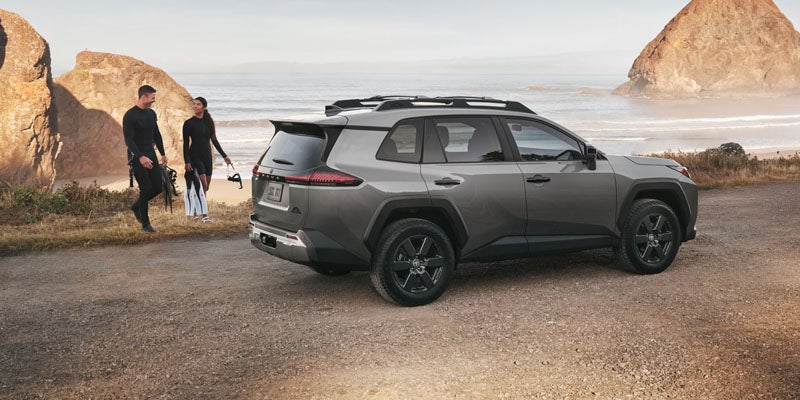
A gray SUV is parked on a dirt path overlooking the ocean, as two people in wetsuits walk towards it.

In the world of compact SUVs, the Toyota RAV4 and the Honda CR-V are regarded as long-term standouts ever since they hit the road in the mid-1990s. Today, these SUVs are two of the best-selling vehicles in and around Katy, Sugar Land, Mission Bend, and the rest of Texas.

When figuring out which of these SUVs to purchase for your family, you're probably considering several factors. In this blog, we'll cover some of the most important ones so you can make an informed decision.

CR-V Vs. RAV4: Performance and Efficiency

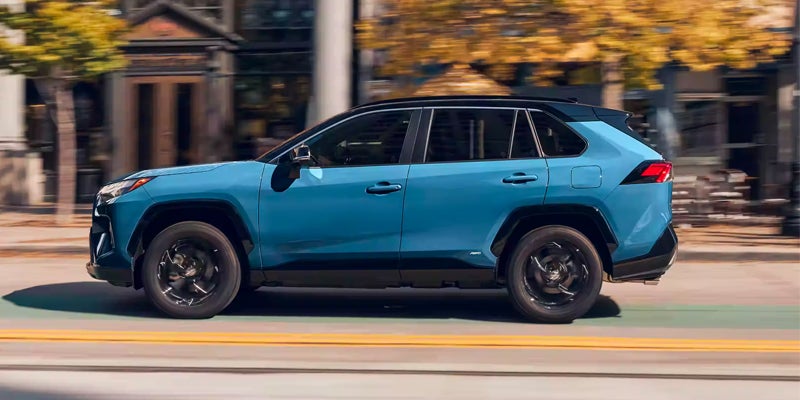
A blue SUV with a black roof and black trim drives down a city street, motion blur visible.

With fluctuating gas prices and unstable supply chains, efficiency is on many consumers' minds. At the same time, however, you probably don't want to compromise on power, especially while you're navigating through traffic on the freeway or driving up a mountain.

Honda offers the CR-V in both gas-powered and hybrid models, which get an EPA-estimated 30 mpg and 38 mpg respectively. The standard, turbo-charged 1.5L inline-4 engine generates 190 hp and 179 lb-ft of torque, which is pretty good, and the hybrid model generates 212 hp of total system output.

However, the Toyota RAV4 offers both better gas mileage and more power out of the gate. This SUV has a fuel type for everyone: gas-powered, hybrid, and plug-in hybrid models are all available. The standard 2.5L engine on the RAV4 produces 203 hp and 184 lb-ft of torque, while the hybrid engine has a total output of 219 hp.

For ultimate power, the Toyota RAV4 Prime plug-in hybrid boasts a total system output of 308 hp, along with an estimated efficiency rating on electric power of 94 MPGe. The other RAV4 models also have impressive gas efficiency ratings, with an estimated 30 mpg for gas-powered and 40 mpg for the hybrid.

RAV4 Vs. CR-V: Safety and Technology

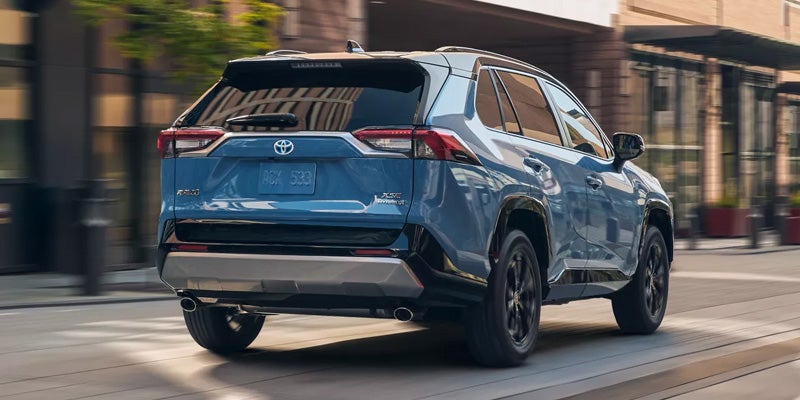
Rear view of a blue 2024 Toyota RAV4 Hybrid XSE driving down a city street.

As manufacturers, both Toyota and Honda are known for their commitment to passenger safety and comfort. Both SUVs offer blind-spot warnings, lane departure alerts, dynamic radar cruise control, and pre-collision systems to keep you safe while driving.

The RAV4 edges out the CR-V in safety though, with its automatic high-beam headlights and road sign recognition feature. You'll drive with greater peace of mind in the Toyota RAV4.

A similar story plays out for the SUVs' onboard tech. While they each have user-friendly infotainment systems, including smartphone integration and Bluetooth, the RAV4 offers a larger touch-screen and more speakers than the CR-V.

CR-V Vs. RAV4: Interior Space

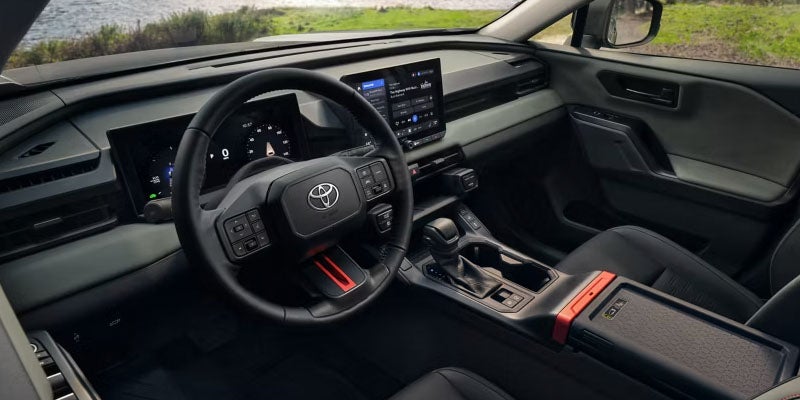
The interior of a Toyota showing the dashboard, steering wheel, digital displays, and center console, with a natural landscape seen through the windshield.

In this area (well, volume), the Honda CR-V finally edges past the Toyota RAV4. While both SUVs can seat five passengers comfortably, the CR-V features a total passenger volume of 105.9 cubic ft, about 7 cubic feet more than the RAV4's 98.9. The same is true regarding the vehicles' available cargo space.

Which Is Better: the 2022 Toyota RAV4 or Honda CR-V?

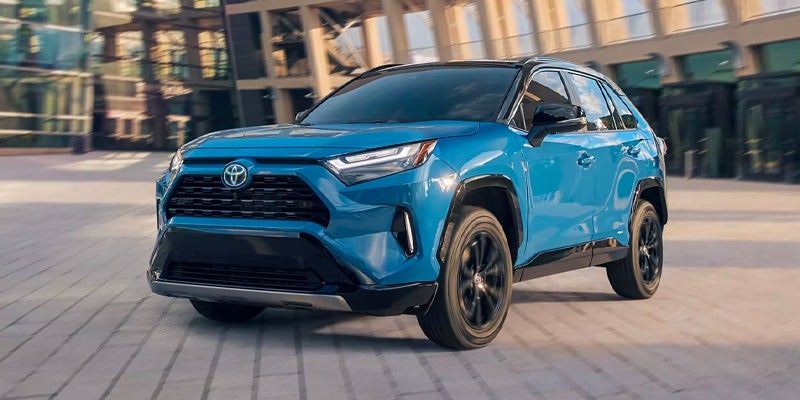
A vibrant blue Toyota RAV4 with a black roof and black wheels drives purposefully on a light-colored paved surface.

Simply put, the new RAV4 is a better SUV in almost all the ways that matter. If you're looking for a powerful yet efficient, safe and comfortable, stylish and fun compact SUV, you can't do much better than a Toyota RAV4.

When you're ready to purchase your next RAV4, Toyota of Katy has you covered! We have a huge selection of new andused Toyota SUVs for sale, so you'll be able to find your next dream car on our lot. Give us a call, visit our lot, or shop online today.

Recommended Posts

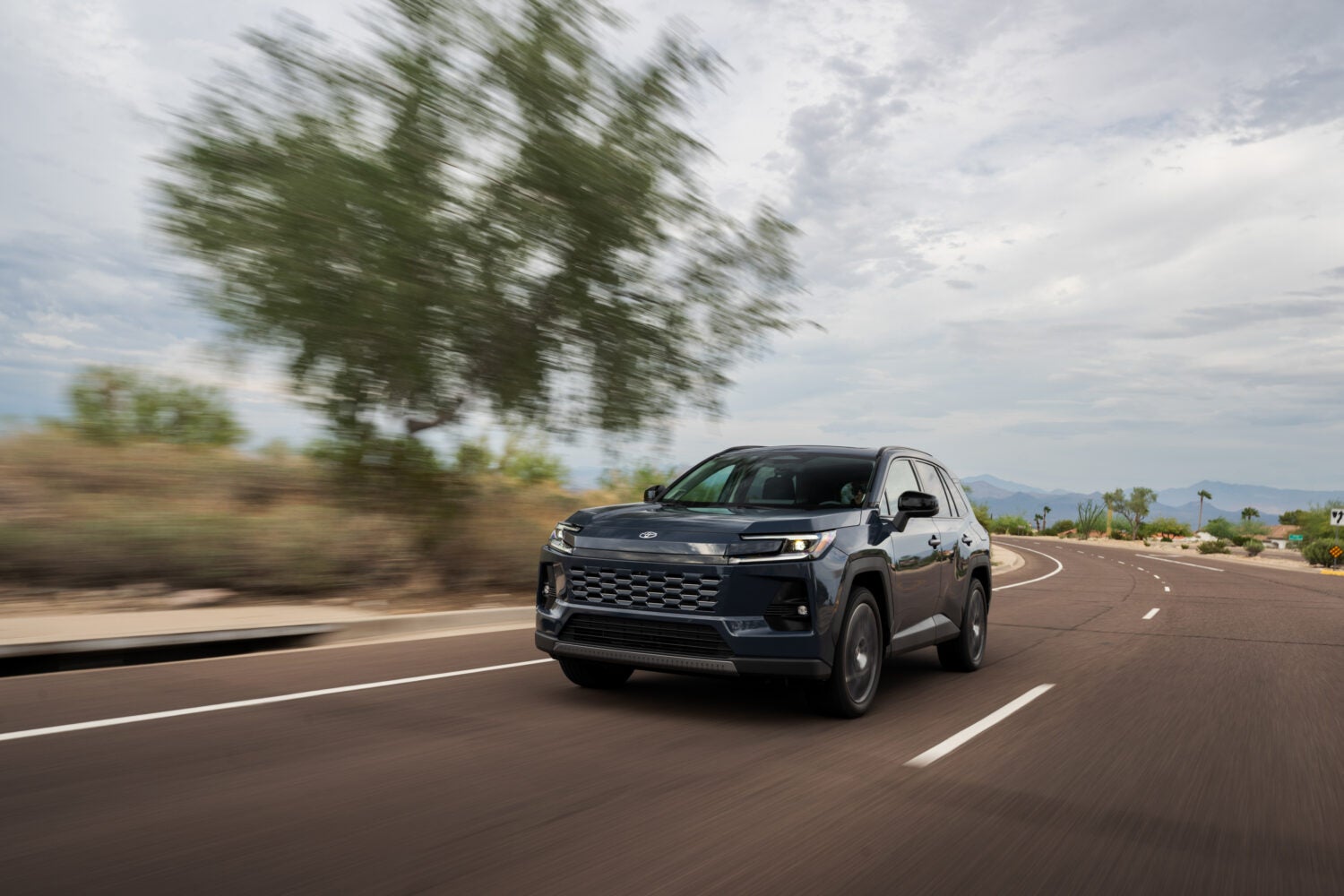
2026 Toyota RAV4 HEV racing down an open road

2027 Toyota RAV4: What We Know So Far

The RAV4 is one of the most-shopped SUVs among drivers in Katy and West Houston, and plenty of them are wondering what the 2027 model will bring. Toyota hasn't published official 2027 details yet, so this page separates what's reported from what's expected to carry over from the redesigned 2026 model. We'll update it as Toyota releases official information. If you want to talk through your options today, contact our team. 2027 RAV4 Status at a Glance Confirmed by Toyota No official 2027 RAV4 specifications, features, or pricing have been announced. Reported for 2027 Possible drive-mode changes for all-wheel-drive hybrids in Japan, including Mud & Sand and Snow & Dirt modes. These changes have not been confirmed for the U.S. U.S. showroom arrival in fall or winter 2026, according to dealer previews. Expected to carry over from 2026 Hybrid-only lineup with Hybrid and Plug-In Hybrid powertrains 226 hp (FWD Hybrid), 236 hp (AWD Hybrid), and 324 hp (Plug-In Hybrid) Up to 52 miles of manufacturer-estimated all-electric driving range on the Plug-In Hybrid Core, Rugged, and Sport design styles Toyota Safety Sense 4.0 The 2027 RAV4 Is Expected to Build on the Redesigned Sixth Generation The 2026 model introduced a complete redesign and a hybrid-only lineup. With that major change already in place, the 2027 RAV4 is expected to be a carryover model, although Toyota has not confirmed its specifications or equipment. 2027 Toyota RAV4 Reported Updates The items below come from early reporting and dealer previews rather than official Toyota announcements. Based on the 2026 redesign, the 2027 lineup is expected to remain hybrid-only. Rumored Drive Mode Update Japanese outlet Creative Trend reports that Toyota may change the available off-road drive modes on all-wheel-drive RAV4 hybrids for 2027. The reported changes include Mud & Sand and Snow & Dirt modes, which could replace the existing Trail mode. Today's U.S.-market Woodland uses Trail and Snow modes. This report concerns the Japanese market and has not been confirmed for the U.S. lineup. It also does not point to a broader redesign, which would be consistent with a relatively quiet model year following the 2026 overhaul. Expected Arrival Near Katy U.S. dealer previews point toward a fall or winter 2026 showroom arrival, similar to the 2026 RAV4 Hybrid, which Toyota expected to reach U.S. dealerships in December 2025. If that pattern holds, Katy shoppers should watch for the 2027 RAV4 in late 2026. Anticipated Pricing Toyota hasn't announced pricing for the 2027 RAV4, so there isn't a reliable basis for estimating the next model year's price. For reference, the 2026 RAV4 Hybrid LE starts at $31,900 before Toyota's applicable Dealer Processing and Handling fee. We'll update this section when official 2027 pricing becomes available. Hybrid-Only Lineup: Powertrain Options Expected to Carry Over Since a full redesign already happened for 2026, the 2027 RAV4 is expected to carry over the same two powertrain families. The specifications below are for the 2026 model and should not be treated as confirmed figures for 2027. The 2026 standard Hybrid produces 226 combined system net horsepower with front-wheel drive and 236 horsepower with all-wheel drive. Fuel economy varies by trim and drivetrain, with the FWD LE, SE, and XLE Premium rated at 47 city/40 highway MPG. AWD models include the Woodland at 41 city/35 highway and the XSE and Limited at 43 city/37 highway. The Plug-In Hybrid pairs a 2.5-liter four-cylinder engine with an electric drive system and a 22.7-kWh battery to produce 324 net combined system horsepower. Every PHEV grade comes standard with AWD. It offers up to 52 miles of manufacturer-estimated all-electric driving range. Once the battery depletes, combined MPG runs 41 on SE and XSE, 38 on Woodland, and 37 on GR SPORT. XSE and Woodland PHEV models also support DC fast charging, capable of charging from 10 to 80 percent in about 30 minutes under ideal conditions. FWD Hybrid AWD Hybrid Plug-In Hybrid Horsepower 226 hp 236 hp 324 hp Fuel economy Up to 47 city / 40 highway MPG Up to 43 city / 37 highway MPG Up to 43 combined MPG-equivalent* Electric range None None Up to 52 miles (manufacturer-estimated) Drivetrain Front-wheel drive Electronic on-demand AWD Electronic on-demand AWD, standard Available grades LE, SE, XLE Premium LE, SE, XLE Premium, Woodland, XSE, Limited SE, XSE, Woodland, GR SPORT Choosing the Right Powertrain for Katy and Houston-Area Driving The right RAV4 depends on how you drive, where you park overnight, and how much you want to spend, since the Plug-In Hybrid starts well above the standard Hybrid. FWD Hybrid: If your weekdays mean stop-and-go I-10 traffic into the Energy Corridor, and you don't need to charge, the FWD Hybrid is the efficiency pick. Its hybrid system recovers energy during braking and coasting, and it carries the lineup's best rating at 43 MPG combined. AWD Hybrid: If you want extra grip pulling away on rain-soaked roads, plan regular weekend trips out of town, or have your eye on the Woodland, the AWD Hybrid adds a rear electric motor for traction while giving up only a few MPG. Plug-In Hybrid: If you can charge at home, the Plug-In Hybrid's up to 52 miles of manufacturer-estimated all-electric driving range can cover many round-trip commutes without using gas, and its 324 horsepower makes highway merging and passing noticeably easier. Three Design Styles: Core, Rugged, and Sport The 2026 redesign organized the RAV4 lineup into three distinct design families. The Core lineup, covering LE, XLE Premium, and Limited trims, emphasizes comfort and everyday practicality. The Rugged lineup, represented by the Woodland trim, leans into off-road capability with all-terrain tires and its own Trail and Snow drive modes. The Sport lineup includes SE, XSE, and GR SPORT. That GR SPORT trim is worth noting on its own, since the 2026 model year brought the first GR SPORT RAV4 to the U.S. market. Whether you're drawn to the GR SPORT for its sportier tuning or the Woodland for outdoor capability, the styling variety gives Katy shoppers a real choice rather than a one-size-fits-all SUV. Toyota Safety Sense 4.0 and Standard Driver-Assistance Features Every 2026 RAV4 comes standard with Toyota Safety Sense 4.0, marking the first appearance of this TSS generation on the RAV4. TSS 4.0 includes pre-collision detection that can recognize vehicles, pedestrians, and cyclists, along with Lane Tracing Assist and Full-Speed Range Dynamic Radar Cruise Control, which works down to a complete stop. That's genuinely useful in the kind of stop-and-go traffic Katy and West Houston commuters deal with daily. Blind Spot Monitor with Rear Cross-Traffic Alert is also standard equipment, along with Road Sign Assist. These are 2026 model-year features; Toyota has not yet confirmed the 2027 equipment list. Getting Ready for the 2027 RAV4 at Toyota of Katy New model years tend to flood the internet with rumors, and sorting through them takes time most people don't have. Our advice: get ahead of the 2027 arrival, and let Toyota of Katy keep you posted as official details emerge. Reserve Your Notification or Ask About Availability If you want to be among the first Katy-area drivers to see the 2027 RAV4 in person, contact our team and ask to be notified as availability firms up. In the meantime, our current RAV4 inventory includes confirmed 2026 models with the specifications and pricing outlined above, no waiting required. Explore Trade-In and Financing Options Now There's no reason to wait on the financial side of things. We can evaluate your trade-in and walk through financing or leasing scenarios now, so you're ready to move quickly once the 2027 RAV4 officially lands near Katy. As a dealership serving Katy and the Greater Houston area with new, used, and certified pre-owned Toyota vehicles, plus financing, service, genuine parts, and a full collision center, we're set up to support you through the entire process, not just the sale. Frequently Asked Questions About the 2027 Toyota RAV4 Will the 2027 RAV4 be all hybrid? It's expected to be. The 2026 redesign moved the RAV4 to Hybrid and Plug-In Hybrid powertrains only, and nothing reported for 2027 suggests a change. How much horsepower does the RAV4 Hybrid have? The 2026 Hybrid makes 226 horsepower with FWD and 236 with AWD, and the Plug-In Hybrid makes 324. See the comparison table above. How much electric range does the RAV4 Plug-In Hybrid offer? The 2026 RAV4 Plug-In Hybrid offers up to 52 miles of manufacturer-estimated all-electric driving range. When will the 2027 RAV4 arrive? Dealer previews point to a fall or winter 2026 launch, but Toyota has not announced an official U.S. arrival date. Will the 2027 RAV4 cost more than the 2026? Pricing hasn't been announced, so it's too early to say. The 2026 Hybrid LE starts at $31,900 before Toyota's applicable Dealer Processing and Handling fee.

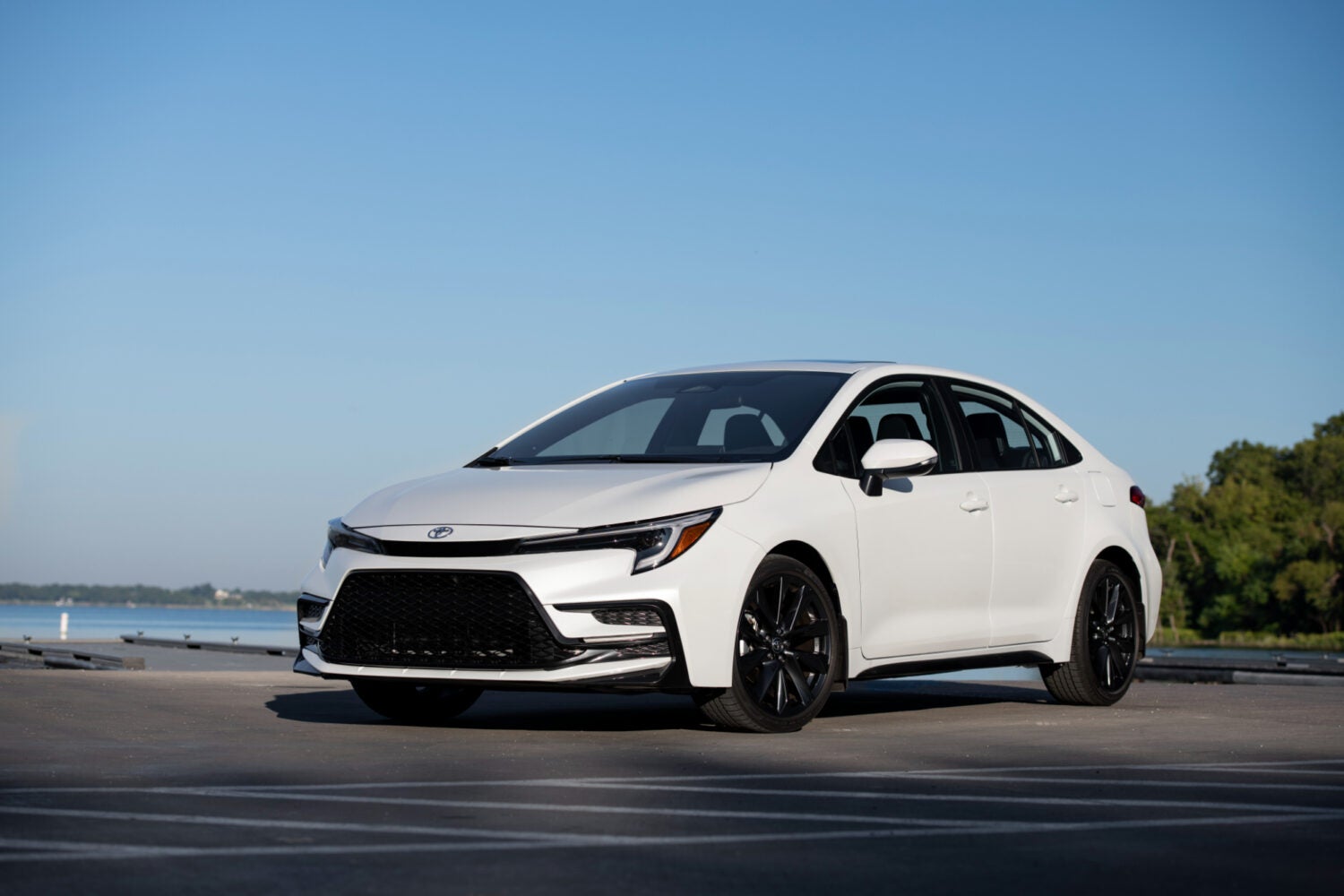
A wind chill pearl 2026 Toyota Corolla XSE

2026 Toyota Corolla vs Subaru Impreza: Key Differences

Compact cars rarely make headlines, but they remain a practical, budget-friendly choice for the daily commute in Katy and the Greater Houston area. If you're cross-shopping the Toyota Corolla vs Subaru Impreza, you're likely weighing two very different philosophies: one built around efficiency and low-cost ownership, the other around standard AWD and interior room. Below are the real tradeoffs between the 2026 models. If you want to see the Corolla up close, you can explore new Toyota Corolla inventory at Toyota of Katy anytime. Toyota Corolla vs Subaru Impreza: Quick Comparison Overview At a glance, the Corolla vs Impreza matchup comes down to priorities. The Corolla rides on Toyota's TNGA-C platform, which provides a rigid structure and a low center of gravity, and its suspension is tuned for comfort on paved roads. The Impreza runs Subaru's Boxer engine paired with standard Symmetrical AWD, built around traction and a planted feel no matter what's under the tires. The Impreza is sold only as a hatchback, while the Corolla gives shoppers a choice between a traditional sedan and the Corolla Hatchback. Key Specs Side-by-Side: Engine, Drivetrain, and Fuel Economy The powertrains and efficiency numbers stack up like this when you put the Corolla Sedan, Corolla Hatchback, and Impreza side by side. Spec Corolla Sedan Corolla Hatchback Impreza (Sport / RS) Engine 2.0L Dynamic Force 4-cylinder 2.0L 4-cylinder 2.0L Boxer (Sport) / 2.5L Boxer (RS) Drivetrain FWD FWD Standard AWD Transmission CVT CVT Lineartronic CVT with paddle shifters Horsepower/Torque 169 hp / 151 lb-ft 169 hp / 151 lb-ft 152 hp / 145 lb-ft (Sport); 180 hp / 178 lb-ft (RS) Fuel Economy (EPA) Up to 32 city / 41 hwy / 35 combined MPG (LE) Up to 32 city / 41 hwy / 35 combined MPG (SE) 27 city / 33 hwy / 29 combined MPG (Sport); 26 city / 33 hwy / 29 combined MPG (RS) Cargo Volume 13.1 cu ft (trunk) 17.8 cu ft 20.4 cu ft The Corolla's LE trim can return up to 35 MPG combined. The Impreza, weighed down slightly by its AWD hardware, lands closer to 29 MPG combined across both Sport and RS trims. On the flip side, the Impreza RS's 2.5L engine offers a meaningful bump in torque over the Corolla, which matters if you value passing power over pump savings. Sedan and Hatchback Body Style Options for Each Model The Corolla lineup splits into two distinct body styles. The 2026 Corolla Sedan comes in LE, SE, and XSE trims, while the 2026 Corolla Hatchback is offered in SE, FX, and XSE trims, each pairing a 2.0L four-cylinder engine with a CVT and FWD. The Impreza, meanwhile, has trimmed its hatchback-only lineup to Sport and RS for 2026. If you're specifically comparing the Corolla Hatchback vs. the Subaru Impreza, know that you're comparing two five-door hatchbacks with very different drivetrain philosophies under similar body shapes. Corolla Hybrid: Higher MPG and Available AWD The 2026 Corolla lineup also includes the Corolla Hybrid sedan in LE, SE, and XLE grades. Its 1.8-liter hybrid system makes 138 net horsepower and earns a manufacturer-estimated rating of up to 53 city / 46 highway / 50 combined MPG, far ahead of the Impreza's 29 combined. The Hybrid LE and SE are also available with all-wheel drive, which adds a rear electric motor for extra traction, so shoppers who want AWD don't have to leave the Corolla lineup to get it. AWD trades some efficiency, with the Hybrid SE AWD rated at 44 combined MPG, still well above the Impreza. With the least horsepower of any car in this comparison, the Hybrid suits efficiency-focused drivers more than those who want passing power. The Hybrid LE starts at $24,575. Performance and Driving Dynamics: AWD vs FWD What's sending power to the wheels is what separates these two compacts. That single distinction shapes almost everything about how each car feels behind the wheel, especially when weather or road conditions come into play. Subaru Impreza's Standard AWD: Handling Rain and Rough Katy-Area Roads The Impreza's Symmetrical AWD system, combined with its low center of gravity from the Boxer engine layout, gives it a composed, planted ride quality. For Katy and Greater Houston drivers, that translates into less snow performance and more confidence in heavy rain and standing water, plus the occasional unpaved or rough stretch outside the main corridors. The RS trim's larger 2.5L engine adds passing power without introducing extra stiffness or cabin noise. It's a legitimate advantage if you regularly drive through downpours or less-maintained roads. Toyota Corolla's FWD Efficiency and On-Road Comfort The Corolla takes a different approach, one that suits drivers whose routine sticks mostly to paved commuting routes. Its FWD setup, combined with the TNGA-C platform's MacPherson strut front suspension and available multi-link rear, delivers a quiet, isolated ride with light, easy steering. It's a car that feels right at home during an Energy Corridor commute or a long grocery run down the Katy Freeway. Skipping AWD does cost you some all-weather grip, but you gain a lighter car that uses less fuel, and ToyotaCare covers normal factory-scheduled maintenance for the first 2 years or 25,000 miles. If you're ready to feel the difference for yourself, contact Toyota of Katy to schedule a test drive and experience the ride quality firsthand. Interior Comfort, Cargo Space, and Technology Features Once you get past the drivetrain debate, cabin space and tech features become the next deciding factors for many shoppers, especially those hauling gear, kids, or coworkers on a regular basis. Cabin Space and Cargo Capacity Compared The Impreza pulls ahead on paper here. With 100.5 cubic feet of passenger volume, 36.5 inches of rear legroom, and up to 56.0 cubic feet of cargo space with the rear seats folded (20.4 cubic feet behind the rear seats), it offers noticeably more passenger room than either Corolla body style. The Corolla Sedan's trunk holds 13.1 cubic feet, while the Corolla Hatchback offers 29.9 inches of rear legroom and 17.8 cubic feet behind the rear seats, or 23.0 cubic feet when the spare is swapped for a tire repair kit. If passenger room and maximum cargo space are your top priorities in the Subaru Impreza vs Toyota Corolla debate, the Impreza has the numbers advantage. Infotainment, Safety Tech, and Driver-Assist Systems Both automakers put real effort into standard safety and connectivity tech. The Corolla comes with the Toyota Audio Multimedia system on a standard 8-inch touchscreen, wireless Apple CarPlay and Android Auto, and Toyota Safety Sense 3.0, which includes driver-assist features such as Lane Departure Assist and Proactive Driving Assist. The Corolla Sedan adds a standard 7-inch digital gauge cluster to the LE and SE, while the XSE gets a 10.5-inch touchscreen and a 12.3-inch digital gauge cluster, both of which are available on the SE through its Premium Package. The Impreza counters with a standard 11.6-inch touchscreen featuring wireless Apple CarPlay and Android Auto, a 4.2-inch LCD driver display, and Subaru's latest EyeSight Driver Assist Technology. For 2026, Subaru has added standard rear-seat side airbags, and the Impreza carries a 5-Star Overall safety rating from NHTSA. The Corolla Sedan's 2026 IIHS ratings show "Good" marks across small overlap front, side, headlights, front crash prevention, and seatbelts and child restraints, with a "Marginal" rating in the moderate overlap front test, the same rating the Impreza received in that test. The Corolla Hatchback yields different results, including an "Acceptable" side rating and no moderate-overlap front test. Neither vehicle has a confirmed IIHS Top Safety Pick status this model year, so it's worth checking current ratings before you decide based on that alone. Pricing, Trims, and Value: Which Gives You More for Your Money Sticker price only tells part of the story, but it's still where most car-buying conversations start, and the two lineups compare in a few notable ways, including where pricing sources disagree. Base and Top-Trim Price Comparison The 2026 Corolla LE starts at an MSRP of $23,125, making it one of the more accessible new cars in its class, with the SE at $25,565 and the XSE at $28,840. The Corolla Hatchback SE starts at $24,580. On the Impreza side, the Sport trim carries an MSRP of $26,595, and the RS trim carries an MSRP of $29,495. For anyone comparing Impreza and Corolla Hatchback pricing, the Corolla's lower entry points across both body styles are hard to ignore. Cost of Ownership: Insurance, Maintenance, and Resale Value Ownership costs add to the Corolla's case. Both vehicles carry the same basic warranty structure, a 3-year/36,000-mile limited warranty and a 5-year/60,000-mile powertrain warranty, but the Corolla also includes ToyotaCare, which covers normal factory-scheduled maintenance and 24/7 roadside assistance for 2 years or 25,000 miles. Paired with the Corolla's lower starting prices and higher fuel economy ratings, that helps keep early ownership costs down. Subaru tells a different story worth mentioning fairly: the brand reports that 96% of vehicles it has sold in the last decade are still on the road, a figure it says is higher than Honda's or Toyota's. It's a longevity claim worth factoring in, even as the Corolla's cost figures suggest it's cheaper to insure and own day-to-day. Each brand is simply emphasizing a different strength. Which Car Fits Your Katy Lifestyle Best? It comes down to what you drive through and what you drive for. Choose the Subaru Impreza If You Prioritize All-Weather Confidence You regularly deal with heavy rain, standing water, or rougher back roads around Katy and the Greater Houston area. You need more passenger and cargo room for family gear, sports equipment, or frequent road trips. You want the added grip and stability of standard AWD without stepping up to an SUV. Choose the Toyota Corolla If You Want Efficiency and Reliability You commute regularly along the Energy Corridor or Katy Freeway and want to keep fuel costs down, with a hybrid option rated up to 50 combined MPG. You're a first-time buyer looking for a lower entry price, plus complimentary maintenance for the first 2 years or 25,000 miles. You want the choice of sedan, hatchback, or hybrid, including available AWD on the Corolla Hybrid. You value a quiet, comfortable ride and access to a large network of trained Toyota technicians for maintenance. Explore the Toyota Corolla at Toyota of Katy If the numbers above point you toward the Corolla, and for a lot of Katy-area drivers focused on efficiency and long-term cost, they do, the next step is simple: come see it in person. What We Can Help You Compare We can walk you through the differences between the Corolla Sedan and Corolla Hatchback, compare trim levels side by side, and answer any lingering questions about how it stacks up against the Impreza for your specific routine. Schedule a Test Drive and Compare in Person Numbers on a spec sheet only go so far. The best way to know which car fits your daily drive is to get behind the wheel. You can explore the current Toyota Corolla inventory online or contact Toyota of Katy directly at our Katy Freeway location to schedule a test drive. Whether you're set on the Corolla or still weighing it against the Impreza, our team can help you compare both in a way that fits your budget and daily routine in and around Katy and the Greater Houston area.


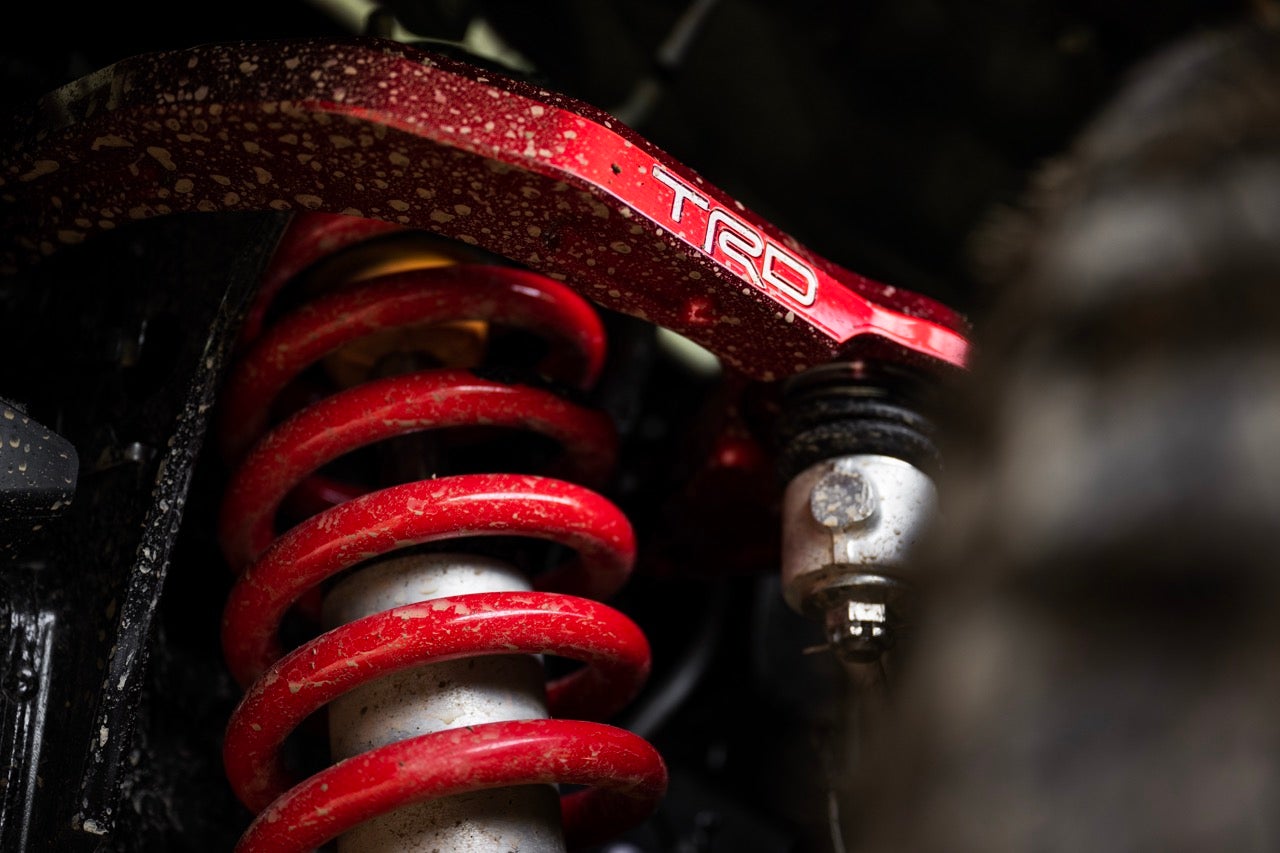
2026_Toyota_Tacoma_TRD_Pro_024

2026 Toyota Tacoma TRD Pro vs GMC Canyon AT4: Key Differences

Off-road shoppers cross-shopping midsize trucks tend to land on the same two names: the Toyota Tacoma TRD Pro and the GMC Canyon AT4. Both trucks carry serious trail credentials, but they get there through different engineering philosophies, and that difference matters once you're airing down tires or crawling over rocks. If you're weighing the Tacoma vs. Canyon for your next weekend adventure truck, it helps to start by browsing our new Tacoma inventory to see current configurations before diving into the specs below. Tacoma TRD Pro vs. GMC Canyon AT4: Which Off-Roader Wins? The GMC Canyon AT4 vs. Toyota Tacoma TRD Pro debate isn't a blowout in either direction. The Canyon AT4 brings a genuinely capable factory lift, a strong turbocharged engine, and an interior that leans upscale. The Tacoma TRD Pro answers with purpose-built off-road hardware, a hybrid powertrain built for trail torque, and a reliability record that's hard to argue with. For most buyers, it comes down to whether they want a truck refined for hardcore trail use or one built for versatile overlanding with daily-driver comfort layered on top. Off-Road Trim Philosophy: Toyota vs. GMC's Approach to the Trail Toyota's off-road philosophy has stayed consistent for years: build durable, proven hardware first, then add refinement around it. GMC takes a more overlanding-oriented approach with the Canyon AT4, blending trail capability with technology and comfort features aimed at drivers who want one truck for basecamp and byway alike. Toyota is chasing trail-first toughness, while GMC wants a truck that handles a week off the grid just as easily as it handles the daily commute. 2026 Tacoma TRD Pro: Refined Off-Road Dominance Toyota equips the 2026 TRD Pro with the i-FORCE MAX hybrid powertrain as standard, pairing it with FOX Internal Bypass QS3 shocks and a Stabilizer Disconnect Mechanism (SDM) that lets drivers disconnect the front sway bar at the push of a button for added wheel articulation. A high-clearance front bumper, TRD performance air intake, and 33-inch Goodyear tires on 18-inch black alloy wheels round out the package. Buyers interested in a slightly less aggressive but still trail-capable option can look at the Tacoma TRD Off-Road grade, which shares some of the same off-road DNA, including available SDM, at a different price point. 2026 GMC Canyon AT4: Overlanding-Focused Capability The Canyon AT4 arrives with a 2-inch factory lift, a 66.1-inch front and rear track width, and 9.6 inches of ground clearance. GMC pairs that with a locking rear differential, a two-speed transfer case, and selectable drive modes including Normal, Terrain, Tow/Haul, and Off-Road. The AT4 Premium Package adds Jet Black leather-appointed seats, seat ventilation, a heated steering wheel, and wireless charging. GMC clearly built this truck for extended overland trips, not weekend rock crawling. Off-Road Hardware Showdown: Suspension, Clearance, and Protection Comparing hardware side by side shows two trucks built for different priorities, though both bring legitimate trail engineering to the table. Spec Tacoma TRD Pro GMC Canyon AT4 Engine/Powertrain i-FORCE MAX hybrid TurboMax turbocharged Drivetrain Part-time 4WD with 2-speed transfer case and electronic locking rear diff 4WD with 2-speed transfer case and automatic locking rear diff Transmission 8-speed automatic 8-speed automatic Horsepower/Torque 326 hp / 465 lb-ft 310 hp / 430 lb-ft Ground Clearance 11.5 in. 9.6 in. Towing Capacity 6,000 lbs Up to 7,700 lbs Suspension and Shock Technology Compared The FOX Internal Bypass QS3 shocks on the TRD Pro measure 2.5 inches and include rear piggyback reservoirs along with three dial-adjustable compression damping settings tuned for pavement, trail, and desert-speed running. Drivers can dial in the ride for whatever's ahead instead of settling for a single setup that has to handle everything. GMC's suspension tuning on the AT4 emphasizes a smoother, more comfort-oriented ride across varied terrain, which suits its overlanding mission but doesn't offer the same trail-specific adjustability as some competitors. Ground Clearance, Angles, and Underbody Armor GMC publishes a 9.6-inch ground clearance figure for the Canyon AT4, along with a transfer case shield to help protect against rocks, ruts, and other obstacles. Toyota rates the TRD Pro at up to 11.5 inches of running ground clearance, with approach, breakover, and departure angles of 35.7, 24.6, and 22.6 degrees, compared with 33.5, 21.0, and 22.4 degrees for the AT4. On the trail, those extra degrees mean the TRD Pro can nose into a steeper ledge before its bumper makes contact and crest a sharper hump before its belly scrapes. The standard high-clearance front bumper is designed to improve approach-angle performance. Locking Diffs, Terrain Modes, and Crawl Control The Canyon AT4 comes with an automatic locking rear differential and multiple drive modes that adjust throttle response and traction management for the terrain at hand. The Tacoma TRD Pro counters with an electronic locking rear differential, Multi-Terrain Select, and CRAWL Control. The difference between the two lockers comes down to who's in charge. The Canyon's system decides when to lock on its own, while the Tacoma lets the driver lock the rear axle at the push of a button before the truck ever starts climbing. The TRD Pro's SDM feature adds on-demand front suspension articulation, giving drivers a real tool for technical rock sections where wheel travel matters more than raw power. Powertrain and Capability: Power, Torque, and Towing on the Trail Power delivery on the trail isn't just about peak numbers. What matters more is how smoothly and predictably a truck puts that power down when traction gets unpredictable. You can start a finance application while you compare these numbers in person. Engine Performance and Off-Road Power Delivery The i-FORCE MAX hybrid powertrain in the TRD Pro produces 326 hp and 465 lb-ft of torque, which translates directly into stronger low-end pull when climbing loose grades or powering through sand. Toyota's gas-only engines lower in the Tacoma lineup are rated at 228 hp and 243 lb-ft, or 278 hp and 317 lb-ft depending on configuration, giving buyers a range of options even outside the TRD Pro trim. GMC's TurboMax engine in the Canyon AT4 delivers 310 hp and 430 lb-ft of torque, with a towing capacity of up to 7,700 lbs, which matters for buyers who tow frequently alongside their off-road use. Transmission and 4WD Behavior in Rough Terrain Both trucks rely on an 8-speed automatic transmission and are tuned to deliver power smoothly over rough terrain rather than hunt for gears at the wrong moment. The difference shows up more in drivetrain hardware than in the transmission itself. The TRD Pro's SDM, electronic locking rear differential, and CRAWL Control give it an edge in technical, low-speed crawling situations, while the Canyon AT4's automatic locking rear diff and terrain modes handle a broader range of everyday off-road conditions capably. Interior Comfort and Off-Road Tech for Long Trail Days Long days on the trail wear on a driver just as much as they wear on a truck, so interior comfort matters more than it might seem at first glance. On screens, the Tacoma TRD Pro comes standard with a 14-inch touchscreen, while the Canyon AT4 uses an 11.3-inch unit running Google built-in. Both support wireless Apple CarPlay and Android Auto. On seats, the TRD Pro's IsoDynamic Performance Front Seats use an air-over-oil shock absorber system to reduce body movement and stabilize the head and neck over rough terrain, and they come standard with heating and ventilation. The Canyon AT4 offers leather-appointed, ventilated front seats as part of its AT4 Premium Package. Both cabins are well equipped, but Toyota's seat technology addresses a problem specific to off-roading that GMC's cabin doesn't directly solve. Real-World Trail Performance: Rocks, Desert, and Mud For drivers around Katy and the greater Houston area, real-world testing doesn't require a trip to Moab. Sam Houston National Forest, north of Houston, keeps its Forest Service roads open to street-legal trucks. Its designated OHV trails are limited to vehicles 50 inches wide or less, though, and Texas law bars driving in the beds and banks of navigable rivers, so plan your route before you air down. Root-covered, uneven sections reward the kind of low-speed articulation the TRD Pro's SDM system is built for. Loose sand favors a truck with strong low-end torque and confident traction modes, an area where the i-FORCE MAX's torque figures and Multi-Terrain Select's Sand setting give the Tacoma an advantage. Mud sections test underbody protection and tire grip equally for both trucks. Quick summary for readers in a hurry: The Tacoma TRD Pro is the better rock crawler thanks to the SDM and adjustable FOX shocks; it's also the better desert runner, given the QS3 shock tuning built for desert-speed damping, and the Canyon AT4 wins on towing off-road with its higher 7,700-lb rating. Reliability, Resale Value, and Aftermarket Support Reliability and resale value carry real weight in the GMC Canyon vs. Toyota Tacoma reliability conversation, and independent data clearly leans toward Toyota. According to iSeeCars, the Canyon depreciates 33.2% over five years compared to 19.5% for the Tacoma, meaning Tacoma owners retain nearly 14 percentage points more value over that stretch. iSeeCars also rates the Tacoma higher on both overall quality (8.4 versus 7.7) and reliability (8.1 versus 7.7), and ranks the Tacoma first among the Best Midsize Trucks, while the Canyon lands third of seven. J.D. Power data has long shown Toyota pulling in buyers who prioritize long-term reliability, a factor that's kept the Tacoma near the top of the segment for years, and Kelley Blue Book points to the Tacoma's off-road capability, refinement, and resale value as reasons it remains a standout in a crowded field. Ownership doesn't stop at the sale. Toyota of Katy's service center and genuine parts team handle routine maintenance and specialized off-road component service for Tacoma TRD Pro owners alike, and you can schedule service anytime through our site. Why the Tacoma TRD Pro Is the Smarter Off-Road Investment Line up the specs, the resale data, and the trail-specific hardware, and the Tacoma TRD Pro looks like the stronger long-term investment for serious off-road driving. Its advantage starts with equipment that works together on the trail: the SDM frees up front articulation, the electronic locking rear differential and CRAWL Control handle the slow, technical sections, and the high-clearance front bumper helps it clear obstacles the Canyon AT4 has to approach more carefully. The IsoDynamic seats keep the driver fresher over a long day, which matters as much as any spec once the pavement ends. The Canyon AT4 genuinely holds its own in towing and daily comfort, but the Tacoma TRD Pro backs up its trail performance with proven reliability and stronger resale value, so the money you put into it holds up long after the first trip. That combination is what the Canyon AT4 struggles to match. Explore the 2026 Tacoma TRD Pro at Toyota of Katy Why a Test Drive Tells the Full Story Spec sheets can only say so much about how an off-road truck feels. Sitting in the IsoDynamic Performance Front Seats, feeling how the i-FORCE MAX hybrid delivers its torque from a stop, and trying the SDM and terrain controls yourself gives you a much clearer picture than any comparison chart. A test drive at Toyota of Katy lets you check the cabin layout, visibility, and ride quality on real roads before you commit. Our team can walk you through each off-road feature, explain how the TRD Pro compares with other Tacoma grades, and help you line up financing. After the sale, our service center and genuine parts team are here to keep your TRD Pro trail-ready. Next Steps As a full-service dealership serving Katy and the greater Houston area, Toyota of Katy can help you confirm exact configurations, trims, and availability. Browse our new Tacoma vehicles or contact us to get current details on the 2026 Tacoma TRD Pro.