


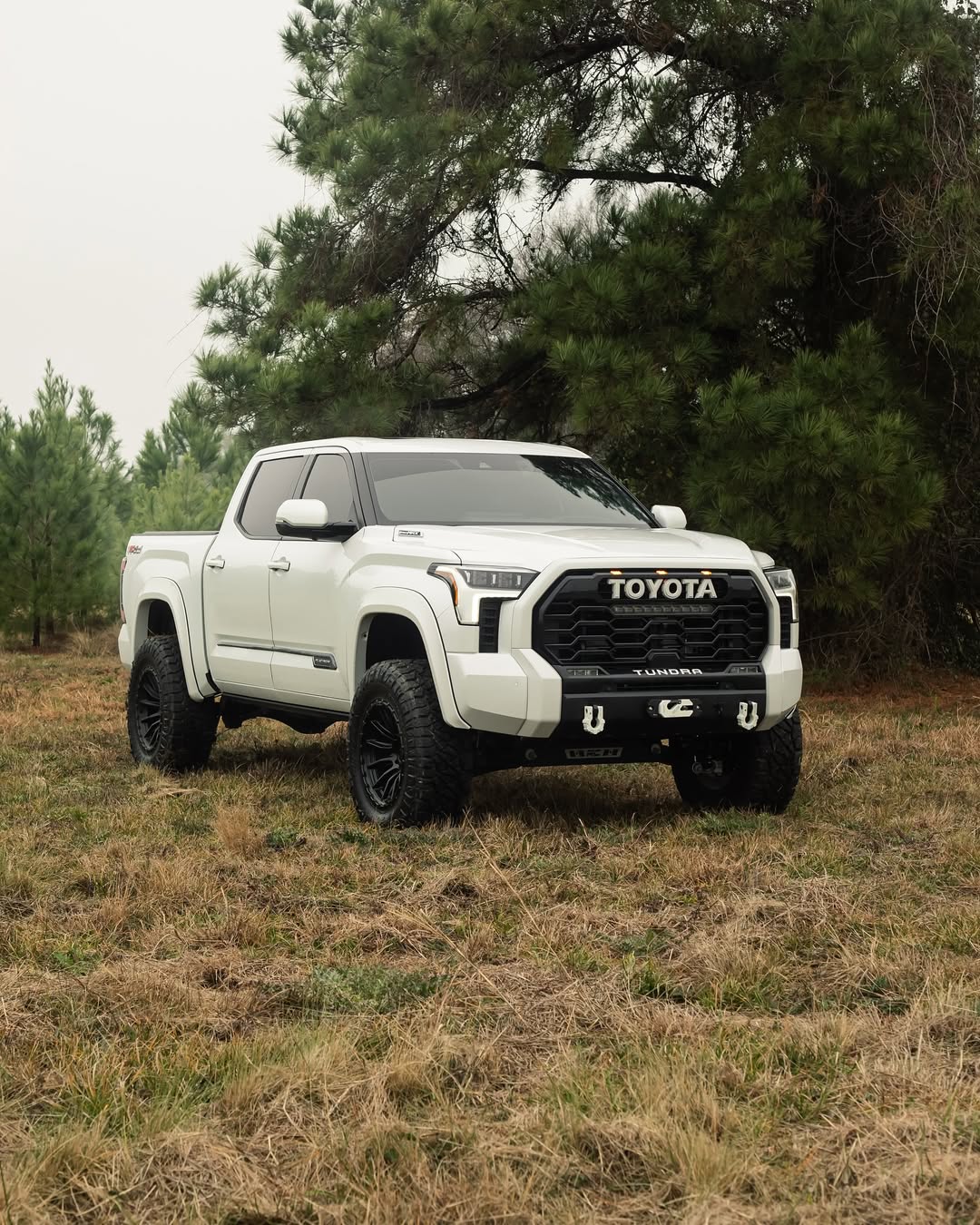
If you spend weekends backing a boat trailer down a ramp at Lake Conroe or hauling a center console toward Galveston Bay, your truck is doing real work. That’s exactly why the Toyota Tundra vs. Ford F-150 debate hits differently here in Katy. What the spec sheet promises and what actually happens on I-10 in July with a loaded bay boat are two very different things. More and more boaters in this area are landing on the same answer: the Toyota Tundra with its i-FORCE MAX hybrid powertrain. If you’re ready to see what’s available now, browse our Tundra i-FORCE MAX inventory and find the configuration that fits your towing needs.
Why Katy Boaters Are Rethinking Their Tow Truck
The boating community around Katy has grown steadily, and so have the boats. Larger vessels, heavier trailers, and longer drives to the coast have pushed truck buyers to think harder about what they actually need under the hood. A truck that barely manages its rated tow capacity on a cool morning can struggle noticeably on a 95-degree August afternoon on I-10. That gap between marketed performance and real-world performance has pushed many buyers to reconsider which truck earns a spot in their driveway.
For years, the Ford F-150 dominated Texas truck sales, and its popularity is easy to understand. It’s comfortable, well-supported, and available in enough configurations to suit nearly any buyer. When boaters specifically compare the Tundra vs. F-150 for towing, though, the conversation shifts. How the truck handles sustained loads, how hybrid torque actually delivers at low speed, and what ownership costs look like five years out all matter more than brand loyalty.
The Real-World Towing Test: Gulf Coast Conditions vs. Spec Sheets
Manufacturer towing ratings are tested under controlled conditions. Those conditions rarely match a Saturday morning in Katy when you’re pulling a 22-foot bay boat on a dual-axle trailer, a typical setup that runs 4,500 to 6,500 lbs with trailer, plus three passengers and a truck bed full of gear. Gulf Coast heat and humidity change the equation in ways a controlled test doesn’t capture.
Heat, Humidity, and the Drive to the Coast
The stretch from Katy to Galveston or Matagorda via I-10 and Highway 99 isn’t just long; it’s thermally demanding. Ambient temperatures regularly climb above 95 degrees during peak boating season, and high humidity compounds the strain on engines, transmissions, and braking systems in ways that flat, dry-weather testing doesn’t replicate.
The Toyota Tundra’s i-FORCE MAX pairs a 3.4L twin-turbocharged V6 with an electric motor placed between the engine and 10-speed automatic transmission. That architecture means the electric motor assists during the heaviest portions of a pull, reducing the sustained thermal load on the combustion engine. On long highway grades, this translates to more stable, consistent performance without the torque-converter hunting some competitors exhibit when working hard in sustained heat.
Tongue Weight and Payload for the Boats Texans Actually Own
Texas boaters tend to own serious boats. Offshore fishing vessels, large bay boats, ski boats loaded with gear, pontoon setups — all carry meaningful tongue weight. When evaluating F-150 vs. Tundra specs for towing, payload capacity matters just as much as the headline tow rating. A truck rated to tow 12,000 lbs, but with a modest payload, can be maxed out well before you hit that limit, especially once you account for passengers, fuel, and bed cargo. Boaters who calculate tongue weight before every trip appreciate a truck that delivers both the numbers and the feel of a well-engineered system.
i-FORCE MAX vs. F-150 PowerBoost: Hybrid Torque on the Boat Ramp
The F-150 hybrid vs. Tundra hybrid matchup is one of the most relevant comparisons for anyone who tows regularly. Both trucks use hybrid powertrains to generate substantial torque, but how that torque is delivered makes a practical difference on the boat ramp.
Low-End Pull Where It Counts Most
On a boat ramp, you’re operating at very low speeds on a wet, sometimes slippery incline with the full weight of the boat and trailer demanding torque from a standing start. The i-FORCE MAX delivers 437 hp and 583 lb-ft of torque, with the integrated electric motor providing immediate pull without the RPM buildup a traditional gasoline engine requires. You get a smooth, confident pull right away, from the first rotation of the wheel.
Ford’s PowerBoost system in the F-150 produces 430 hp and 570 lb-ft of torque, and it’s genuinely capable at the ramp. Owners who’ve used both frequently describe the Tundra’s electric motor integration as more natural-feeling during the slowest, most torque-intensive moments of a launch or retrieval. That distinction matters when you’re managing a boat on a crowded public ramp with tight margins.
Fuel Efficiency When You’re Hauling a Loaded Trailer 60 Miles
The drive from Katy to the most popular launch points sits in the 50 to 70-mile range. At highway speeds with a full trailer, fuel economy becomes a real cost. The hybrid systems in both trucks improve efficiency compared to traditional V8 setups, but the Tundra’s i-FORCE MAX architecture is particularly good at recovering energy during deceleration and coasting. Over a full boating season, those savings show up at the pump.
Toyota Tundra vs. Ford F-150: Towing Features Side-by-Side
Beyond raw power, towing technology has become a key point of separation. When you line up Tundra vs. F-150 specs on features, the following comparison covers what matters most for boaters:
| Powertrain | Horsepower / Torque | Hybrid System | Trailer Backup Tech | Towing Aids | Onboard Power | |
| 2025 Toyota Tundra i-FORCE MAX | 3.4L twin-turbo V6 + electric motor | 437 hp / 583 lb-ft | Electric motor placed between engine and transmission; assists under load | Trailer Backup Guide with Straight Path Assist | Tow/Haul mode, Trailer Sway Control, integrated trailer brake controller (equipped trims), tow mirrors | Standard 400W outlet |
| 2025 Ford F-150 PowerBoost | 3.5L twin-turbo V6 + electric motor | 430 hp / 570 lb-ft | Parallel hybrid; electric motor augments gas V6 | Pro Trailer Backup Assist (knob-steered) | Tow/Haul mode, Trailer Sway Control, integrated trailer brake controller (equipped trims) | Pro Power Onboard (up to 7.2 kW available) |
The Tundra’s available panoramic view monitor provides a bird’s-eye view that’s genuinely helpful when backing into tight ramp positions or maneuvering through a crowded marina lot. The multi-terrain monitor and crawl control add confidence in the low-traction conditions a wet boat ramp creates.
The F-150 counters with Pro Trailer Backup Assist, which lets drivers steer a trailer using a dedicated knob rather than the steering wheel. Ford also offers a solid set of towing cameras and an onboard payload scale. Toyota’s system feels more integrated and requires less learning time, particularly for drivers who aren’t backing trailers every week. Pro Power Onboard is a genuine advantage for the F-150 if jobsite power is a priority alongside boating.
Long-Term Reliability in a Texas Climate: What the Data Says
Choosing between the Tundra and the F-150 isn’t just about launch-day performance. It’s about how each truck holds up through years of coastal salt air, summer heat cycles, and the cumulative wear of regular towing.
Toyota’s Reputation in High-Heat, High-Humidity Ownership
Toyota has spent decades building a reputation for reliability, particularly in high-humidity, high-heat climates like Southeast Texas. Tundra owners in the Katy area frequently report fewer corrosion-related issues and more predictable maintenance schedules, with consistent performance well past 100,000 miles. The i-FORCE MAX’s hybrid system follows Toyota’s established hybrid engineering philosophy, the same approach that has made the Prius and Highlander Hybrid among the most durable powertrains on the road. The J.D. Power Vehicle Dependability Study and Consumer Reports owner satisfaction data consistently place Toyota near the top of full-size truck reliability rankings, though specific 2025 model-year figures should be verified as new data becomes available.
F-150 Ownership Costs, Recalls, and Resale Value
The Ford F-150 earns its best-seller status for good reasons. Resale value is strong across most configurations, and the service network is wide. The NHTSA recall database shows the F-150 has accumulated a longer history of recalls and technical service bulletins, particularly around newer technology integrations. Its EcoBoost engines, while powerful, require careful maintenance under sustained high-heat, high-load conditions to avoid issues that can become expensive over time. If you’d like to contact our Katy team to discuss long-term ownership costs in more detail, we’re happy to walk through the numbers.
Tundra vs. F-150: Which Truck Fits the Katy Boater Lifestyle
For someone who lives in Katy and regularly hauls a boat to Gulf Coast waters, the answer leans toward Toyota. The F-150 is a capable truck, and for the right buyer, it’s a solid choice. When towing is the primary use case, though, the Tundra with i-FORCE MAX covers the things that matter most in this climate: heat management under sustained load, immediate low-end torque from the hybrid system, long-term reliability, and towing technology well-designed for real-world use.
The F-150 makes more sense for buyers who prioritize onboard power generation, prefer the Pro Trailer Backup Assist system, or are already deep in the Ford service ecosystem. For the boater who wants to pull hard on a hot ramp, cruise efficiently down I-10, and drive the same truck a decade from now without surprises, the Tundra vs. F-150 question resolves itself fairly quickly.
Find Your i-FORCE MAX at Toyota of Katy
We’re located at 21555 Katy Fwy, west of Houston, and we carry new Tundra inventory across multiple trims and configurations. Our team can walk you through exactly which setup matches your towing needs, whether you’re pulling a bay boat on weekends or a heavier offshore rig for longer coastal runs.
You can see our in-stock Tundra i-FORCE MAX lineup online, or schedule a test drive and ask our Tundra specialists detailed questions about tow ratings and features. For anyone still weighing the Tundra vs. F-150 decision, the clearest next step is getting behind the wheel and feeling what the i-FORCE MAX actually does on a loaded trailer.
Connect with us


