

Blog / Toyota Camry

Toyota Camry LE vs. XSE: Differences in MPG, Features & Price

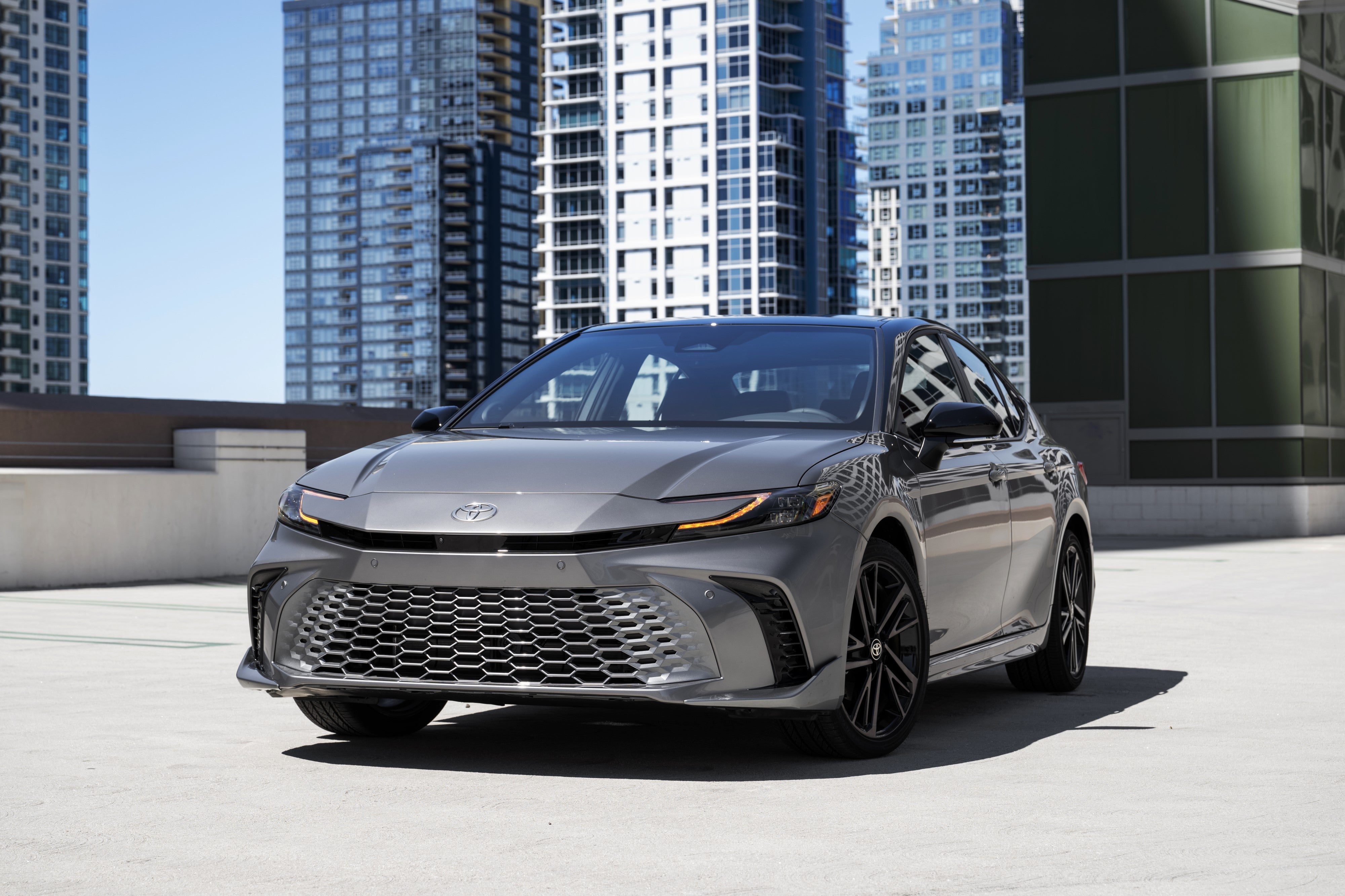
2027 Toyota Camry XSE 007

The choice between the Toyota Camry LE and XSE comes down to what you value in the daily drive. The LE is rated at 51 mpg combined in FWD form, while the XSE FWD gets 46 mpg combined. What the XSE offers in return is larger screens, 19-inch wheels, and a sport-tuned setup. Both are hybrid-only, so the core powertrain is the same either way.


Toyota Camry LE vs. XSE: Quick Verdict for Katy Commuters

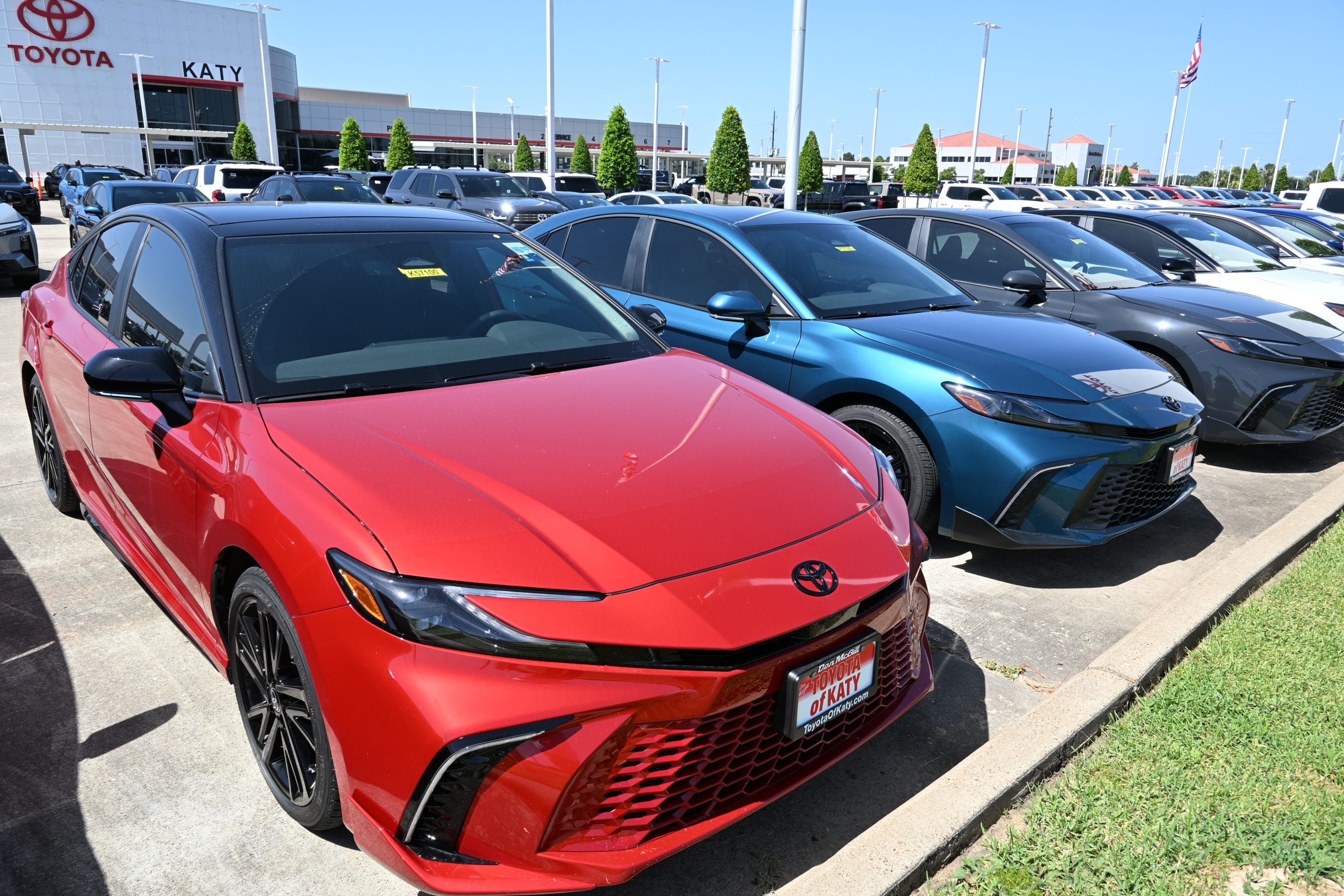
For most Katy commuters, the LE is the smarter choice if mileage and monthly costs drive your decision. The XSE makes sense if you spend long hours in the car and want its equipment and sportier setup. Compare FWD with FWD and AWD with AWD, and you'll see the real differences. You can also check the new Toyota Camry inventory in Katy to see what's in stock.


The table below sets the Toyota Camry LE and XSE side by side for each drivetrain.

Feature LE FWD LE AWD XSE FWD XSE AWD
Powertrain 2.5-liter four-cylinder hybrid 2.5-liter four-cylinder hybrid 2.5-liter four-cylinder hybrid 2.5-liter four-cylinder hybrid
Horsepower 225 net-combined hp 232 net-combined hp 225 net-combined hp 232 net-combined hp
Transmission Electronically controlled CVT Electronically controlled CVT Electronically controlled CVT Electronically controlled CVT
EPA city/highway/combined MPG 52/49/51 50/49/50 47/45/46 43/43/43
Wheels 16-inch alloy 16-inch alloy 19-inch black and smoke-gray-finished alloy 19-inch black and smoke-gray-finished alloy
Suspension Standard Standard Sport-tuned Sport-tuned
Front seats Fabric-trimmed Fabric-trimmed Leather-trimmed Leather-trimmed
Display and cluster 8-inch touchscreen, 7-inch digital cluster 8-inch touchscreen, 7-inch digital cluster 12.3-inch touchscreen, 12.3-inch digital cluster 12.3-inch touchscreen, 12.3-inch digital cluster
Audio Six-speaker Six-speaker Six-speaker standard Six-speaker standard
Standard safety suite Toyota Safety Sense 3.0 Toyota Safety Sense 3.0 Toyota Safety Sense 3.0 Toyota Safety Sense 3.0
Cargo 15.1 cu. ft. 15.1 cu. ft. 15.1 cu. ft. 15.1 cu. ft.


Price and Monthly Payment: What Separates the LE From the XSE

The Camry LE starts at $29,600 ($31,125 with AWD), while the XSE starts at $36,000 ($37,525 with AWD), and both include a $1,295 destination charge. That roughly $6,400 difference buys leather seats, larger screens, 19-inch wheels, and the sport suspension. Both trims share the same hybrid system, so the extra money goes to features and styling, not power.


The LE's higher fuel economy is the other half of the value picture. A lower sticker price and better MPG work together over years of commuting. The monthly payment depends on the financing terms and the trim. If you want to see how each trim might fit your budget, start with our finance application. If you're budget-minded, our certified pre-owned vehicles are another route worth a look.


Fuel Economy and Powertrain for I-10 and Grand Parkway Driving

Whether you merge onto I-10 or settle into the Grand Parkway, both trims drive the same way mechanically. You'll notice the gap at the pump.


Shared Hybrid Powertrain and Performance

Every Toyota Camry uses a 2.5-liter four-cylinder with Toyota's fifth-generation hybrid system and an electronically controlled CVT. Drivetrain sets the output. FWD makes 225 net-combined hp, and AWD makes 232 net-combined hp.

Stepping up to the XSE adds no power. Electronic On-Demand AWD controls torque distribution to the rear wheels when it detects slippery road conditions or a loss of tire grip. That helps traction, but it doesn't make wet roads or flooded streets safe to enter.


MPG Differences and Estimated Fuel Costs

EPA-estimated ratings are city/highway/combined:

  • LE FWD: 52/49/51.

  • LE AWD: 50/49/50.

  • XSE FWD: 47/45/46.

  • XSE AWD: 43/43/43.


Here is an illustration of the method, not a prediction. Multiply miles per day by days driven, then divide by mpg to get gallons. Take a Katy-to-Energy Corridor style commute. Over the same miles, the LE FWD at 51 mpg combined uses fewer gallons than the XSE FWD at 46. Use your own mileage to run the numbers. EPA figures are estimates. Real-world results vary with driving habits, traffic, and conditions.


Want to feel the difference yourself? Contact us to set up a test drive.


Ride Comfort and Driving Feel in Katy Traffic

Toyota says the Camry's suspension delivers both handling and a smooth ride. Trim-level tuning is where the two diverge, and your own route will tell you the most.


Suspension Tuning and Wheel Size

The LE rides on 16-inch alloy wheels. On the XSE, you get 19-inch black and smoke-gray-finished alloy wheels plus a sport-tuned suspension with front and rear shock absorbers. It also has a larger-diameter front stabilizer bar than the LE. Toyota says this is intended to support comfort, stability, and handling. The XSE also adds paddle shifters. Its sportier tuning and larger wheels are aimed at handling.


Road Noise and Stop-and-Go Commutes

In stop-and-go traffic, the hybrid system's electric assistance helps low-speed movement feel smooth. Road noise depends on tires and pavement, so we won't rank the trims here. Drive both over a rough stretch and a freeway run, and trust your own ears.


Interior, Seats, and Cargo Space

Both trims seat five, with 15.1 cu. ft. of cargo space, 42.1 inches of front legroom, and 38.0 inches of rear legroom. Moving up to the XSE changes materials and amenities, while usable space stays the same.


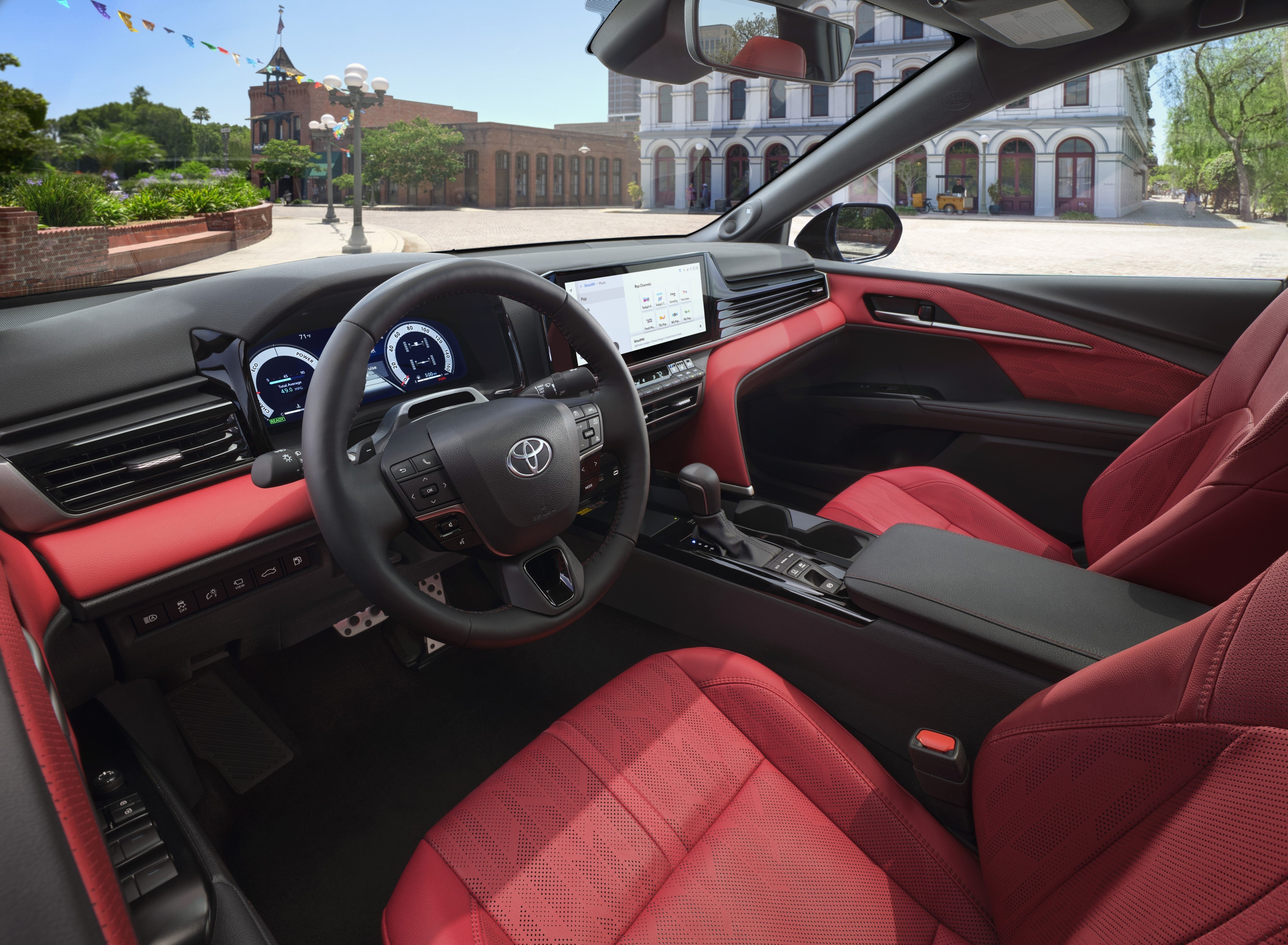
The LE has fabric-trimmed front seats with 6-way manual adjustment for both the driver and passenger, and an 8-way power driver’s seat with power lumbar is available through the Convenience Package, along with available heated front seats. The XSE has leather-trimmed front seats, an 8-way power driver’s seat with power lumbar and an 8-way power passenger seat, with heated front seats standard. That matters in a household where passengers often ride along. Both trims come with dual-zone automatic climate control with rear-seat vents, which helps on hot Katy afternoons.

If style is part of your decision, see our guide to Camry colors for drivers in Katy and West Houston.


Technology, Connectivity, and Safety Features

Connectivity is a strong point for both trims. Screens and audio are where they differ most.


Screen, Audio, and Smartphone Integration

The LE has an 8-inch Toyota Audio Multimedia touchscreen, a 7-inch digital gauge cluster, and a six-speaker audio system. The XSE has a 12.3-inch touchscreen and 12.3-inch digital gauge cluster. Six-speaker audio is standard, and a nine-speaker JBL Premium Audio system with subwoofer and amplifier is available.


Wireless Apple CarPlay and wireless Android Auto are standard across grades. You also get simultaneous Bluetooth for two phones, and a Wi-Fi Connect trial or subscription offers 4G connectivity for up to five devices.


Driver-Assist Features for Daily Commuters

Toyota Safety Sense 3.0 includes the Pre-Collision System with Pedestrian Detection, Full-Speed Range Dynamic Radar Cruise Control, Lane Departure Alert with Steering Assist, Lane Tracing Assist, Road Sign Assist, Automatic High Beams, and Proactive Driving Assist. Blind Spot Monitor comes standard too.


Radar cruise is designed to operate above 20 mph. Lane Departure Alert detects lane markings or the road edge above 30 mph. Lane Tracing Assist helps keep the car centered while Dynamic Radar Cruise Control is active.


On the XSE, the available Premium Plus Package adds Traffic Jam Assist (not offered on the LE), which is designed for controlled-access freeways at 25 mph or less. It requires Lane Tracing Assist and an active Drive Connect subscription to be active, and it is not an automated driving system, so it requires driver supervision at all times.


How to Decide: Match Your Commute to the Right Trim

Start with your daily miles and budget, then consider what you want from the interior. AWD is a separate decision that depends on how much traction you need. After that, drive both trims back-to-back because specs only go so far.


Choose the LE for Value and Efficiency

  • You want the best EPA ratings, at 51 mpg combined in FWD form.

  • You want standard Toyota Safety Sense 3.0 and wireless smartphone connectivity.

  • You'd rather keep the purchase price lower and put your budget elsewhere.

  • You like the 16-inch wheels and comfort-focused setup.


Choose the XSE for Style, Comfort, and Tech

  • You want leather-trimmed seats and standard heated front seats.

  • You want the 12.3-inch screen and 12.3-inch digital gauge cluster for easier reading.

  • You like the sport-tuned suspension and paddle shifters, and you want the 19-inch wheels.

  • You're comfortable with EPA ratings below the LE's in both FWD and AWD.


Compare Camry Trims in Person at Toyota of Katy

The best way to settle the Toyota Camry LE vs XSE question is to drive both on your real commute. Toyota of Katy sells new and used Toyota cars, trucks, and SUVs and offers financing, service, genuine parts, and collision repair at 21555 Katy Fwy, Katy, TX 77450, serving Katy and the Greater Houston area.


Bring your usual route, whether that's I-10 or the Energy Corridor, and we'll help you compare trims back to back. Contact us to request a test drive, or call sales at 844-809-1063 (Mon–Sat 9 AM to 7 PM). You can also browse our new Toyota Camry inventory in Katy and start your financing application when you're ready.
Posted in:

Related Posts

Two 2026 blue and white Toyota Camrys at Toyota of Katy

2026 Toyota Camry Hybrid vs. Prius: Which Is Better for Katy Drivers?

If you're driving the Katy Freeway every weekday, a few extra miles per gallon add up fast. That's why the camry hybrid vs prius question comes up so often among Katy commuters heading into Houston. Both hybrids wear the Toyota badge and share the same core engineering, but they solve the daily grind differently. Below is a rundown of the real differences, backed by the numbers. The Katy-to-Houston Commute: Why Your Hybrid Choice Matters Katy sits roughly 25 to 35 miles west of downtown Houston, and most residents rely on I-10 West (the Katy Freeway) or TX-99 (the Grand Parkway) to get where they're going. A typical Katy-to-Houston run covers about 28.7 miles one way and takes around 34 minutes in normal traffic. Morning rush hour tells a different story: expect 45 to 60 minutes most days, and longer still once you hit the I-610 West Loop, which has been ranked the most congested road segment in the state for three years running. The segment that earns that title begins right where the Katy Freeway meets it. The Katy Freeway itself is one of the widest highways in the world, running up to 12 main lanes plus four managed lanes, but volume still wins most mornings. When you're spending that much time behind the wheel, fuel economy and reliability aren't extras. They're daily necessities. Camry Hybrid vs. Prius: Quick Comparison Snapshot Both cars share the same hybrid philosophy, but their execution diverges. The Camry Hybrid is a midsize sedan built for space and a quieter ride, while the Prius is a five-door hatchback tuned for efficiency and cargo flexibility. The base LE FWD trims stack up like this: Spec Camry Hybrid LE FWD Prius LE FWD Engine/Powertrain 2.5L 4-cyl HEV 2.0L 4-cyl + 83-kW motor, 222V lithium-ion battery Drivetrain FWD (AWD available) FWD (AWD available) Fuel Economy (City/Hwy/Combined) 53/50/51 MPG 57 combined Horsepower 225 hp 194 hp combined Cargo Volume 15.1 cu ft (trunk) 23.8 cu ft (behind rear seats) Safety Tech TSS 3.0, 2026 IIHS Top Safety Pick+ TSS 3.0, 2026 IIHS Top Safety Pick+ If you'd like to see these trims in person, browse our current inventory before making the trip out. Fuel Economy for Your Daily I-10 Commute The Prius LE FWD tops out at 57 city, 56 highway, and 57 combined MPG, the best rating between the two hybrids, while the Camry Hybrid LE FWD delivers 52 city, 49 highway, and 51 combined. Move up to the Camry's SE, Nightshade, XSE, or XLE trims, and combined economy drops to 46 MPG, and choosing AWD costs about 1 MPG on the LE and about 3 MPG on the XSE. The Prius follows a similar pattern, with the LE AWD at 54 combined and the XLE, Nightshade, and Limited landing at 52 combined with FWD or 49 with AWD. Both run on regular unleaded, so neither asks for a premium at the pump, and the Camry's 13.0-gallon tank gives it roughly 663 miles of range on the LE FWD trim. Numbers on a spec sheet only tell part of the story. Against that 28.7-mile Katy-to-Houston commute, using an estimated gas price of $3.00 per gallon, a Camry Hybrid LE averaging 51 MPG combined would burn about 1.13 gallons round trip (57.4 miles), costing roughly $3.38 a day. A Prius LE at 57 MPG combined would use about 1.01 gallons for the same round trip, costing close to $3.02. That's a difference of about 36 cents a day, or around $7 to $9 a month, depending on how many days you're driving into the office. Over a year that lands near $90, and since the base Prius also starts about $750 below the base Camry Hybrid, there's no price premium to earn back first. Neither car wins outright; it comes down to how much room you need against how much you value the efficiency. For a closer look, explore our Toyota hybrid selection. Space and Comfort for Commuters and Families The Prius edges out the Camry slightly in front legroom, 43.2 inches versus 42.1 inches, but the story flips in the back seat. The Camry offers 38.0 inches of rear legroom compared to the Prius's 34.8 inches, a gap that matters if you regularly haul passengers or car seats, or just want to stretch out. Total passenger volume follows the same trend, with the Camry offering up to 99.9 cubic feet of space compared to the Prius's 91.2 cubic feet. If you're weighing size for family use, the Camry's extra rear-seat room is the more practical pick. Flip the comparison to cargo, and the Prius pulls ahead. Its hatchback design gives it about 23.8 cubic feet behind the rear seats on the LE trim, or 20.3 cubic feet on the XLE, Nightshade, and Limited grades, and the 60/40 split-fold rear seats open up considerably more room for longer loads. The Camry's trunk tops out at 15.1 cubic feet, plenty for groceries and luggage, but without the same flexibility for bulkier items like furniture or sports gear. Anyone weighing cargo capacity will find the Prius the more versatile hauler. Highway Performance and Driving Feel Performance-wise, these two are closer than you might expect. Independent testing puts the front-drive Prius at roughly 7.7 seconds to 60 MPH and the front-drive Camry Hybrid at roughly 7.8, essentially a wash, with Camry AWD models a few tenths quicker thanks to the extra rear motor. Both transition between electric and gasoline power smoothly through their eCVTs, so there's no jarring handoff at highway speeds. The Camry tends to feel larger, quieter, and more composed on longer drives, which lines up with its sedan proportions, while the Prius counters with nimble handling that some drivers prefer in tighter city traffic. If you want extra traction for Gulf Coast downpours, the Camry's optional electronic on-demand AWD uses a dedicated rear-axle motor with no driveshaft, so it doesn't eat into cargo space either. Technology and Safety Features for Long Commutes Both models come standard with Toyota Safety Sense 3.0, which includes pre-collision detection with pedestrian and cyclist recognition, full-speed range dynamic radar cruise control, lane departure alert with steering assist, lane tracing assist, road sign assist, automatic high beams, and proactive driving assist. That's the same safety backbone across both cars, so neither one cuts corners on the freeway. Where they differ is in cabin tech. The Camry's XLE and XSE trims get a standard 12.3-inch digital gauge cluster, while LE, SE, and Nightshade trims use a 7-inch gauge cluster. All Camry trims start with an 8-inch touchscreen, with a 12.3-inch touchscreen available on higher trims. Wireless Apple CarPlay and Android Auto come standard across the Camry lineup, along with a standard wireless charging pad on all trims. The Prius keeps things simple, with an 8-inch touchscreen standard on the LE, XLE, and Nightshade; a 12.3-inch screen standard on the Limited; and that larger screen offered as an option on the XLE and Nightshade. Both the 2026 Camry Hybrid and Prius earned IIHS Top Safety Pick+ status, with the Camry rated Good in all three crash tests and in both front crash prevention evaluations, though its headlights were rated Acceptable. Both vehicles are backed by eight standard airbags. The Prius earned Good ratings across the same crash tests, with its headlights likewise rated Acceptable rather than Good. Pricing and Total Cost of Ownership Pricing is where this comparison gets interesting, because the two are nearly neck and neck. The Camry Hybrid starts at $29,600 for the LE FWD and climbs to $36,000 for the XSE FWD across five trims, all before a $1,195 destination charge. AWD adds $1,525 across the board, pushing the top XSE AWD to $37,525. The Prius starts at $28,550 for the LE FWD before the same $1,195 destination charge, with AWD adding $1,400. Moving up the Prius ladder, the XLE FWD runs $31,995, with a 12.3-inch screen and a panoramic roof, while the Nightshade lands at $32,800 FWD or $34,325 AWD, and the Limited tops the range. Base to base, the Prius comes in about $1,050 under the Camry Hybrid, so the price gap alone won't make the decision for you. All figures here are MSRP and subject to change, so we always recommend confirming current pricing with our team before you decide. If financing is on your mind, get a head start through our finance application. Toyota's reputation for dependability shows up in both models. Consumer Reports has again named Toyota the most dependable brand in its Annual Auto Reliability Survey, and hybrids consistently score well in that data. J.D. Power rated the 2026 Prius at 78 out of 100 overall, with quality and reliability at 75, driving experience at 76, resale value at 87, and dealership experience at 77. RepairPal gives the Prius a reliability score of 4.0 out of 5, with average annual repair costs of around $408 and a low unscheduled repair visit rate of 0.4. Both hybrids carry Toyota's 10-year/150,000-mile limited hybrid battery warranty, and according to Torque News, maintenance costs on the hybrid systems themselves are virtually identical between the two. Which Hybrid Fits Your Katy-to-Houston Drive? The right pick comes down to your specific commute, household, and budget, not some abstract idea of which car is "better." Choose the Camry Hybrid If… You regularly carry rear-seat passengers, want more shoulder and legroom for a growing family, or prefer a quieter, more composed ride on longer stretches of I-10. It's also the pick if you want AWD without sacrificing trunk space, thanks to its rear-motor setup. Browse our new Camry inventory in Katy to see current trims and availability. Choose the Prius If… You're a solo or two-person commuter prioritizing the best possible MPG, need hatchback-style cargo flexibility for gear or weekend trips, and don't mind a tighter rear seat in exchange for efficiency. This is exactly the tradeoff many drivers debate: efficiency and cargo versatility against sedan comfort and rear-seat room. Explore Camry Hybrid and Prius Models at Toyota of Katy Specs and comparison charts only go so far. The best way to settle the debate is to sit in both, adjust the seats, and feel how each one handles a stretch of the Katy Freeway. We serve drivers throughout Katy, Cinco Ranch, Fulshear, and West Houston from our location at 21555 Katy Freeway, Katy, TX 77450, with more than 600 vehicles on our lot spanning new, used, and certified pre-owned options, including our full Toyota hybrid selection featuring the Camry Hybrid, RAV4 Hybrid, and Highlander Hybrid. Contact us to schedule a test drive and put both hybrids to the test on your own Katy-to-Houston route.

2027 Toyota Camry XSE AWD Heavy Metal Black

2027 Toyota Camry: What We Know So Far

Toyota announced the 2027 Toyota Camry on October 13, 2026, and shoppers across Katy and West Houston are already asking what it means for them. We want to give you a straight answer, separating what Toyota has confirmed from what remains open. If you'd rather look at vehicles while you read, you can browse our current Camry inventory. What Toyota Has Confirmed for 2027 Here’s what Toyota’s official announcement covers. Toyota has published the grade lineup and hybrid powertrain details, along with manufacturer-estimated fuel economy and pricing. The 2027 Camry starts at $29,700 for the LE, followed by the SE at $32,200, the Nightshade at $33,200, the XLE at $34,900, and the XSE at $36,100, with AWD adding $1,525 on any grade (prices exclude the $1,295 dealer processing and handling fee). Toyota expects the model to be at dealerships in fall 2026, but a specific on-sale date hasn’t been announced. Specifications and availability may change without notice, so please confirm details with Toyota or with our dealership before you decide. What Carries Over From the 2026 Camry Toyota describes the 2027 grades, features, and options as carryovers, confirming continuity. The 2027 Camry looks like the current car, with the same five grades, wheel designs, and colors we cover below. Toyota has not announced a redesign date or details of a next-generation Camry, and we won't guess at one. Hybrid-Only Powertrain and Everyday Driving in Katy Every 2027 Toyota Camry uses Toyota's fifth-generation Toyota Hybrid System (THS 5), with a 2.5-liter four-cylinder engine and an eCVT. Output is 225 net combined horsepower with FWD and 232 with AWD. The AWD system is Electronic On-Demand All-Wheel Drive, with an electric motor-generator on the rear axle. The suspension is MacPherson strut up front and multi-link in the rear, and the SE, Nightshade, and XSE get sport-tuned suspensions. For local driving, a hybrid sedan suits the stop-and-go stretches of I-10 and the Katy Freeway, errands around Katy, and runs out the Grand Parkway. It also suits the trips into Houston and the Energy Corridor commutes many of our neighbors make. A conventional hybrid like this one needs no plug-in charging, since the vehicle manages its own battery. Your fuel economy will still vary with grade, drivetrain, traffic, and driving style. AWD can add traction in suitable conditions, but a sedan stays a sedan, and AWD never makes driving through flooded roads safe. If you're weighing sedans from Toyota, our post on the 2026 Toyota Crown vs. Camry for Katy commuters is a useful Toyota-to-Toyota resource. The LE, SE, Nightshade, XLE and XSE Grades The 2027 Camry keeps five grades, and the differences go beyond styling. Wheels and touchscreens change as you move up, along with seating and mpg. The mpg figures below are manufacturer-estimated, listed as city/highway/combined. Grade Wheels Touchscreen and gauge cluster FWD mpg AWD mpg LE 16-inch alloy 8-inch / 7-inch 52/49/51 50/49/50 SE 18-inch black-finished alloy 8-inch / 7-inch 47/45/46 46/46/46 Nightshade 19-inch satin black-finished alloy 8-inch / 7-inch 47/45/46 46/46/46 XLE 18-inch two-tone machined and black-finished alloy 12.3-inch / 12.3-inch 47/45/46 46/46/46 XSE 19-inch black and smoke-gray-finished alloy 12.3-inch / 12.3-inch 47/45/46 43/43/43 A Multimedia Upgrade Package with the 12.3-inch touchscreen is listed for the SE and Nightshade. Those two grades are the ones to look at if you want the SE look with a larger screen. The XSE follows the same sport-tuned approach with its own wheels and trim. Sport styling and tuned suspension come with the same engine, though, so judge each grade on the features you'll actually use. Interior and Comfort by Grade The 2027 Toyota Camry interior also varies by grade: The LE has woven-fabric seating. The SE and Nightshade have SofTex-trimmed seats. The XLE has leather and Dinamica microfiber trim. The XSE has leather-trimmed seating. Heated front seats are standard on the XLE and XSE and available on select other grades. Ventilated front seats are available on the XLE and XSE. Wireless Apple CarPlay and Android Auto are standard, as are dual-zone automatic climate control with rear vents and Push Button Start. Standard Safety Features Toyota Safety Sense 3.0 is standard. It includes Pre-Collision System with Pedestrian Detection, Full-Speed Range Dynamic Radar Cruise Control, Lane Departure Alert with Steering Assist, Lane Tracing Assist, Road Sign Assist, Automatic High Beams, and Proactive Driving Assist. Blind Spot Monitor with Rear Cross-Traffic Alert and Safe Exit Alert are standard across grades. What’s Still Unknown Toyota has not announced an on-sale date for the 2027 Camry. The only timing it offers is a season: fall 2026, so the release date has no exact answer yet. We also can't say when any unit will reach Toyota of Katy, and we're making no claim about local arrival or allocation. Toyota has also not announced a redesign date, future trim revisions, or extra equipment beyond the published carryover. If a website tells you otherwise, ask where it got the information. We'd rather say "not announced" than fill the gap with a guess. What’s Changed for 2027: Pricing, Not Equipment Because the grades, features, and options all carry over, the main change for 2027 is pricing, which is slightly higher than the 2026 model. The color palette carries over too: Ocean Gem, Heavy Metal, Ice Cap, Wind Chill Pearl, Celestial Silver Metallic, Underground, Midnight Black Metallic, Supersonic Red, Reservoir Blue, and Dark Cosmos. Availability varies by grade. The Nightshade comes in Ice Cap, Supersonic Red, and Midnight Black Metallic. The XSE offers select colors with a Midnight Black Metallic roof. Which colors and grades actually reach our area are still open questions, and that's the part to confirm with us once vehicles are on the way. Should You Wait for the 2027 Camry or Explore the 2026 Model? There’s no universal right answer, because it depends on your timeline and what you need from the car. Since the 2027 grades, features, and options carry over, the two model years drive and feel the same. The practical differences are the model-year label, slightly higher 2027 pricing, and the timing of when you can get behind the wheel, which makes a 2026 Camry available today worth a close look. Who May Want to Wait Waiting makes sense if you specifically want the 2027 model year and your timeline is flexible. If your current vehicle is running fine, you can watch Toyota's rollout and compare configurations when they're available. Just remember that waiting only gets you a later outcome, and a better one isn't guaranteed. Who May Want to Buy Now Buying now fits if you need a vehicle soon or prefer the current model. It also fits if you have trade-in timing to consider or financing to sort out. A car you can see and drive today beats one defined only by a season. If that sounds like you, contact our team about availability. We can't promise notifications or preorders, and allocations are out of our hands too, but we can tell you what we know. Whichever way you lean, keep an eye on these: Arrival timing from Toyota Availability by grade and color Local availability at Toyota of Katy Explore the Current 2026 Camry at Toyota of Katy The 2026 Camry was also exclusively hybrid, with the same five grades. The Nightshade debuted for 2026, based on the SE. Our online Camry inventory displays 2026 listings, including LE, SE, XLE, and Nightshade examples. Availability changes, so check the live inventory for what's listed today. You can also start at our new Toyota Camry for sale in Katy, TX. Toyota of Katy sells new and used Toyota cars, trucks, and SUVs and offers financing, service, genuine parts, and collision repair in Katy, TX. We help shoppers compare trims, features, technology, and financing options. If a test drive is next, pay attention to ride comfort, rear-seat room, and how the controls feel. You can also start a finance application before you visit. Once you own a Toyota, our service department is here to help with maintenance. Visit us at 21555 Katy Freeway, Katy, TX 77450. Sales hours are 9:00 a.m. to 7:00 p.m. Monday through Saturday.

DSC_0055

2026 Toyota Crown vs. Camry: Which Sedan Is Best for Katy Commuters?

If you spend your mornings inching through I-10 traffic or commuting between Katy and Houston's Energy Corridor, your vehicle makes a bigger difference than you might think. The 2026 Toyota Crown and 2026 Toyota Camry are both excellent commuter sedans, but they serve different priorities. Whether you value premium comfort or exceptional fuel efficiency, understanding the differences can help you choose the right fit. For more than 20 years, Toyota of Katy has helped local drivers find the Toyota that best fits their lifestyle. Toyota Crown or Camry: Which Luxury Commuter Fits West Houston? The Toyota Crown or Camry question comes down to what you're chasing behind the wheel. The Crown is Toyota's elevated play, built for drivers who want a premium experience without giving up practicality for style. The Camry, on the other hand, built its name on decades of reliable, efficient driving that never demanded much attention. West Houston's road mix is unique: high-speed stretches on I-10 and the Grand Parkway, followed by stop-and-go reality on surface streets around Katy and the Energy Corridor. Whichever car handles both comfortably and cost-effectively deserves your attention. Crown vs. Camry: Quick Comparison for Katy Commuters Spec Toyota Crown Toyota Camry Engine/Powertrain 2.5L Hybrid (standard); 2.4L Turbo Hybrid MAX (Platinum only) 2.5L hybrid four-cylinder (all trims) Max Horsepower 236 hp standard; 340 hp Hybrid MAX 225 hp (FWD); 232 hp (AWD) Combined MPG 41 combined (standard); ~30 combined (Hybrid MAX) Up to 52 city / 49 highway (LE FWD) Drivetrain Standard AWD, all trims FWD standard; AWD available on select trims Length ~196 in. ~193.5 in. Best For Highway-heavy commutes, elevated comfort City driving, efficiency, tighter parking The 2026 Crown arrives with a beefier available hybrid option, a taller stance, and an interior designed with luxury in mind. The Camry sticks with its familiar sedan shape but goes fully hybrid across every trim, landing it among the most fuel-efficient non-plug-in sedans you can buy. Both are available at Toyota of Katy, where you can contact our team to compare them in person. Meet the 2026 Toyota Crown: Elevated Luxury for Your Commute The 2026 Toyota Crown is a deliberate step upmarket from the typical Camry-shaped image most people associate with "Toyota." It rides higher than a traditional sedan, sits lower than a typical SUV, and carves out a style space of its own. Toyota built the standard hybrid system to deliver a smooth, responsive ride without a charging cable, something that matters when your morning starts on a 70 mph stretch of I-10. Crown Trim Levels and Standout Features The Crown lineup runs from XLE (from roughly $41,440) through Limited (from roughly $45,950), the Nightshade Edition (from roughly $48,765, with 21-inch matte-black wheels and dark badging, handles, and mirror caps), and Platinum (from roughly $54,990), the only trim offering the 340-hp Hybrid MAX powertrain. Standard leather seating, a panoramic fixed-glass roof, and heated and ventilated front seats run across all trims, alongside a large touchscreen, wireless Apple CarPlay and Android Auto, and Toyota Safety Sense. Higher trims add premium JBL audio, a head-up display, and ambient lighting. Comfort, Refinement, and Ride Quality The Crown's suspension tuning absorbs Houston's road imperfections with authority, keeping the cabin quiet even on rough freeway surfaces. Rear passengers get noticeably more legroom than in the Camry, which makes the Crown a compelling option for families or professionals who often carry clients. If your commute regularly stretches beyond 45 minutes each way, that refinement starts to feel less like an indulgence and more like a practical necessity. You can browse our current Crown inventory to see available trims. Meet the 2026 Toyota Camry: The Proven Value Commuter The 2026 Toyota Camry is one of the smartest evolutions in Toyota's lineup in years. For the first time, every Camry trim is hybrid, meaning every buyer benefits from improved fuel economy without paying extra. The Camry's profile is familiar, but its updated interior and technology bring it firmly into modern territory. It's not chasing luxury sedan status. It just does everything well, consistently, year after year. Camry Trim Levels and Standout Features The Camry lineup includes LE, SE, XLE, XSE (with AWD available), and Nightshade, starting around $29,600 MSRP with top trims landing in the mid-$30,000 range. Even the base trim includes a touchscreen, wireless smartphone integration, and Toyota Safety Sense 3.0. Mid-range trims add a sunroof, synthetic leather seating, and a larger display, while upper trims bring real leather, a JBL premium audio system, and a digital instrument cluster. The XSE trim adds two-tone exterior options for a sportier look. Efficiency and Everyday Comfort The full-hybrid Camry delivers up to 52 MPG city / 49 MPG highway on LE FWD, making it one of the most cost-effective choices in its segment for high-mileage commuters. Over the course of a year, those pump savings add up, particularly for drivers logging 20,000-plus miles annually on West Houston roads. Inside, the seating position is lower and more traditional than the Crown's, cargo space is generous for a sedan, and the layout prioritizes ease of use. Explore the current Camry inventory to compare trims side by side. Which Fits Your West Houston Drive Best? The right choice depends on the kind of driving that fills your week. Best for I-10 and Grand Parkway Highway Commutes For drivers spending most of their time on I-10, Highway 6, or the Grand Parkway, the Crown earns its price premium. The available 340-hp Hybrid MAX pulls confidently at highway speeds, and the cabin's noise isolation keeps wind and road noise out during longer stretches, even through Houston's sudden heavy rain. If your commute is primarily highway driving and you value comfort over a 50-minute round trip, the Crown delivers a meaningfully better experience. Best for City Driving Around Katy The Camry is the smarter pick for city-based driving around Katy and the surface streets of the Energy Corridor. It's easier to maneuver in tight parking situations, its hybrid system shines in stop-and-go traffic through regenerative braking, and its lower operating cost keeps ownership affordable. For commuters whose days involve short hops between errands, school pickups, and office parking garages, the Camry's practical footprint and fuel economy make it the clear everyday choice. Pricing and Value: Getting the Most for Your Commute The Camry's lower starting price, around $29,600 MSRP, makes it accessible to a broader range of buyers, and its full-hybrid powertrain across all trims means fuel savings from the first trim level up. The Crown starts around $41,440, a gap of roughly $11,800 or more, reflecting real differences in materials, ride quality, tech content, and overall sophistication. Pricing can vary with incentives and market conditions, so the team at Toyota of Katy, located at 21555 Katy Fwy, Katy, TX 77450, can walk you through current figures and financing options for either vehicle. Test Drive the Crown or Camry at Toyota of Katy Reading about these vehicles gets you part of the way there. Sitting in them closes the gap. The difference in ride height between the Crown and Camry is immediately apparent, and once you're behind the wheel, you'll notice that the seat feel, cabin noise, and steering response tell their own story, too. Schedule a visit and compare both models on familiar West Houston roads. Our sales team can help you compare against your own routes and budget, with no pressure either way. Ready to Decide? Whether you're leaning toward the Crown's luxury positioning or the Camry's proven efficiency, contact our team at Toyota of Katy to schedule a test drive and get behind the wheel of each. Frequently Asked Questions Does the 2026 Camry come as a hybrid? Yes. The 2026 Camry is hybrid-only across all trim levels, so every buyer gets the fuel-efficiency benefits without having to choose a specific powertrain option. Which is better for highway driving? The Crown is the stronger choice for sustained highway commutes. Its more powerful available hybrid system, quieter cabin, and smoother suspension make long stretches on I-10 or the Grand Parkway noticeably more comfortable. Which is the better value for daily commuting? The Camry offers a lower starting price and up to 52 city/49 highway MPG, making it the better value pick for cost-conscious commuters. The Crown offers more for drivers who prioritize luxury and are willing to pay a roughly $ 11,800 premium. Does the Crown or Camry offer AWD? The Crown comes with standard AWD across all trims, while the Camry offers AWD only on select trims. This matters for commuters wanting consistent traction in Houston's sudden rain. Can I test drive both at Toyota of Katy? Absolutely. Toyota of Katy carries both models and welcomes test drives. Schedule one through our contact page or visit us at 21555 Katy Fwy in Katy, TX.

$(document).ready(function () { var $phoneSection = $('#rightBlockInfo'); if (!$phoneSection.length || $phoneSection.find('.custom-call-dropdown').length) { return; } var phoneDropdown = ` `; $('#telSet1, #telSet2').remove(); $phoneSection.find('li.googleTranslate').after(phoneDropdown); });