

Deciding between a Toyota hybrid and a gas model isn't as simple as picking the "greener" option. It comes down to how you actually drive: your commute, your road trip habits, and how you weigh sticker price against fuel savings. We put together this guide to help you cut through the noise and match a powertrain to your real routine. If you'd rather skip ahead and start comparing vehicles in person, you can always contact us at Toyota of Katy.
Toyota Hybrid vs. Gas: Understanding the Real Difference
Before comparing specific models, it helps to understand what actually separates hybrid vs gas systems under the hood. The difference isn't just about fuel economy numbers on a window sticker. It comes down to how each vehicle generates and manages power.
How Hybrid Powertrains Work
Toyota's hybrid electric vehicles pair a gas engine with one or more electric motors. They still run on gasoline and drive much like a traditional car, no plugging in required. At low speeds and during deceleration, the electric motor handles most of the work, so the gas engine isn't running constantly. That's why hybrids often post stronger MPG in the city than on the highway. Regenerative braking captures energy while slowing down and uses it, along with the gas engine, to keep the battery charged automatically.
How Traditional Gas Engines Compare
A gas-only Toyota relies entirely on its combustion engine, with no electric motor stepping in to share the load. The driving experience feels familiar and consistent across speeds, and fuel efficiency tends to hold steady or even improve at highway speeds rather than in stop-and-go conditions. A hybrid shines in city traffic; a gas engine shows its strength on the open road.
Comparing Costs: Purchase Price vs. Long-Term Savings
The cost of hybrid cars vs gas cars usually starts with a higher MSRP for the hybrid, followed by the question of whether fuel savings close that gap over time. There isn't a single answer. It depends on the model, how many miles you drive, and how much of that driving happens in traffic versus on the highway.
Hybrid Price Premiums by Model
The price difference between hybrid and gas cars varies quite a bit across Toyota's lineup. Some models, like the Camry and RAV4, are hybrid or plug-in hybrid only for the 2026 model year, so there's no direct gas trim to compare against. Others, like the Highlander and Corolla, still offer both. Depending on trim and equipment, the hybrid premium can land anywhere from a few hundred dollars up to around two thousand.
Fuel Savings Over Time at Katy Gas Prices
Fuel savings math depends heavily on local gas prices, and Houston-area drivers typically see some of the lowest in Texas. Check AAA's Texas tracker for today's number, then run it against your own mileage.
Here's the shape of it, as an illustration rather than an official Toyota figure. Drive 15,000 miles a year, and a vehicle averaging 35 MPG uses roughly 429 gallons, while one averaging 50 MPG uses about 300. That's 129 gallons, or somewhere around $450 a year at current Houston prices. Against a hybrid premium of $1,750 to $2,000, you're looking at roughly four years to break even on fuel alone, sooner if you drive more than 15,000 miles or spend most of them in traffic, longer if your miles are mostly highway. If you keep vehicles past that point, the hybrid wins. If you trade every three years, the gas model's lower entry price may serve you better.
If you want to explore hybrid gas mileage advantages firsthand, you can browse Toyota hybrid models in our current inventory. Before finalizing any purchase decision based on potential tax incentives, we'd recommend checking eligibility with a tax professional or through our financing team, since incentive programs change, and we don't want you relying on outdated figures.
How Katy and West Houston Driving Impacts Your Choice
Where and how you drive matters just as much as the vehicle you choose. Katy and the surrounding West Houston area offer a mix of driving conditions that can tilt the decision one way or another.
I-10 Commuting and Highway Stretches
At a steady 70 mph, a hybrid's electric motor has little to do. The gas engine is doing nearly all the work, regenerative braking barely engages, and the efficiency gap narrows considerably. That's why the Corolla Hybrid rates 53 in the city but 46 on the highway, while the gas Corolla holds closer to steady across both.
So if your week is mostly open-road miles, running out toward Sealy and Columbus or making regular trips to San Antonio, the hybrid premium takes longer to pay back than the headline mpg suggests. A gas Corolla or Highlander is a sound choice, and the lower purchase price is money in your pocket on day one.
Stop-and-Go Traffic Around Katy and the Grand Parkway
On the flip side, drivers navigating stop-and-go traffic will get more value from a hybrid because the system shuts the gas engine off instead of idling, which is where a conventional engine wastes the most fuel. Sitting still burns nothing in a hybrid.
Here's the wrinkle for Katy specifically: the "highway means gas" rule assumes the highway is actually moving. The I-10 stretch between the Grand Parkway and Beltway 8 at 7:30 on a weekday is a parking lot, and those miles behave like city miles no matter what the road is called. An Energy Corridor commuter crawling that stretch daily is in hybrid territory even though the whole trip is technically highway. A driver whose commute runs the Grand Parkway at steady speeds, or who regularly runs out on I-10 toward San Antonio, is closer to the gas case.
Toyota Camry: Hybrid vs. Gas for Everyday Driving
For the 2026 model year, the Camry is hybrid-only, starting at $29,600 and running on regular unleaded. There's no separate gas trim to weigh against it, so the real decision is FWD versus AWD. Front-drive is the efficiency pick at 51 mpg combined on the LE, while AWD adds $1,525 and rates 50 combined, a small efficiency cost for traction on wet Katy roads during storm season.
Worth putting that 51 mpg in perspective: a midsize sedan now returns better fuel economy than most compact cars did a decade ago, which changes the calculation for anyone who's been holding onto an older Camry waiting for the numbers to make sense. If you're specifically hunting for a gas-powered Camry, our pre-owned inventory is where to look, though availability varies.
Toyota RAV4: Hybrid vs. Gas for Families and Commuters
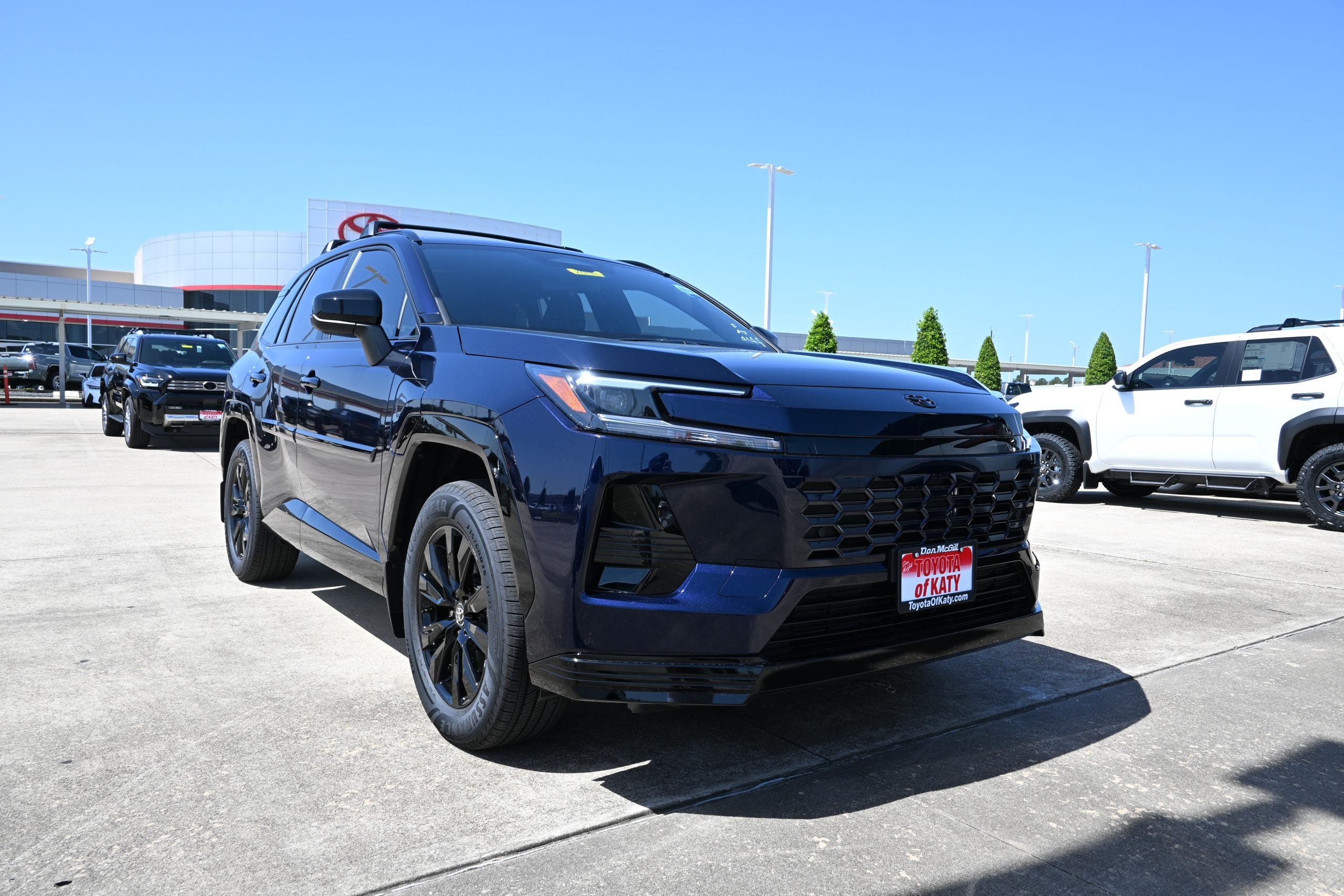
The RAV4 conversation has shifted in a similar direction. For 2026, the lineup is hybrid and plug-in hybrid only, with no traditional gas trim offered. The choice here comes down to trim and range rather than powertrain type.
RAV4 Head-to-Head Snapshot
Trim | Starting MSRP | Power | Notable Feature |
RAV4 Hybrid FWD | $31,900 | 226 hp (236 hp AWD) | Up to 48 mpg combined |
RAV4 Plug-in Hybrid SE | $41,500 | 324 net combined HP | 54-mile all-electric range |
Towing splits by drivetrain rather than by powertrain. The hybrid LE tows 1,750 lbs in either FWD or AWD, while AWD versions of the SE, XLE Premium, Limited, and Woodland reach 3,500. The plug-in hybrid tows 3,500 pounds on every trim except the GR Sport, where Toyota doesn't recommend towing. So if a boat or small trailer is in the picture, the trim and drivetrain matter more than whether you go plug-in. If a gas RAV4 is what you're after, it's worth checking our used inventory, since availability there can differ from new stock.
Toyota Highlander: Hybrid vs. Gas for Road Trips and Hauling
The Highlander comparison is one of the more clear-cut choices in Toyota's lineup, since both powertrains are still offered on real trims.
Highlander Head-to-Head Snapshot
Trim | Starting MSRP | Horsepower | Combined MPG (est.) |
Highlander XLE Gas | $46,270 | 265 hp (2.4-liter turbocharged four-cylinder) | 24 MPG |
Highlander XLE Hybrid | $48,020 | 243 net combined hp | 35 MPG |
The gas Highlander keeps the higher-output turbocharged engine, which appeals to drivers who tow trailers or haul gear regularly and want stronger low-end torque; gas models offer up to 5,000 pounds of towing capacity against the hybrid's 3,500.
The fuel math here is the most favorable in the lineup. At 15,000 miles a year, 24 mpg burns about 625 gallons, while 35 mpg burns about 429, a difference of about $650 annually. That clears the $1,750 premium in under three years, and Highlanders tend to stay in families longer than that. One thing to factor in: every Highlander Hybrid comes with all-wheel drive standard, while the gas XLE starts front-drive, so part of that gap is drivetrain rather than electrification. Compare an AWD gas Highlander against the hybrid for the honest premium.
Toyota Corolla: Hybrid vs. Gas for Budget-Conscious Drivers
This question is often most relevant with the Corolla, since it's Toyota's most budget-focused nameplate. The gas Corolla LE starts at $23,125 plus a $1,295 delivery fee, powered by a 2.0-liter four-cylinder producing 169 hp and 151 lb-ft through a CVT, rated up to 35 MPG combined.
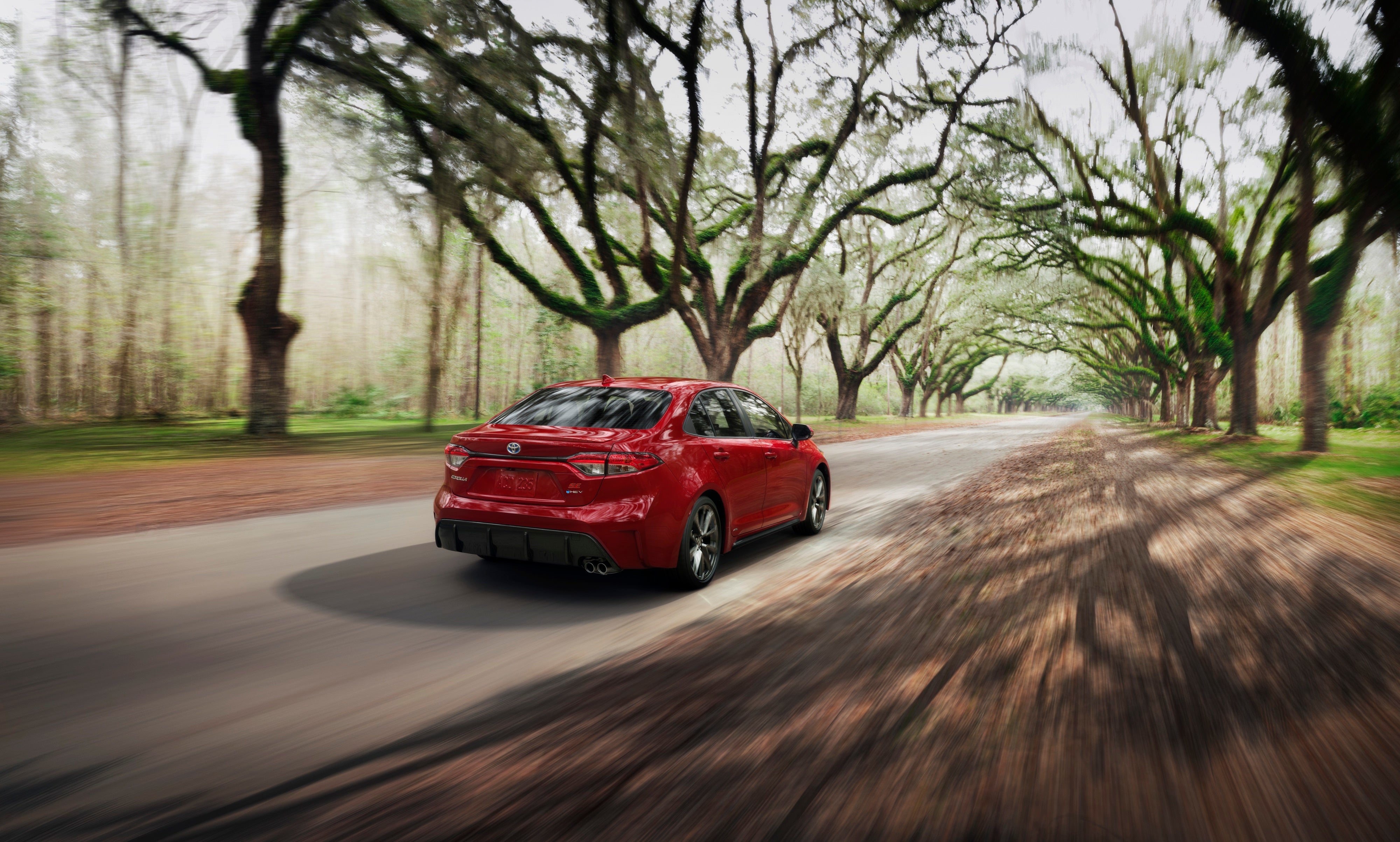
The Corolla Hybrid runs on the same regular unleaded, but the fuel efficiency picture looks quite different. The Corolla Hybrid LE uses a 1.8-liter 4-cylinder paired with an electric motor for 138 net combined hp and 105 lb-ft, rated up to 53 city, 46 highway, and 50 combined MPG. Toyota lists the Corolla Hybrid LE starting at $24,975. The premium over the gas model is modest, and for budget-conscious drivers who do a lot of city driving, the hybrid's fuel savings can add up meaningfully.
Maintenance, Battery Life, and Ownership Considerations
Hybrid ownership tends to be more balanced than people assume going in. Toyota backs its hybrid battery with a 10-year/150,000-mile limited warranty, and other hybrid components, including the battery control module, hybrid control module, and inverter/converter, carry an 8-year/100,000-mile warranty. Buyers worried about hybrid ownership costs get a lot of runway here before they need to think twice.
On routine maintenance, Kelley Blue Book has noted that regenerative braking reduces wear on brake pads and rotors, which can extend service life compared to a traditional gas vehicle that relies solely on friction braking. As for Texas heat, modern hybrid batteries are engineered with thermal management systems built to handle high-temperature climates, so Katy's summers shouldn't be a source of unusual concern for hybrid owners. Our service center can help keep either powertrain running well for the long haul.
Which Powertrain Fits Your Katy Lifestyle?
There's no universal answer here. It depends on your specific routine, and being honest about your driving habits is the best way to choose correctly.
Choose Hybrid If You Drive Mostly Local, Congested Routes
If your daily miles are dominated by Katy traffic, school runs, or short hops around the Energy Corridor, a hybrid's ability to lean on electric power at low speeds will likely translate into real savings at the pump, along with a quieter ride and potentially lower brake maintenance over time.
Choose Gas If You Prioritize Upfront Savings or Frequent Long Drives
If you frequently drive long stretches of I-10 or prioritize a lower purchase price over incremental fuel savings, a gas model, if still available, remains a perfectly sound choice. Gas engines perform efficiently at steady highway speeds, and the lower upfront cost can matter more than fuel savings for drivers who don't rack up heavy city mileage.
Explore Toyota Hybrid and Gas Models at Toyota of Katy
Whether you're drawn to the efficiency of a hybrid or the straightforward simplicity of a gas engine, the best way to decide is to get behind the wheel.
Talk to Our Team
Our team at Toyota of Katy can walk you through the tradeoffs for your specific commute, whether that's daily stop-and-go traffic or regular trips out toward the Hill Country.
Ready to Compare?
The most useful thing you can do is drive both. Search our new inventory to see what's on the lot, then come by 21555 Katy Fwy and take a hybrid and its gas counterpart out on the same route, ideally the one you actually commute. Fifteen minutes in traffic tells you more about which powertrain fits your week than any spec sheet, ours included.